


Welcome to issue #62 of FutureFemHealth, here to bring you your weekly news about women’s health innovation and FemTech (w/c 22 July 2024).
🌟 Coming up today we’ve got:
🤰🏼 $26m Series A for Novocuff to tackle preterm births
❤️ HPV self-sampling tests one-step closer after NHS trial
📈 First-time IVF patients now aged 35+ for first time, says new HFEA data
🙏🏼 ‘Dream come true’ drug could extend female fertility by five years
Got news to share from the world of FemTech and women’s health innovation? Want to sponsor our newsletter? Let me know at anna@futurefemhealth.com
🤰🏼Taking on the challenge of preterm births

Improving maternal and neonatal care can sometimes seem like a near-insurmountable challenge.
Headlines and data constantly highlight deep-seated issues: maternal deaths, racial disparities, preterm births, and postpartum mental health.
But then, a start-up comes along with a targeted solution that offers real hope for meaningful progress.
Actually, make that two start-ups.
Novocuff and PregnanTech are both working to reduce the devastation of preterm births.
Preterm birth is the leading cause of death for infants under the age of one. An estimated one million babies die each year due to preterm birth complications - with many others facing long-term health issues.
Every extra day a baby can stay in the womb is crucial.
And the financial and emotional burden is also overwhelming. In the US, the cost of treating a preterm newborn is ten times that of a full-term baby. And women who have had preterm delivery experience significantly higher levels of stress and depression.
Last week, Novocuff closed an oversubscribed $26 million Series A funding round.
Founders Amelia “Amy” Degenkolb and Donald Lee are developing a medical device that can stabilise and close the cervix if it begins to open prematurely during pregnancy.
Investor Curt LaBelle from AXA IM Alts commented:
“Our investment should enable completion of a US pivotal trial and the introduction of the Novocuff device to global markets, including low- and middle-income countries.”
Over in Israel, PregnanTech has developed LIONESS, a non-surgical silicone ring device similar to a pessary.
It can be inserted around the cervix as early as the 12th week of pregnancy in a quick non-surgical procedure that takes just a few minutes.
The ring keeps the cervix long and helps to prevent dilation, thereby extending pregnancy.
LIONESS has already shown promising outcomes in trials published in the American Journal of Obstetrics and Gynecology.
Next year, PregnanTech also plans a pivotal study in the US and will apply for FDA approval.
Both of these focused, problem-specific approaches from Novocuff and PregnanTech offer real hope on a global scale.
And by accumulating more solutions like these we can create the substantial positive change we all want - and need - to see in maternal and infant health outcomes.
💰 Funding, deals and investment news

📌 US: Novocuff raises $26m to advance tech to reduce preterm births. See main story above for details. Funding round led by AXA IM Alts. (Continue reading: FutureFemHealth)
📌 US: 3Daughters closes $4.7m seed funding round for novel IUD contraception. 3Daughters’ small, magnetic and frameless IUD ‘self-assembles’ in the uterus with no strings. A patented inserter and retriever helps to eliminate pain too. This round included participation from existing investors Thairm Bio. 3Daughters has now launched its Series A financing round of $15m to fund clinical trials next year. (Continue reading: FutureFemHealth)
📌 MALAYSIA: Motherhood Care+ completes seed funding round. In Malaysia, confinement after birth is a common practice to regulate both physical and mental health. Start-up Motherhood Care+ integrates products and services from confinement centres, nannies and wellness providers into one platform and app, supporting women through pregnancy and the crucial 100 days post-birth. Funding was led by Care Ventures Group. Amount undisclosed. (Continue reading: FutureFemHealth)
📌 US: TMRW Life Sciences raises $28m Series D to upgrade storage for egg freezing. TMRW takes on the risk of storing eggs, embryos and sperm for more than 63 fertility clinics in the UK and US (including for Kindbody). Its world-first and only FDA-cleared automated platform is said to reduce potential points of failure by 93% and make processes much more efficient for clinics. Funding was led by existing investor 5AM Ventures and will be used for further international expansion. (Continue reading: Endpointsnews)
🌟 More news from this week
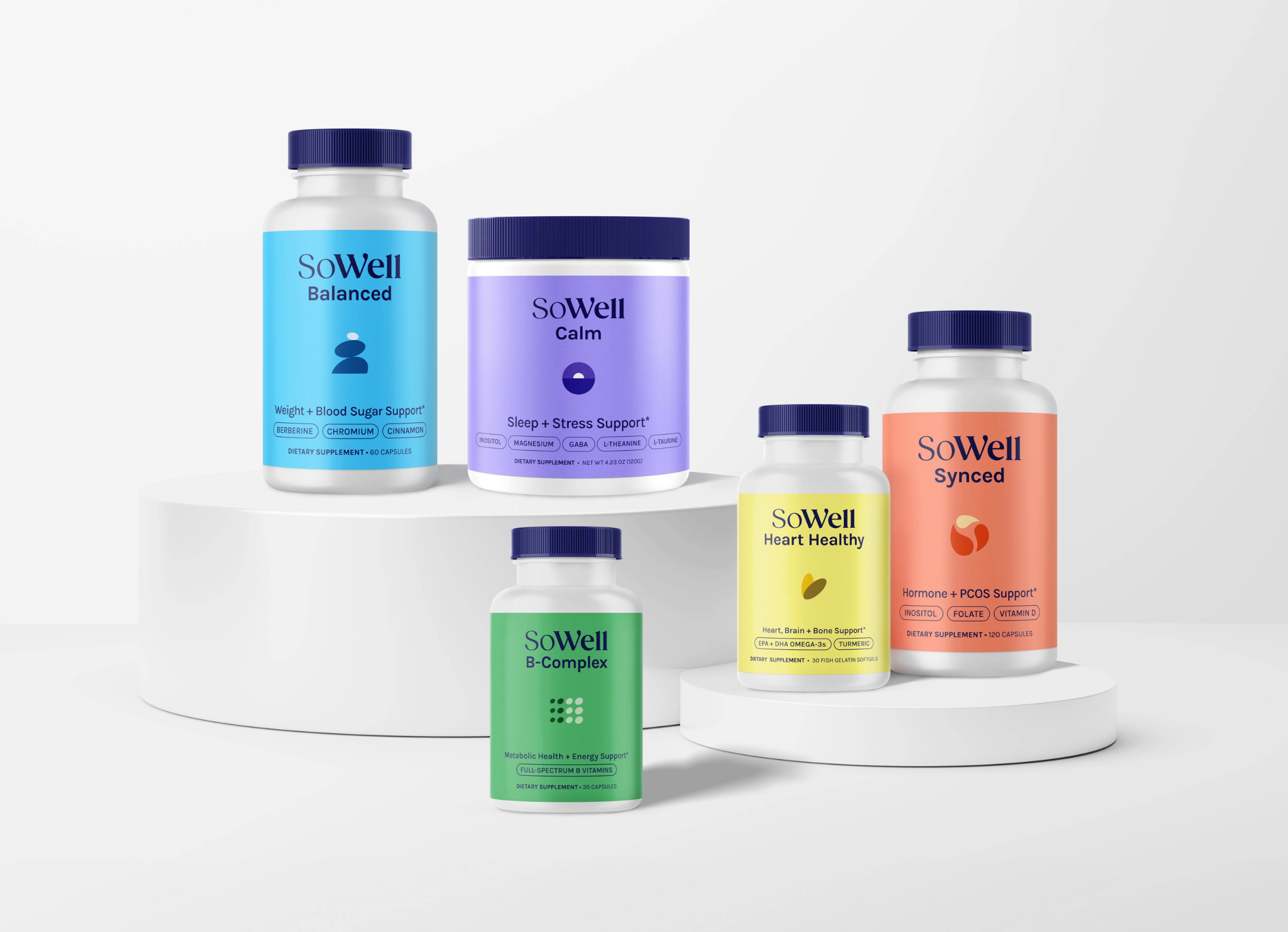
📌 US: Women’s health and hormonal health driving interest and growth in vitamins, minerals and supplements (VMS) sector. A new report from NYC-based VC firm XRC Ventures deep dives into the $60billion VMS sector. It finds that increased general interest in health and wellbeing as well as growing awareness of hormonal health and the destigmatisation of women’s health continues to result in a growing number of start-ups to meet consumer demand. Seven other key trends in the VMS sector are identified including longevity and GLP-1s. (Continue reading: FutureFemHealth)
📌 GLOBAL: The no-brainer menopause treatment that nobody is talking about. It’s safe, localised and relieves a slew of painful symptoms related to the genitourinary syndrome of menopause (GSM) - which affects as many of 84% of women during and following menopause. So why is vaginal (o)estrogen, which is both preventative and restorative, not more widely available? This is a brilliant overview of an important (and cheap) treatment. (Continue reading: Oprah Daily)
📌 US: More teen-focused period-care startups are entering wholesale. Period care brand Pinkie will launch in CVS this month. It’s an example of how small, disruptor brands are getting more recognition from wholesalers, thanks to growing consumer demand for more diverse and innovative products. (Continue reading: Modern Retail)
📌 US: Saalt’s menstrual cup sees sales triple after tampon study. Yes, that tampon study has caused plenty of concern about the safety of tampons - albeit with many unanswered questions that need more research. But the impact is apparently being felt: Saalt, which sells menstrual cups and period underwear, says it has seen a 95% increase in its website sales and a 109% increase in online orders. (Continue reading: Boise Dev news)
🩸 Research and women’s health news

📌 UK: ‘Game-changing’ HPV self-sampling tests one-step closer after NHS trial. Currently the UK’s cervical screening programme requires people to go into their GP surgery - yet 1 in 3 of those invited do not go. A self-sampling vaginal swab, designed for people who haven’t attended cervical screening, has seen success in a trial in 133 London GP practices. It suggests that if self-sampling was rolled out on the NHS more widely it could enable a million more women to get tested for HPV in three years. Self-sampling is already introduced in countries such as The Netherlands, Australia, Denmark and Sweden. (Continue reading: Eve Appeal)
📌 UK: Fertility patients are starting treatment when chances of having a baby fall, says HFEA. It’s time for annual trends and figures from the Human Fertilisation and Embryology Authority (HFEA). For the first time, the average age of first-time patients is now over 35-years-old. HFEA’s chair Julia Chain has since hit back at media coverage which inferred that women are starting IVF too late. She said ‘we do not judge, blame or criticise those who are accessing treatment at any stage.’ (Continue reading: HFEA)
📌 US: ’Dream come true’: study suggests drug could extend women’s fertility by five years. A cheap and generic drug called Rapamycin could decrease ovarian ageing by 20%, providing hope for age-related fertility issues, while also delaying menopause, post-menopausal health issues and perhaps even extending lifespan. A world-first, albeit small trial, will now scale up to provide more evidence. Yet as co-lead researcher Yousin Suh commented: “there’s no motivation for pharmaceutical companies to invest because there’s no possibility of making money from an off-patent drug.” (Continue reading: The Guardian)
📌 UK: Air pollution and pregnancy: how air pollution impacts us from the beginning. Air pollution impacts our everyday life, but there is also a lot of emerging literature on the impacts of air pollution on fertility, pregnancy and the health of babies and their mothers. In this article, Air Aware Labs delves into the evidence we have so far. (Continue reading: Air Aware Labs)
📌 GLOBAL: Why sex bias in labs means women are the losers in research into ageing. In laboratories worldwide, cages are filled with mice for human research. And they all share one thing in common - they are all male. The impact of this is staggering: about 75% of the drugs that extend lifespan in mice work only on males. When researchers belatedly tested the drugs on both sexes they discovered females did not respond. This is an eye-opening piece well worth a read - there are many more shocking examples I can’t squeeze in here! (Continue reading: The Guardian)
📄 Govt & policy news
📌 US: Women’s health in a ‘perilous place.’ Where a woman lives matters to her health with ‘clear distinctions’ across US states when it comes to access to care, quality of care and health outcomes. The latest 2024 State scorecard from Commonwealth Fund says there are deep and growing inequalities that need urgent action. (Continue reading: The Guardian)
📌 UK: It’s time to prioritise women’s reproductive health. 800 clinicians and 60 leading organisations have called upon the new Government to improve the health of the 51% and prioritise women’s reproductive health. Led by The Faculty of Sexual and Reproductive Healthcare, an open letter highlights shocking health inequalities for urgent action, including maternal mortality in Black women and women of Asian and mixed ethnicity. (Continue reading: FSRH)
📌 US: Where does Kamala Harris stand on women’s health issues? After a momentous week in American politics that saw President Joe Biden pull out of the election race, Vice-President Kamala Harris is now the likely Democratic nominee for upcoming election. This article highlights her track record on women’s health - championing reproductive rights and pushing to make Black maternal health a national priority. (Continue reading: Women’s Health Magazine)
✅ Jobs
📌 UK: Conversational Content Designer (fixed-term, 14 months), Flo Health
📌 UK: Investment Manager, Exceptional Ventures
📌 US: Head of Growth, Evvy
And finally….

Help us lift the lid on discrimination facing FemTech…
We’re working with The Guardian on a major investigation into the barriers that FemTech, women’s health and sexual wellness companies face, and we need your help! Have you been turned down for banking, insurance, payment providers or e-commerce? Perhaps you’ve been forced to pay a premium for insurance?
Please take 2 minutes to complete our survey (can be anonymously) so that we can raise awareness of the extent of this issue. If you operate in the UK, please take part here.
See you next time,
Anna