


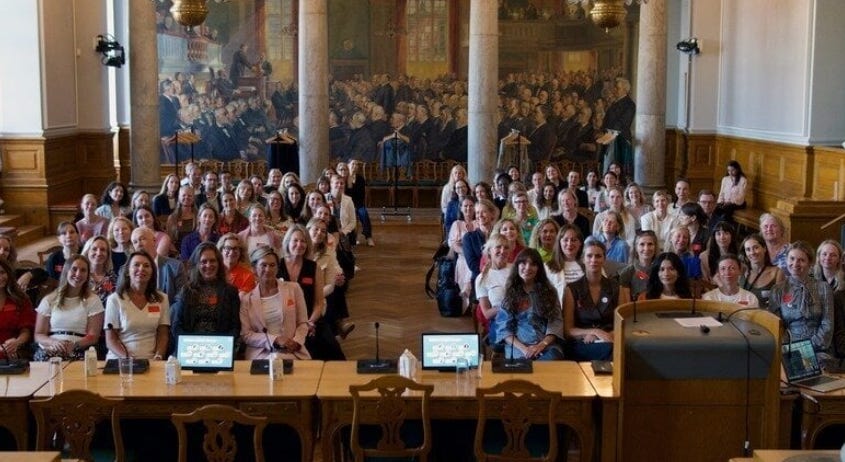
Earlier this year, more than 130 participants from across the Nordic region gathered inside the Danish Parliament to tackle a deceptively simple question: what should women’s health look like by 2040?
The result was a shared vision that now underpins the newly launched Nordic Charter for Women’s Health 2040, alongside a public petition calling on Nordic governments and the Nordic Council of Ministers to formally commit to it.
The Charter sets out a long-range, systems-level ambition: that by 2040, every woman in the Nordics should live in a society where health is treated as a birthright rather than a benefit — anticipated, equitable, and embedded into everyday life.
The initiative was formally launched on 8 December at the Finnish Embassy in Copenhagen, co-hosted by the Nordic Council of Ministers, the Copenhagen Institute for Futures Studies, and the Nordic Women’s Health Hub.
Longevity without health
Despite strong welfare states and global reputations for gender equality, women in the Nordic region — as elsewhere — spend significantly more of their lives in poor health than men.
Globally, women live longer but spend around 25% more of their lifespan in ill health. At the same time, investment in understanding women’s biology remains limited: roughly 5% of global health R&D funding is directed toward women’s health overall, and only 1% toward non-oncology, women-specific conditions.
The result is a persistent mismatch between women’s health needs and the systems designed to serve them. Across the lifespan — from adolescence to menopause and beyond — women experience delayed diagnoses, limited access to informed care, and workplaces and policies that fail to account for female biology.
Pushing for equality
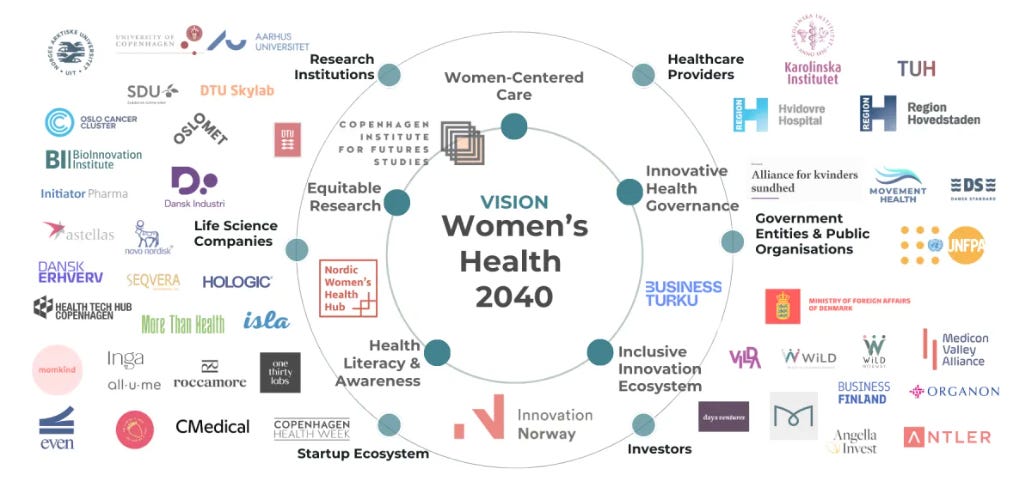
Rather than focusing on incremental improvements, the Nordic Charter for Women’s Health 2040 takes a values-led approach.
Its core argument is that setting a visionary starting point matters. Instead of asking what is currently feasible, it defines what should be considered standard — and asks institutions to align accordingly.
An accompanying petition to the charter formally calls on Nordic governments and the Nordic Council of Ministers to formally commit to the Charter’s principles.
Key commitments outlined include:
Achieving parity in Healthy Life Years (HLY) so that women and men reach a 1.0 ratio, ending the pattern of women spending more years in poor health.
Integrating female biology and sex-specific health education into all university-level medical curricula, ensuring future clinicians are trained to recognise and treat women’s health accurately.
Implementing sex-based funding criteria across Nordic research councils and public funding programmes, embedding gender considerations at every stage of research design and evaluation.
Making sex-disaggregated data mandatory in clinical trials, rather than optional.
Linking healthcare financing to measurable improvements in health-related quality of life, using validated tools such as EQ-5D/5L, instead of rewarding volume of services delivered.
Following the petition launch, the next step is for governments to respond to the proposed charter and decide how to take it forward.