



Guest contribution by Dijana Atanasovska, Hanah Ecosystem.
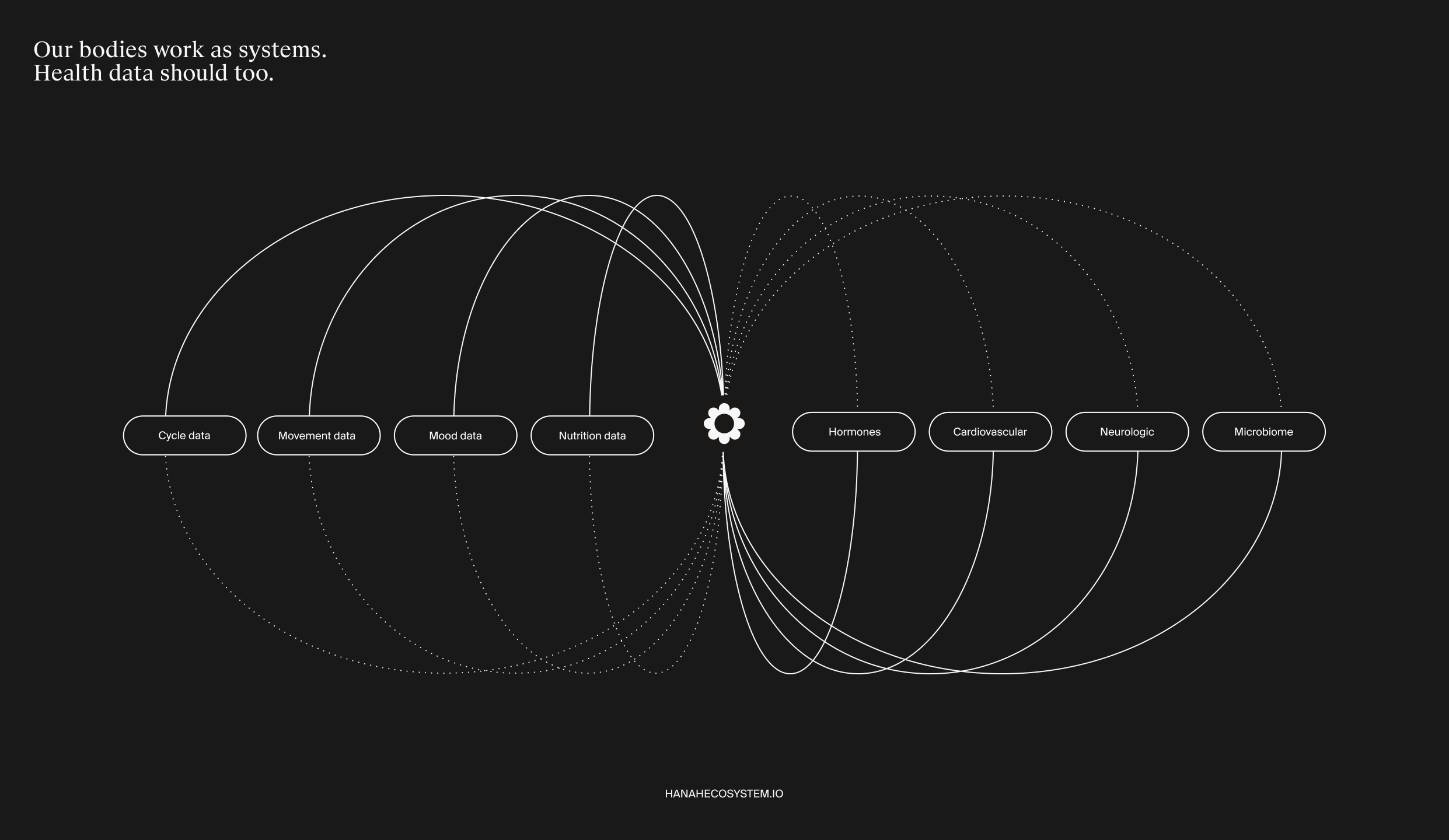
Women’s health has never been more innovative — or more fragmented.
We’re surrounded by apps and wearables that give insight into our cycles, fertility, sleep, stress, nutrition and chronic conditions. Each one captures a sliver of our health story. Yet most of that data lives in isolation, locked inside separate systems that don’t speak to one another.
Your period tracker knows when your cycle starts. Your wearable knows how you sleep. Your doctor knows your latest medication.
But together, they rarely form a coherent picture.
This fragmentation is inconvenient for users, yes, but it also has real consequences for research, care and innovation — especially in women’s health, where data gaps are already profound.
The limits of the “super app” solution
One response to fragmentation has been consolidation, with large platforms expanding horizontally into multiple health domains.
That model works for users who are comfortable living entirely inside one ecosystem. But it often replaces many small silos with one large one. When institutions — hospitals, researchers, public health bodies — want to collaborate, they remain dependent on whether a single company is willing (or able) to open the gates.
From the institutional side, the picture is no better. Hospital systems are fragmented and outdated. Research recruitment is slow. Data sharing across borders or organisations can take months — sometimes years — because compliance, governance and consent are so complex.
The result? Incredible volumes of women’s health data exist, yet are incredibly hard to use responsibly, collaboratively and at scale.
Lowering the barrier to collaboration
We believe collaboration in women’s health should be easier, safer and more compliant — for everyone involved.
And one thing has become clear through our conversations with hospitals, researchers and industry partners: the desire to collaborate already exists.
The problem is friction.
Today, setting up a compliant data collaboration between an app and a research institution can require months of legal work, bespoke agreements and duplicated effort — often repeating the same compliance processes again and again.
This slows innovation and discourages participation, particularly for smaller femtech companies that don’t have large legal or regulatory teams.
Hanah’s focus is on addressing this bottleneck — making ethical collaboration possible in a faster and still secure way without forcing anyone to give up control, compromise safety, or rebuild the wheel every time.
For apps, that means support in navigating complex and evolving regulatory requirements. For researchers and hospitals, it means faster, safer ways to work together across systems and borders. For women, it means transparency, choice and dignity in how their data is used.
From manifesto to movement
Recently, we published our manifesto and opened a public call for participation — inviting individuals, researchers, clinicians, technologists and institutions to help shape what comes next.
This phase is about activation as we listen, learn and convene. We have upcoming academic workshops and early pilots with partners who share our commitment to ethics, privacy and collaboration.
Women’s health is finally being taken seriously — by investors, policymakers and the public. But without shared foundations, progress will remain uneven and exclusionary. It determines who gets included, who gets excluded, and how fast meaningful change can happen.
If we get this right, we don’t just unlock better research or faster innovation. We create conditions where women’s bodies are represented more accurately, ethically and comprehensively — now and in the future.
That’s the future Hanah is working toward. And it’s one we believe must be built together.
If you’re a researcher, healthcare institution, femtech company or innovator interested in exploring more collaborative, privacy-first approaches to women’s health data, explore Hanah’s technology by emailing tech@hanahecosystem.io
You can also sign up to an upcoming academic workshop here.
Really thoughtful piece. The point about fragmentation being the real blocker, not lack of data, feels spot on, especially in women’s health where context matters so much. Making collaboration easier without stripping people of control feels like the missing link here.