


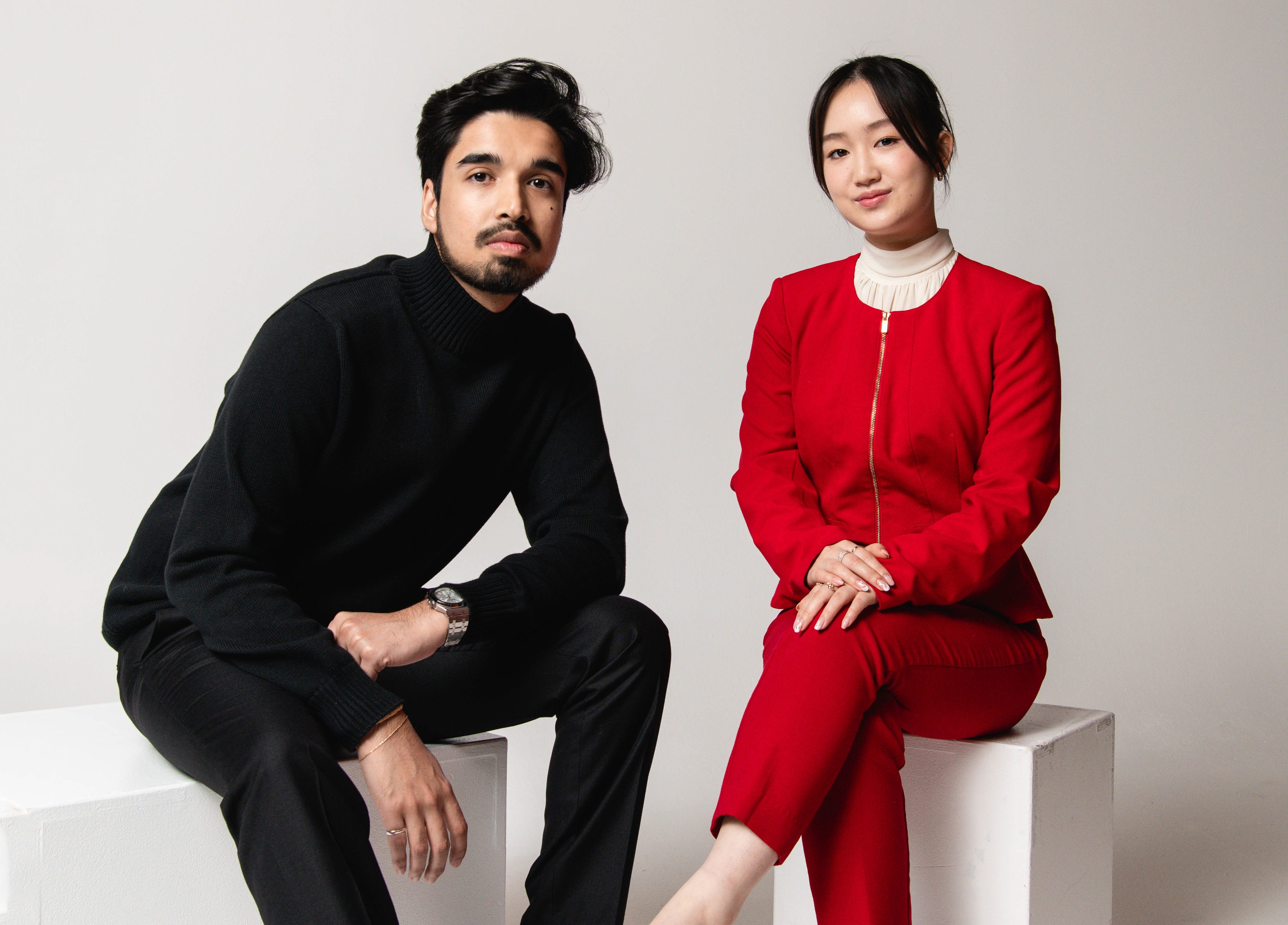
A new women’s health startup, Clair, has come out of stealth, announcing plans to launch a wrist-worn wearable designed to provide continuous, non-invasive insights into female hormone patterns.
Founded by Stanford graduates Jenny Duan and Abhinav Agarwal, Clair is positioning itself as the first wearable built specifically to track hormonal dynamics in real time, without blood draws, urine tests or needles. It describes the product as continuous hormone monitoring via physiological inference, rather than direct hormone measurement in blood, saliva or sweat. The company says its technology combines multiple physiological signals to infer changes in key reproductive hormones, including estrogen, progesterone, luteinising hormone (LH) and follicle-stimulating hormone (FSH).
“We didn’t invent the signals that Clair reads,” wrote the founders in an introductory blog post. “What was missing was the technology to listen. The sensors sophisticated to capture the subtle changes. The models smart enough to fuse multiple signals into coherent predictions.”
The Clair system consists of a wrist-worn device paired with a mobile app. The app is due to launch for beta testing in February 2026, with the hardware expected to follow later in the year, in November.
Clair is also midway through a funding round, with one investor, Reach Capital, publicly sharing that the team “bring the rare combination this category demands: technical depth, consumer empathy, and the ability to turn complex science into something people can actually use.” No further funding details have yet been disclosed.
A continuous picture of hormonal patterns
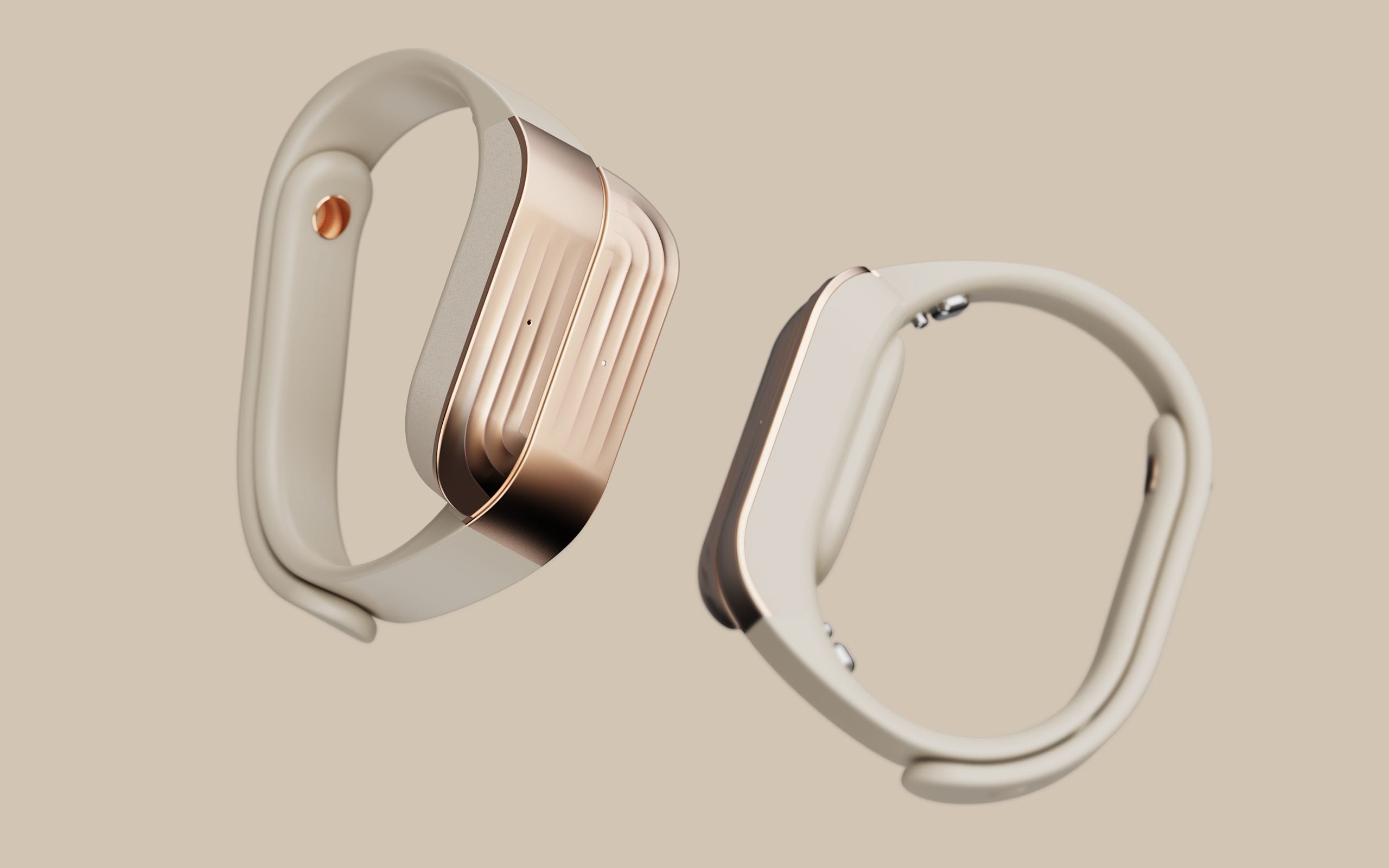
While many existing health wearables focus on metrics such as steps, sleep and heart rate, Clair is designed to link those signals directly to hormonal rhythms. The company argues that traditional trackers struggle to capture the complexity of female physiology, particularly across the menstrual cycle, during perimenopause, or for women with irregular cycles.
According to the company, the wearable will use ten distinct biosensors and analyses data across 130+ proprietary biomarkers. These include skin temperature, heart rate, heart-rate variability, breathing rate, sleep patterns, electrodermal activity and movement. By analysing how these signals change together over time, Clair aims to model hormonal patterns as they unfold, rather than relying on calendar-based predictions or single point-in-time tests. This allows users to see patterns and act accordingly - whether that be to adjust their lifestyle, speak to a healthcare provider or simply understand what their body is doing and why.
Tracking without a blood draw
The most common question Clair faces is how it tracks hormones consistently without a blood draw. Explaining its science in a blog post, Clair describes itself as a multi-modal sensor array capturing over 130 mechanistic biomarkers spanning cardiovascular, thermoregulatory, autonomic, electrodermal, body composition, sleep and more.
“Our models learn the mapping between these multi-system physiological signatures and the underlying hormonal state — trained against clinical-grade hormone ground truth, not just self-reported cycle data,” the team explain. “The result is continuous hormonal inference from signals the body is already producing.”
In the article on its website Clair addresses directly the questions it’s had about whether it can claim to be a CHM or not:
“Clair is a continuous hormone monitor. It continuously observes your hormonal state through multi-modal physiological signals — analogous to how a CGM continuously monitors glucose through interstitial fluid. Neither measures the target analyte directly. Both infer it from correlated signals at high frequency, validated against ground-truth measurements.
“The question, for any monitoring technology, is not "is it direct?" but "how well-validated is the inference, and is it clinically useful?" That is what our validation data and clinical study program are designed to establish.”
In early validation, Clair says it tested prototypes on 40+ women across 127 cycles, benchmarked against clinical-grade hormone assays, reporting 94.1% accuracy for cycle-phase classification and 87% sensitivity for LH surge detection. Clair says its models have been trained on diverse female physiology, including conditions such as polycystic ovary syndrome (PCOS) and anovulatory cycles.
The startup is targeting a broad range of use cases, from fertility tracking and athletic performance optimisation to longer-term hormonal health management and perimenopause. For fertility, Clair says continuous tracking could help identify fertile windows and confirm ovulation without the need for disposable test strips. For athletes, the company argues that understanding hormonal fluctuations could support better training and recovery decisions. In perimenopause, where symptoms are often difficult to interpret and poorly supported by standard care, continuous hormone-linked data could help women make sense of changes in sleep, energy and mood.
Clair says its first release will launch as a general wellness device, surfacing phase classification, trend insights and event detection such as ovulation confirmation. The company says numerical hormone values would come later as part of a planned FDA-cleared version.
Closing existing gaps
The founders say the motivation for building Clair came from both personal experience and gaps they observed in existing health technology. Duan, now 21, studied symbolic systems at Stanford, focusing on AI ethics and social systems, while Agarwal, 23, brings experience in wearable hardware and algorithm development. Together, they identified what they describe as a mismatch between the data wearables already collect and the hormone-related insights women are still missing.
Clair says data privacy, accessibility and accuracy are core to its approach. By making hormone patterns visible earlier, the company argues, women could move from reacting to symptoms after they escalate to acting preventatively, with clearer evidence to support conversations with healthcare providers.