


This is a guest post by Brittany Ryan, founder of Her Health Agents and a fractional product and communications advisor for women’s health teams.
Spend enough time in FemTech circles and a pattern starts to emerge. Founders, researchers, and clinicians in this space are, by and large, working toward the same thing: a healthcare system, services and tooling that take women’s health seriously. Yet the ecosystem often behaves as though each company is solving a problem no one else has thought of, building in isolation, fundraising in isolation, and educating the market in isolation.
The signs of strain are hard to miss. Amy Beckley, PhD, owner and CEO of Proov, kicked off 2026 with her prediction that “70% of current women’s health businesses will fail in 2026…[because of] too many companies all competing for the same small pot of funding”.
Beyond the funding crunch, she points to the proliferation of “micro education”, with companies producing noise around the same health topics. For a field with no shortage of ideas, urgency, or competent contributors, and as a woman with a vested interest in the collective success of women’s health innovation, this is a difficult pattern to watch from the sidelines.
As the FemTech industry matures, consolidation is a natural part of commercial evolution; the inevitable thinning of the herd and economic survival of the fittest (or funded-est). Surely FemTech isn’t the first industry to face this collision of: urgency, data shortages, funding shortages, and a gulf of opportunities brought by new technology… Is there something to learn from how others have navigated this crossroads?
Duplicated efforts with no IP-value-added
Take endometriosis. One of the most prevalent and historically under-researched conditions affecting women, it has attracted a wave of startups, many building to establish a foothold in their local markets: in the US, in the UK, in Australia, in France and so on. Initially, this global momentum radiates hope and optimism that finally [insert any underserved women’s health condition] is having a moment. But how many players will survive long enough to have real impact?
Each of these start-ups is navigating its own regulatory environment, generating its own clinical evidence, and making its own case to investors about why the condition deserves attention and capital, and why they are the founding team to bet on. The geographic distance means they are rarely in direct competition, but every hard-won insight, every regulatory lesson, every clinical relationship stays siloed within the company that earned it. The same foundational work ends up being paid for repeatedly.
The second pattern is even more visible if you’ve spent time in the space. Alongside building their products, FemTech founders carry an additional burden: the work of making the problem legible. Often called the “awareness tax,” it means building awareness among users dismissed or misdiagnosed for years, among investors encountering conditions like endometriosis, PMOS (previously PCOS), or pelvic floor dysfunction for the first time across a boardroom table, and among clinicians working with an evidence base that has historically underrepresented women.
Download any app in the women’s health space. Odds are it will offer you the ability to track your cycle, and a library of supporting educational content. In any given condition space, libraries appear, written independently, clinically reviewed independently, published independently, covering similar or related topics. How many hours of clinical advisor time have gone into explaining what endometriosis is (or reviewing what an LLM wrote), across how many companies, in how many languages, when that explanation already existed somewhere else in slightly different form? That is scarce time and money that could have gone toward solving the actual problem, or toward an open-source body maintaining a reliable, trustworthy library of condition information. More importantly, it’s time and money not being invested in the IP and differentiators that actually build company value.
Unlikely collaborations: lessons from elsewhere
It turns out other industries have faced versions of the same problem, and built different structures to navigate it.
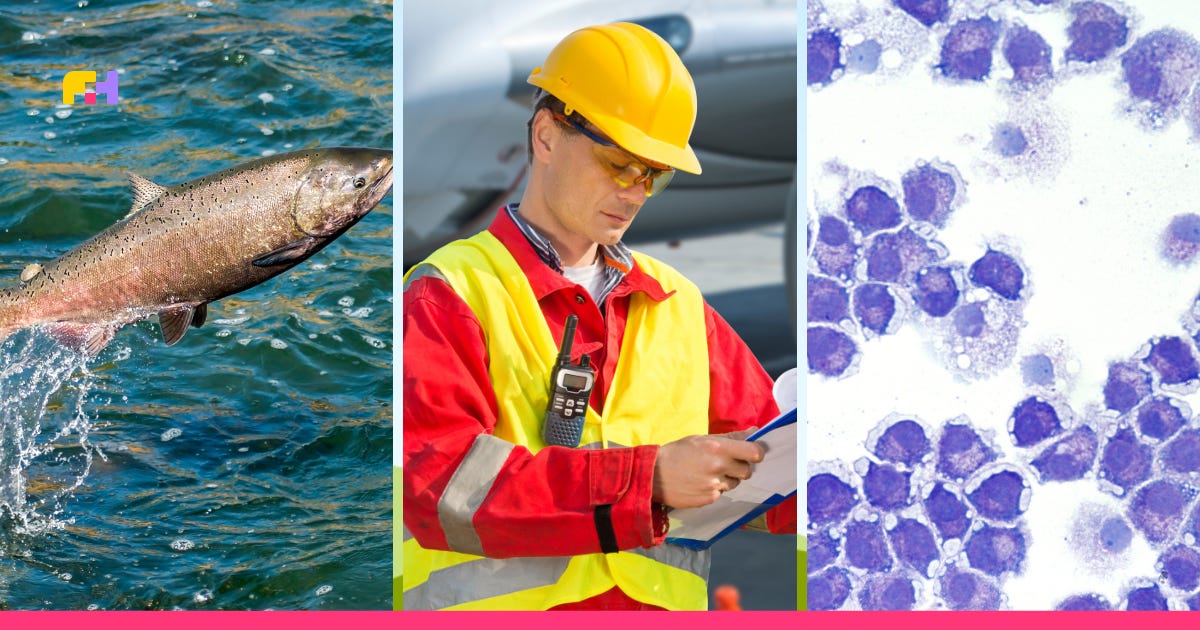
Global Salmon Initiative (GSI)
In 2013, CEOs of competing salmon aquaculture companies, facing regulatory and shareholder pressure, joined forces around collective interest. They recognised shared challenges costing every company regardless of performance, including sustainability certification, disease management, and feed efficiency, and agreed to pool resources on those challenges while competing on everything else. The outcomes over the following decade were significant: around 40% of global salmon production became certified to the industry’s gold environmental standard, medicinal sea lice treatments dropped by 50%, and feed efficiency improved measurably across the sector. Collective progress served everyone’s interests more than parallel, siloed effort ever would.
Commercial Aviation Safety Standards
In the midst of a “crisis of public confidence” in 1997, competing airlines agreed to share flight safety data through a body called the Commercial Aviation Safety Team, or CAST. Data flows through an independent third party, the Aviation Safety Information Analysis and Sharing (ASIAS) system, which anonymises it so airlines can contribute operational information without handing anything sensitive to a competitor. As a result of a shared pool of data, it was possible to identify patterns that otherwise may not be apparent through the lens of an individual operator. Over the following decade, commercial aviation fatalities in the US fell by 83%. The programme has since produced over 100 industry-wide safety enhancements and continues to expand nearly 20 years on.
Biopharma - The Pistoia Alliance
In 2007, senior R&D directors from competing pharmaceutical companies gathered in Pistoia, Italy, and concluded they were independently spending on the same foundational research tasks: gene sequencing, literature monitoring, and data standards. Work necessary for everyone and competitively useful to no one. The Pistoia Alliance grew out of that conversation, built around the explicit aim of encouraging “the cross-company conversations that identify the most pernicious examples of resource-wasting replication of pre-competitive research activities, and then launching project teams to address these challenges.” Founded by major players including AstraZeneca, GSK, Novartis and Pfizer, the Alliance continues today, built on the principle that collaborative solutions can “advance science and create value for the industry, without yielding competitive advantage for individual organizations or requiring competitive data to be shared.”
What can we learn here?
One caveat before applying these examples to FemTech. The precedents above sit largely in systems and operational practices, far from the consumer. They also come from industries with deeper pockets, and formal collaboration bodies take real effort to build. Duplication in women’s health behaves differently: much of it lives at the patient-facing layer, in education, guidance, and interpretation of evidence. That layer shapes trust directly, and inconsistency is immediately visible to the end user. The case for coordination is stronger here, but it rubs against every founder’s need to establish themselves as a serious voice in the space; both for the investors deciding whether to back them, and the end users deciding whether to trust them. Content and awareness are usually the entry point to both.
That being said, all three examples started with a group of people recognising shared urgency and shared costs, and deciding to do something about it together. That starting point is available to women’s health companies now. Two areas stand out as candidates, though an entire paper could be written about a third: addressing the data gap.
The first is regulatory and clinical intelligence. A founder who has spent eighteen months in the German regulatory landscape has knowledge another founder entering that market would benefit from enormously. Sharing it does not hand a competitor an advantage. The product, the brand, the clinical relationships, and the commercial execution remain entirely theirs. The “IP-free zone” holds the foundational map and supplemental assets, not key ingredients to each player’s unique answer to the problem.
The second is condition-level education and awareness. If several endometriosis companies jointly developed and openly licensed a shared body of educational content, or partnered with bodies where that content already exists, each would walk away with something more credible and more comprehensive than any of them could have produced alone, at a fraction of the cost. The shared layer simply stops consuming precious resources, and patients gain access to a trustworthy, open-source library.
Progress here requires someone to call the room. The Global Salmon Initiative did not emerge from a general sense that collaboration was a good idea. It required a small number of leaders to decide that the cost of continued fragmentation outweighed the discomfort of sitting down with competitors. In women’s health, that moment feels overdue.
With our powers combined
Salmon farmers, airlines, and pharma researchers all found a meaningful difference between the work that makes a company distinct and the work that simply has to exist for the field to function or advance. The latter doesn’t need to be duplicated, at full cost, across every company in a space.
This is where precompetitive collaboration can play a role.
The harder questions sit further down the road: who convenes, how it is governed, how trust is held across stakeholders with different incentives and definitions of success. None of those has an obvious answer in women’s health yet. None of the precedents above did at the start either.
The people building in women’s health are, almost without exception, here for two reasons: they believe women deserve better, and they can see the commercial opportunity in proving it. Which means the founder working on the same condition in a different market, with a different product and a different clinical approach, is not the competition yet. She, he, or they are a potential collaborator on the part of the ‘IP-free zone’ work that benefits everyone — and precompetitive collaboration is one way to put more of the available money where it actually counts.
About the author
Brittany Ryan is founder of Her Health Agents, a portfolio of 0→1 discovery ventures working at the intersection of women’s health innovation, data infrastructure, and access. She also serves as a Fractional Product and Communications Advisor, helping women’s health teams sharpen what they’re building and how they talk about it.