


Sleep technology company Eight Sleep has raised $50m in a strategic funding round led by Tether Investments, valuing the company at $1.5bn, as it expands into AI-driven sleep systems and clinical research - including on women’s health.
The new funding comes less than a year after the company raised $100m in August 2025 from investors including HSG, Valor Equity Partners, Founders Fund and Y Combinator. Eight Sleep did not disclose the valuation of that round, but the company was previously valued at $500m in 2021 when it raised an $86m Series C.
In total, the New York-based company has now raised more than $310m, according to Crunchbase.
Eight Sleep said it became free-cash-flow positive in 2025 and plans to use the latest funding to develop new products, expand internationally and support clinical validation of its technology. The company currently ships its products to more than 34 countries.
From smart beds to sleep health platform
Founded in 2014, Eight Sleep builds connected mattress covers and accessories that monitor sleep and regulate bed temperature throughout the night.
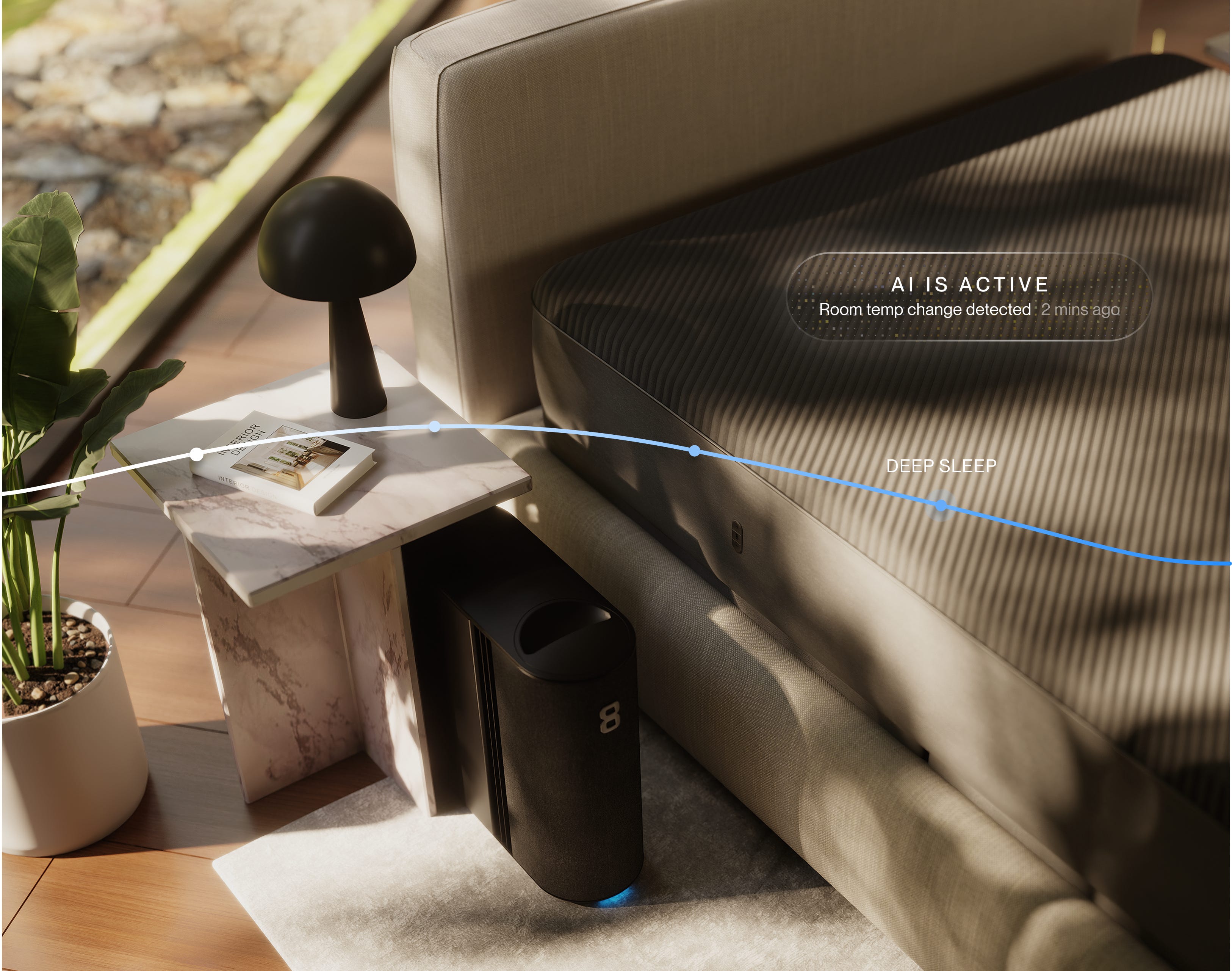
Its Pod system collects data on sleep stages, heart rate and body temperature while circulating water through the mattress cover to warm or cool the bed. The company is now developing an AI-powered sleep agent that adjusts temperature, elevation and firmness automatically based on physiological signals.
To do this, Eight Sleep is advancing clinical and regulatory work in the United States, including FDA filings for sleep apnea detection and mitigation. If approved, the technology could move beyond consumer wellness into regulated health monitoring.
“Sleep was just the beginning,” said Matteo Franceschetti, Co-founder and CEO of Eight Sleep.
“What we’re building doesn’t exist yet — a system that understands your body better each night and acts on that knowledge. Our goal is to build the defining health technology company of this generation.”
The company said early pilots of its AI-driven guidance have prompted users to change behaviours such as exercise timing, caffeine consumption and sleep schedules.
Targeting menopause-related sleep disruption
Alongside its consumer technology strategy, Eight Sleep has begun investing in women’s sleep research, an area it says has historically been overlooked.
In July 2025, the company launched Hot Flash Mode, a feature designed to help manage night-time hot flashes during menopause by delivering rapid cooling through its Pod system. Early research from the company suggests temperature regulation through the Pod may reduce nighttime hot flashes by around 55–56%.
The feature forms part of Eight Sleep’s Women’s Sleep Initiative, a multi-year programme aimed at studying how hormonal changes affect sleep and developing technologies tailored to women’s physiology. Nearly 80% of women experience hot flashes or night sweats during menopause, yet midlife women remain underrepresented in sleep research.
Real-world menopause study
As part of the initiative, Eight Sleep Labs conducted a controlled at-home study in 2025 examining how bed temperature affects sleep and physiology during menopause.
The study involved 90 participants, including 60 postmenopausal women, and generated more than 10,000 hours of sleep data from over 1,400 nights.
Researchers tracked measures including core body temperature, heart rate variability, hormones and sleep metrics. Early findings suggest temperature regulation may help restore overnight body temperature rhythms and improve cardiovascular recovery.
Two scientific papers based on the study are currently under submission for peer review, according to the company.
With its latest funding, Eight Sleep is aiming to expand beyond connected bedding into what it describes as a data-driven sleep health platform — one that increasingly includes research and technology designed to address women’s sleep challenges.