


Two new national FemTech networks have launched in quick succession, signalling growing momentum for women’s health innovation across Southern Europe - and also revealing how differently these ecosystems are evolving.
FemTech Portugal officially debuted during Web Summit in Lisbon, while FemTech Spain launched at Health Tech Forward 2025. They share ambitions to connect founders, investors, clinicians and advocates in markets where women’s health has lacked visibility, infrastructure and coordinated support.
Portugal’s early ecosystem

FemTech Portugal, founded by Lesley Farrah Dorwling-Carter, Isabel Holguera and Samantha Isola launched with a series of community-led events that attracted more than 900 registrations, including the first-ever FemTech meetup held during the conference week. Organisers say attendees were actively seeking out the initiative throughout Web Summit, showing the unmet demand for a visible women’s health presence within Portugal’s broader tech scene.
The launch brought together founders, investors and ecosystem builders, many of whom had not previously been connected through a women’s health lens.
Portugal’s FemTech landscape remains small. Early mapping suggests fewer than a dozen startups can currently be classified as women’s health–focused, with most activity falling under broader health tech rather than FemTech specifically.
As co-founder Isabel Holguera explains:
“We’re mapping out the landscape as we speak and identifying where the FemTech startups are.
“In Portugal, we have some health associations and some foundations, but these focus more on health in general,” she added. “They don’t really focus on FemTech and that’s where we saw the gap.”
FemTech Portugal is framing its early phase as community-first: building relationships, identifying gaps, and creating space for conversations that have often been missing from Portugal’s innovation agenda.
Co-founder Samantha Isola continued:
“We’re focused on building a community until the end of this year and then launching initiatives early next year.”
The team is particularly conscious of Portugal’s regional, cultural, and socioeconomic differences. Access is a central concern for women’s health - while Portugal attracts international residents through relatively affordable private healthcare, public women’s health services face long wait times and limited specialist availability. Any innovation, the organisers say, must account for who benefits — and who is left out.
Spain - a community in market-definition mode
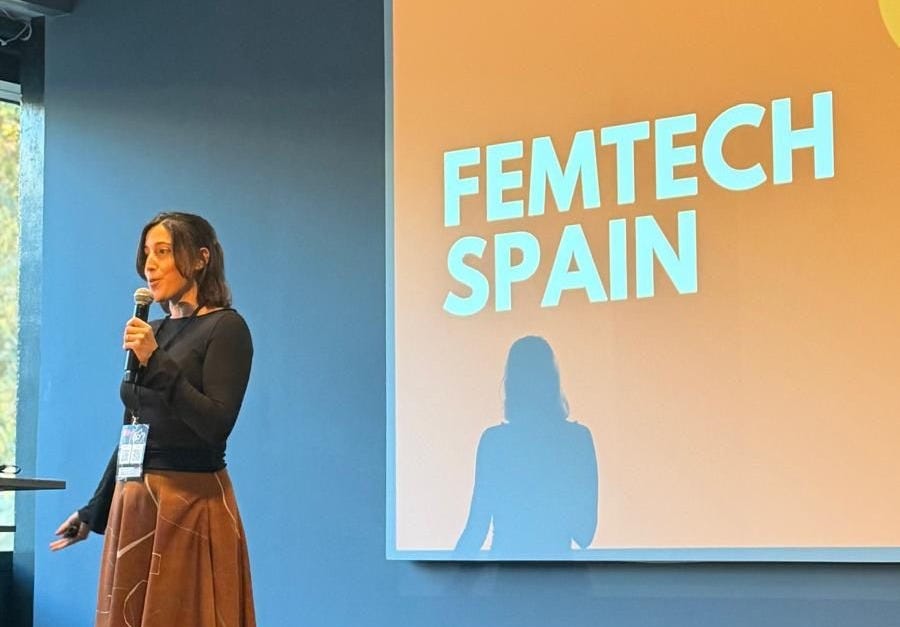
Also launching has been Femtech Spain, with its official debut at Health Tech Forward 2025, bringing together 100+ founders, investors and industry leaders - the most well-attended session of the whole conference. The event marked the release of two major assets: the Femtech Spain Market Map 2025 and the first-ever Femtech Spain Industry Report.
According to data shared at the launch, Spain’s FemTech market reached $900 million in 2023 and is projected to grow to $2.31 billion by 2030, at a 14% CAGR — outpacing the broader digital health sector. The new market map identifies 50 companies, nearly double the number recorded in 2021, with 64% founded within the past five years.
The picture that emerges is of a fast-growing ecosystem, with particular strength in deep-science and clinically integrated women’s health innovation.
FemTech Spain founder Lucia Orozco Lopez framed the role of national networks as connective tissue:
“Networks like Femtech Spain are essential to connect the dots across a sector that too often develops in isolation,” she said.
“When founders, researchers, clinicians and investors can find each other, the work becomes stronger, faster, and more aligned with women’s real health needs.”
Broader ecosystem organisations
FemTech Portugal and FemTech Spain are reflective of a growing number of ecosystem communities across the world which are connected through the FemTech Across Borders organisation.
This year, FemTech France secured a first-in-France FemTech fund - launching with an initial €5 million and a goal of raising at least €35 million more. The fund was announced by by Valérie Pécresse, president of the Île-de-France region and has the objective of financing ten start-ups over a year in four priority areas: endometriosis, fertility support, menopause care and women’s cardiology. FemTech France has also identified an estimated 170 start-ups operating in France defined as FemTech.
In September, FemTech Italy launched the first FemTech Observatory Report - mapping 92 FemTech entities in Italy, with 45% founded after 2023 showing rapid growth.
The FemTech Italy report also mapped global trends - estimating that in 2024 FemTech startups worldwide raised $2.6 billion, up 55% from the previous year, with Europe showing the fastest growth in deal value. Yet these sums remain a fraction of healthcare venture capital, with only 2–3% directed to women-founded startups.
Regional differences identified in the Observatory report are stark: North America continues to capture 65% of global capital, while Europe benefits from policy support such as Horizon Europe, and Asia-Pacific shows high consumer adoption potential. At the same time, structural gaps remain: less than 1% of R&D funding goes to women-specific conditions outside oncology, and women still make up only 22% of participants in early-phase clinical trials. The Observatory report argues that bridging these divides is not just about fairness - it represents a trillion-dollar global economic opportunity.
Love this!!!