


Women’s health companies have long faced restrictions advertising their products on social media. But the same problems are also affecting their ability to access some of the most basic services needed to run a business, from banking and insurance to payments and ecommerce.
Now, a new initiative aims to help change that.
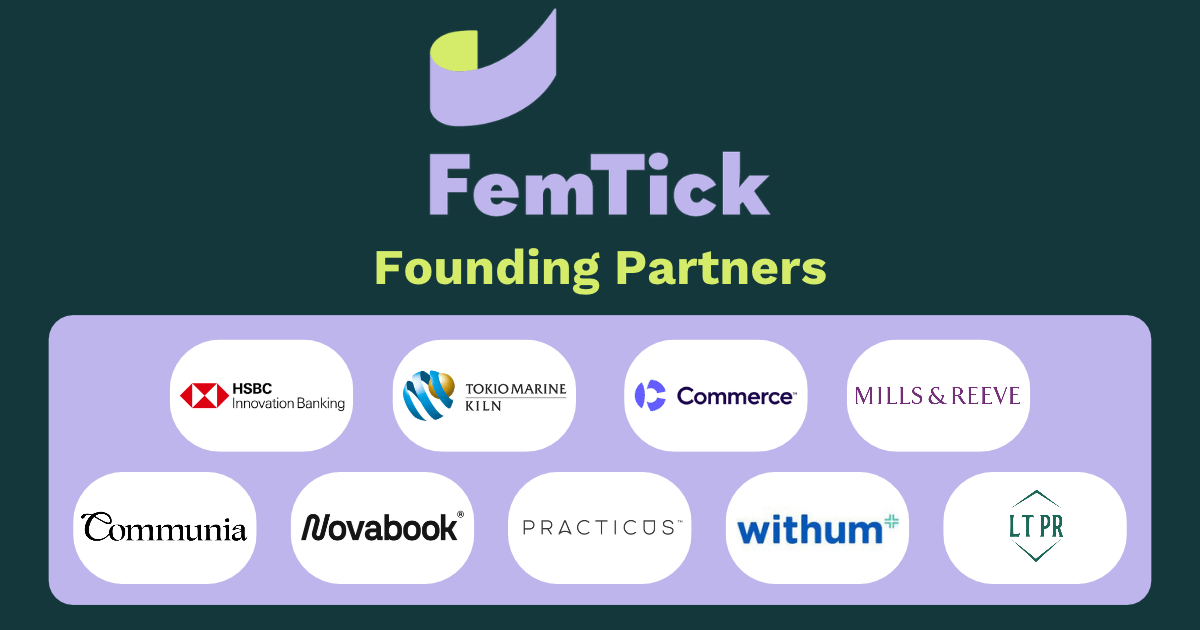
FemTick, an accreditation developed by women’s health advocacy organisation CensHERship, has launched with nine founding partners, including HSBC Innovation Banking, Tokio Marine Kiln, Commerce, Withum, Practicus, Novabook, Mills & Reeve, LT PR and Communia.
Spanning banking, insurance, ecommerce, accountancy, legal services, recruitment and communications, the partners will help shape the accreditation as it expands to additional service providers.
“Women’s health is a fast-growing area of healthcare innovation with significant unmet need. We’re seeing high-quality innovation across the sector, but companies still face barriers to accessing capital, commercialising their products and scaling successfully,” said Emma Stephens, Head of Growth and Financing, HSBC Innovation Banking UK.
“With one of the world’s strongest innovation ecosystems, the UK is well placed to drive progress in this space, and we’re proud to support the extraordinary innovators shaping its future.”
Through FemTick, service providers undergo an assessment of how they classify, review and support women’s health businesses. Those meeting the standard can display the FemTick badge, helping founders identify organisations that understand their sector and are committed to providing services free from bias.
“There are already organisations doing great work to support women’s health businesses, but founders don’t always know where to find them,” said Anna O’Sullivan and Clio Wood, co-founders of CensHERship.
“FemTick is about making those organisations easier to find, helping founders access the services they need and encouraging more providers to support the sector.”
Barrier to basic services
The FemTick initiative builds on three years of CensHERship research into censorship and structural bias affecting women’s health companies, which has revealed how restrictions extend well beyond social media platforms.
Its 2026 Bias Burden report found that every women’s health company surveyed had encountered barriers accessing financial or commercial services, with more than 60% reporting lost revenue as a result.
In some cases, the problems stem from automated classification and risk assessment systems similar to those behind restrictions on women’s health advertising. Words such as “menstrual”, “vagina” and “sexual health” can trigger systems designed to flag adult content or high-risk businesses, even when the companies involved are selling legitimate healthcare products.
In others, existing policies and risk assessments haven’t kept pace with innovation. Emerging technologies, such as the use of menstrual blood for diagnostics, may not fit neatly into established categories, creating additional scrutiny or barriers for businesses developing them.
“We started by investigating why women’s health content was being censored on social media, but what we uncovered was a much bigger problem,” said Clio.
“Companies were telling us they couldn’t access payment services, were being refused insurance or were struggling to open bank accounts. These are the basic services every business needs, yet women’s health companies were finding themselves excluded because of what they sell.”
Building the infrastructure for women's health
Rather than creating another campaign focused on the barriers, FemTick aims to help build the commercial infrastructure that women’s health businesses need to grow, bringing together service providers committed to supporting the sector.
“There’s understandably been a lot of attention on investment in women’s health, but much less discussion about the infrastructure these businesses need to operate,” said Anna.
“You can develop an incredible new product and raise investment, but if you can’t process payments, obtain insurance or access the basic services every business relies on, you’re going to struggle to grow. We want to recognise the organisations getting this right and encourage others to follow.”
Women’s health investor Cristina Ljungberg, co-founder of The Case for Her, also welcomed the initiative, highlighting the importance of giving founders greater visibility of organisations that understand the market.
FemTick is now inviting additional financial and commercial service providers to participate as it expands the initiative. Organisations interested in joining can find out more at femtick.com.
Disclosure: FutureFemHealth founder Anna O’Sullivan is also co-founder of CensHERship, the organisation behind FemTick.