


While perimenopause is a near-universal life stage for women over 40, new global data suggests that many women—particularly in the United States—still struggle to recognise what it looks and feels like.
A new digital study from Flo Health and Mayo Clinic has found that American women rank only sixth globally for overall knowledge of perimenopause symptoms, trailing peers in the United Kingdom, Ireland, Canada, Australia and the Netherlands.
The findings are published in Menopause, the official journal of The Menopause Society, and mark the first paper in a broader, multi-part global research programme examining perimenopause knowledge, symptoms and attitudes at scale.
Awareness is rising, understanding is not
In recent years, perimenopause and menopause have moved firmly into the public conversation. Celebrities are speaking openly, employers are trialling menopause policies, and digital health companies are investing heavily in midlife women’s care.
But this study suggests that visibility has not yet translated into understanding.
Despite growing attention in the U.S, American participants scored lower on perimenopause knowledge than women in several peer nations. The UK ranked highest overall - perhaps driven in part by the ‘Davina effect’ where TV presenter Davina McCall led a popular documentary about the menopause leading to a surge of interest in HRT. The lowest scores were reported in Nigeria, France and parts of Latin America.
The gap matters because perimenopause often begins years before menopause itself—and symptoms can be misattributed, dismissed, or missed entirely.
“We need to normalize conversations around perimenopause and menopause, so women feel empowered to have honest conversations with their doctors and other support systems,” said Dr. Anna Klepchukova, Chief Medical Officer at Flo.
The study: a global, digital first
Titled Global Perspectives on Perimenopause: A Digital Survey of Knowledge and Symptoms using the Flo Application, the study analysed responses from 17,494 Flo users across 158 countries between December 2024 and May 2025.
Women aged 18–34 answered questions focused on perimenopause knowledge and attitudes. Those aged 35 and over completed additional modules covering symptoms, healthcare interactions and treatment experiences. Further findings on attitudes toward perimenopause are expected in later publications.
As a digital-first study conducted via a widely used women’s health app, the research offers a rare large-scale, global snapshot of how women understand—and experience—this transition.
And for Flo Health, the study helps position it as a research and education platform operating at global scale, rather than ‘just’ a tracking app. This is important given Flo unique access to such a large-scale real world data set that potentially includes people that traditional studies might not.
“This study demonstrates a prolonged commitment from both Flo Health and Mayo Clinic in helping women better understand their bodies and advocating for their health through perimenopause, and every other phase of their health journeys, through medically- backed insights and advice,” said Dr Anna Klepchukova.
What women recognise… and what they don’t
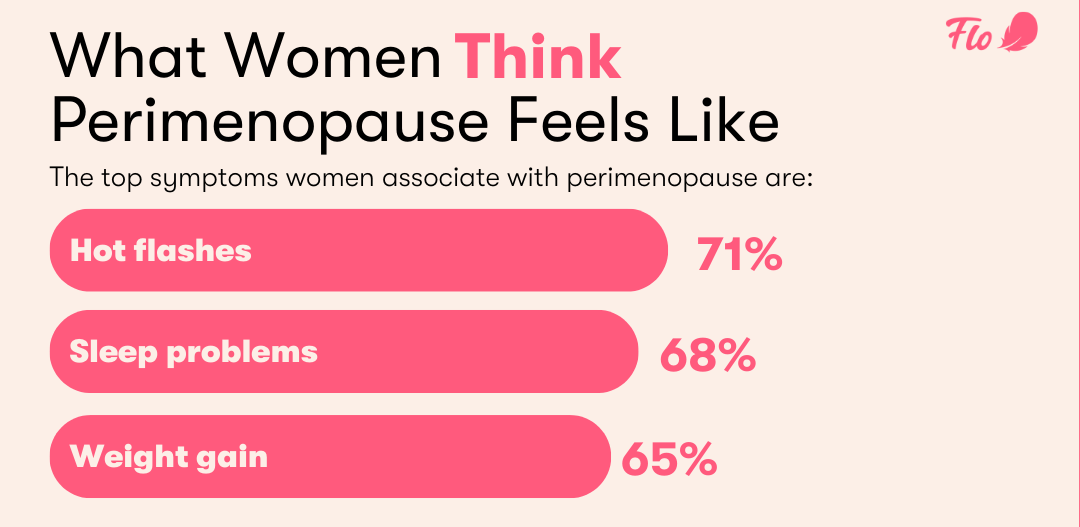
Across regions, participants were most likely to associate perimenopause with a narrow set of well-publicised symptoms:
Hot flashes (71%)
Sleep problems (68%)
Weight gain (65%)
But awareness dropped sharply for other common symptoms, including fatigue, irritability and digestive changes—despite these being among the most frequently reported lived experiences.
Knowledge levels were generally higher in high-income countries such as the UK, Ireland and Australia, yet overall scores remained low across all regions, underscoring how under-recognised perimenopause remains globally.
Symptoms don’t wait for a label
One of the study’s most striking findings is how pervasive symptoms are—even among women who do not identify as being in perimenopause.
Among women aged 35 and over, the most commonly reported symptoms regardless of reproductive stage were fatigue (83%), physical and mental exhaustion (83%) and irritability (80%), followed by depressive mood (77%), sleep problems (76%), digestive issues (76%) and anxiety (75%).
For women who did report being in perimenopause, symptom intensity was significantly higher. The top five symptoms in this group were physical and mental exhaustion (95%), fatigue (93%), irritability (91%), sleep problems (89%) and depressive mood (88%).
Geographic differences also emerged. Digestive symptoms ranked among the top three in countries including Nigeria, South Africa, India, France and Ireland, while mood-related symptoms dominated in Germany, Spain, Venezuela and the Netherlands. Sleep disturbance was especially prominent in Nigeria.
A mismatch between expectation and experience
According to Mayo Clinic’s Principal Investigator Dr Mary Hedges, the findings suggest women lack the foundational knowledge needed to identify symptoms early and seek timely care.
“There is a mismatch in knowledge and expectations of perimenopause and actual symptoms experienced during perimenopause. Many women in perimenopause may not yet be experiencing hot flashes, and are more likely to be experiencing the cognitive and physical symptoms of fatigue, exhaustion, mood, sleep, or even digestive changes,” she said.
“The findings from this study illustrate the need to advance perimenopause research and education, so that we can equip both patients and healthcare clinicians with the knowledge and skills needed to address symptoms and improve the quality of care we provide to women.”
👍🏻