


U.S biotechnology company Gameto has licensed new genetic tools from Harvard researchers that could make it possible to study human egg development in a dish — a long-standing challenge in reproductive science.
Gameto announced that it has secured exclusive rights to intellectual property developed at Harvard that enables human cells to enter the earliest stages of meiosis, a critical process required for egg formation. The research was carried out in the lab of George Church at Harvard Medical School and the Wyss Institute.
Meiosis — the specialised form of cell division that produces eggs and sperm — has been notoriously difficult to replicate outside the body. As a result, much of human ovarian development has remained effectively inaccessible to researchers.
“These licenses meaningfully expand the scope and power of our ovaroid platform,” said Dr. Christian Kramme, Gameto’s Chief Scientific Officer.
“We already have published how to genetically induce early germ cells, developed methods to generate highly functional ovarian support cells, and maintain those cells together in a stable developmental niche. Adding the ability to induce early meiosis lets us push these systems further and study stages of ovarian biology that have largely been inaccessible until now.”
Accelerating drug discovery
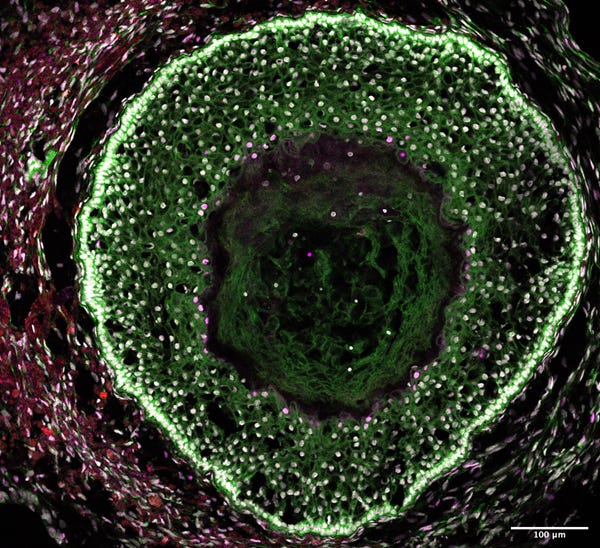
Gameto plans to integrate the newly licensed methods into its existing “ovary-in-a-dish” platform, which uses stem cells and organoid biology to model different stages of ovarian development. If successful, the approach could allow scientists to observe how human egg cells form, mature and fail — without relying on animal models or donated tissue.
Researchers say the technology could accelerate drug discovery for conditions such as infertility, early menopause and primary ovarian insufficiency, where treatment options have historically been limited and poorly studied.
“Human ovarian biology has historically been one of the most difficult systems to study and drug,” said Dr. Dina Radenkovic Turner, CEO of Gameto.
“This integrated approach gives us an unprecedented window into ovarian development and dysfunction, as well as a scalable engine for discovering and developing new therapies for women’s health.”
Gameto has raised more than $100m in funding, most recently a $44million Series C in 2025. In 2024 it announced a world-first as a baby was born from eggs matured outside of the body using its technology Fertilo.