


A new global report shows that more women are being tested for major health conditions than at any point in the past five years. But despite those gains, overall progress in women’s health has stalled.
The fifth edition of the Hologic Global Women’s Health Index, produced in partnership with Gallup, rates the global score for women’s health across five dimensions at 54 out of 100. This is the same score as when the Index began in 2020, highlighting that while more women are accessing preventative care, it is not yet translating into better health outcomes at scale.
A widening gap
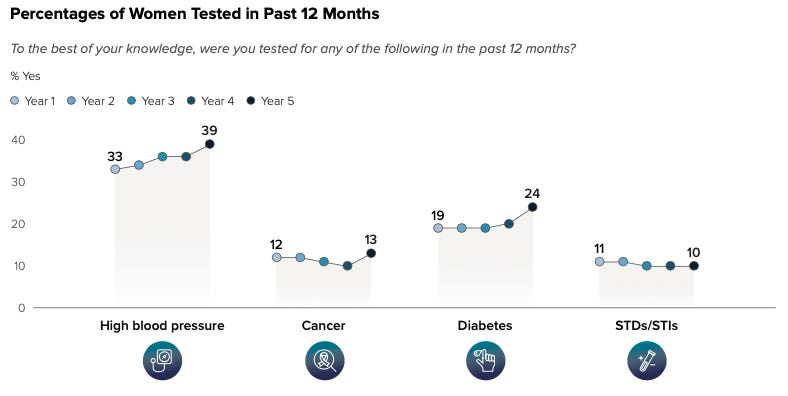
The Index shows that in the past year around 70 million more women were tested for cancer, high blood pressure or diabetes compared to the previous year. Screening rates for high blood pressure have reached 39%, while diabetes testing has climbed to 24%, both at record highs.
But alongside this, more than half of women and girls aged 15 and older - around 1.5 billion globally - did not receive a single test for any of these conditions in the past year. Screening for sexually transmitted infections has remained flat at just 10%, unchanged since the Index began.
In addition, gains highlighted in the report are mostly concentrated among older women and those living in higher-income countries, while rates in low-income settings have largely stagnated.
“It is encouraging to see needed increases in preventive care screening rates,” said Stephen P. MacMillan, chairman and CEO of Hologic.
“But we cannot mistake progress for success.”
Where countries stand
At a country level, the picture is mixed. The United States recorded its highest ranking since the Index began, placing 13th with a score of 64. The United Kingdom, by contrast, sits at 48th with a score of 58, below several European peers and dropping its score compared to previous years.
At the top of the Index, Taiwan continues to lead globally with a score of 69 for the fifth consecutive year, followed by countries including Latvia, Japan and Germany.
What stands out among higher-performing countries is not just access to care, but consistency across multiple dimensions - from preventive screening to perceptions of safety and basic needs. In some cases, national strategies focused on early detection and structured screening programmes have contributed to stronger results, particularly in areas such as cancer and chronic disease prevention.
However, even the highest-scoring countries fall well short of a perfect score, reinforcing the report’s conclusion that no health system is yet delivering fully for women.
How safety and basic needs impact the picture of health
The Index also goes beyond clinical care, capturing women’s lived experiences across five areas: preventive care, emotional health, safety, basic needs and individual health.
A third of women reported experiencing daily physical pain, while nearly one in four said health problems had interfered with their daily lives. Emotional health remains under strain, with 42% of women reporting worry and 28% reporting sadness on the previous day - both higher than in the first year of the Index.
At the same time, progress in perceived safety is offset by scale: although 67% of women now say they feel safe walking alone at night—a record high—this still leaves nearly one billion women who do not.
Perhaps most strikingly, the report highlights the extent to which health outcomes are shaped by economic conditions. Nearly four in ten women said they had struggled to afford food in the past year, and almost one in three reported difficulty affording housing.
As a result, despite gains in preventive care, overall scores have remained flat over five years, and no country scored higher than 69 out of 100 in the latest rankings. Even top-performing countries, the report notes, have “work to do.”
This suggests that expanding access to testing - while critical - is only one piece of a much larger puzzle.
A critical moment for global health
The timing of the report adds further weight. The latest data captures the state of women’s health just before significant reductions in global health funding in early 2025 , raising questions about whether even the limited gains seen so far can be sustained.
The report calls for a coordinated global response, including expanding access to early detection, developing national women’s health strategies and addressing research gaps for conditions that disproportionately affect women.
It also makes clear that structural pressures: economic insecurity, persistent safety concerns and unmet basic needs are key to unlocking more progress in women’s health.
For the growing women’s health innovation and femtech sector, the findings point highlight that while new tools are improving detection and monitoring, their impact will remain limited without wider access, affordability and integration into health systems.