


When Qatar Science & Technology Park (QSTP) launched a new FemTech accelerator earlier this year, applications arrived from 47 countries.
In partnership with Merck, the programme attracted 240 startups working across fertility, hormonal health, chronic disease, diagnostics, AI and preventative health. More than 70% of applicants were female founders.
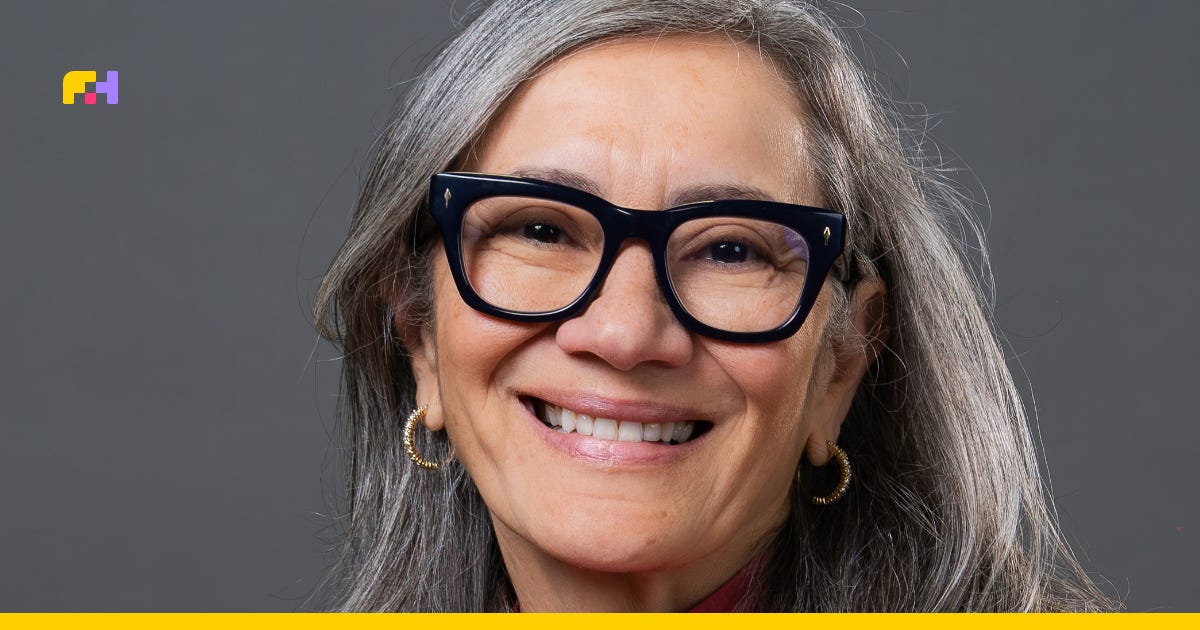
“We wanted to start with a programme that could encourage more founders who are solving for women’s health issues to consider the region a home and be able to solve for the challenges we had regionally,” explains Rama Chakaki, President of QSTP.
“And also to encourage female founders who are looking at the same to come in and say, look, we have capital for you.”
Starting with women
Rama’s interest in women’s health predates her work at QSTP. She previously worked in venture capital and spent years supporting medical non-profits operating in conflict zones. Growing up in Saudi Arabia, she also experienced some of the challenges women face navigating healthcare systems first hand.
“I experienced firsthand what it was like to be a young lady in the healthcare system,” she said. “Everything is hush hush and shy.”
The focus on women’s health was also enabled by what existed around QSTP and the wider Qatar Foundation ecosystem. QSTP sits opposite a centre dedicated to women’s and children’s health and is surrounded by research, healthcare and education institutions.
“If we’re going to do health, we will start with women,” Rama said.
“We’ve got the research institution right across the way that’s already solving for women’s health issues. You’ve got all of the elements, the natural elements to say we’re going to do this.
“If you are lagging behind addressing half of the population, then that gap presents a huge economic opportunity.”
And the QSTP accelerator arrives as women’s health appears to be rising up the policy and investor agenda in the wider Gulf region.
In May, Abu Dhabi’s Department of Health announced a partnership with Oura to explore how wearable data could support preventative healthcare, beginning with women’s health and cardiometabolic risk.
Earlier this year, Expo City Dubai launched a dedicated FemTech Hub, while UAE-based women’s health company Nabta Health continues to expand its hybrid care model across the Middle East and Africa - raising a $2 m pre-Series A at the end of 2025. The UAE also launched its National Policy for the Promotion of Women’s Health in 2024, stating ‘women’s health is integral to the overall health of society’.
Cohort support
The accelerator was launched in partnership with Merck, which has identified women’s health as a major area of unmet need and innovation.
The accelerator is designed around market access as much as mentorship, with support provided to access healthcare systems, pilot opportunities and commercial pathways across the region.
Merck Egypt is supporting the programme through introductions to healthcare stakeholders and ecosystem partners, helping participating companies explore opportunities to pilot, scale and reach patients across Egypt and wider MENA markets.
The programme has also attracted support from investors including Golden Gate Ventures, Shorooq, White Star Capital, Raed Ventures, Global Ventures, STV, Jaza Rift Ventures, Rasmal Ventures and the QSTP Tech Venture Fund.
The accelerator is currently moving through its first phase, which includes workshops, investor sessions and introductions to healthcare leaders, researchers and regulators. The next stage will see selected startups pursue pilot projects in Qatar and Egypt.
Selected companies span everything from fertility and maternal health to menopause, diagnostics and chronic disease. Participants include Noor Sciences, a US startup developing AI-powered embryo assessment technology for IVF; South Africa's Babysteps Health Technologies, which predicts high-risk pregnancies using low-cost diagnostics and AI; Canada's Hyivy Health, which is building an at-home pelvic health system for women living with chronic pelvic pain; and Prickly Pear Health, a US company for hormonal and brain health.
Geographically, the cohort stretches from Canada, the US and the UK to South Africa, Nigeria, Tunisia, Estonia, Australia, and the MENA region itself.
Adapting for local realities
Most applicants to the QSTP programme were not building for the MENA region when they started their companies. And for Rama, the question has been how to support women’s health technologies to easily translate to the region.
“Are the apps like Flo or others tailored to our needs? Or are they not?” she asked. “And if they’re not, then how do we create that market in a way that’s suitable for us?”
She points to differences in family structures, reproductive health needs and demographics across the region, alongside conditions that may be less common in North America and Europe.
“There’s maybe not enough data on and not enough applications for and studies for,” she said, discussing some of the healthcare challenges specific to local populations.
Much of the programme is therefore built around helping founders understand the healthcare systems, patient populations and cultural realities they hope to serve.
It includes sessions on healthcare delivery, fundraising, regulation and market access, alongside workshops focused on cultural and religious differences across the region.
“We’ve also had some workshops on what’s culturally different,” Rama said. “How do you also navigate, for example, the cultural and religious differences and similarities in the different markets?”
One session is led by Al-Mujadilah, a women-focused cultural dialogue centre established by Qatar Foundation. Its role is to help founders understand what Rama describes as the difference between “hard facts versus soft realities” and avoid confusing cultural misunderstandings with genuine barriers.
A launchpad for the region
While Qatar itself is a relatively small market, Rama sees the accelerator as part of a wider effort to connect founders with opportunities across the MENA region.
“We are looking at it as a launch pad for the region,” she said.
QSTP sits within a network of around 40 institutions spanning education, research and healthcare. The ecosystem also includes the Qatar Precision Health Institute, which has assembled genomic data from approximately 40,000 people.
“The access to all of whether it’s human capital or the institutions or the data,” Rama said, is part of what founders find attractive.
And the pilots aim to expose founders to very different healthcare systems.
“You have a potential to pilot in Qatar and to pilot in another country that has a very different demographic,” she said. “In this case, it’s Egypt.”
Rama also contrasts this to what might be a typical founder experience in the US where the level of access can be challenging.
“I’ve seen companies try to navigate it in the States and they’re pretty much on their own,” she said.
“Whereas here the QSTP is leading on facilitating those discussions and bringing them to the attention of the highest levels of people in government.”
“The benefit of being a large fish in a small sea is that you can make these things happen.”