


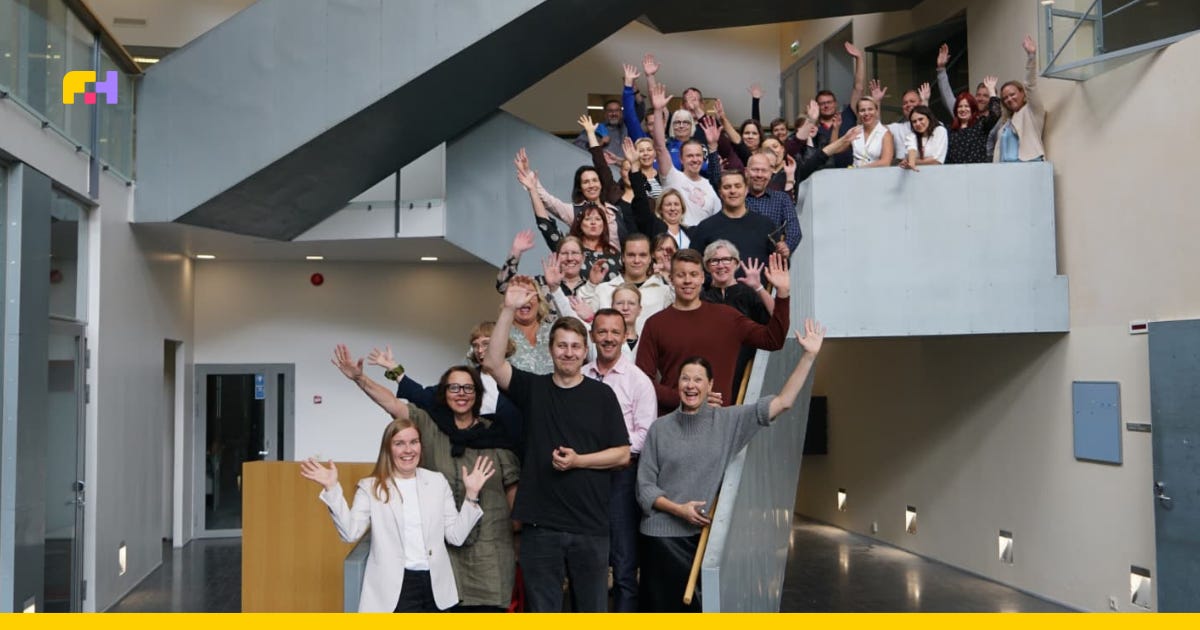
When Anastasiya Markvarde was approached by Business Turku to launch a women’s health accelerator in Finland, she could hardly have anticipated the response. Within weeks, the inaugural Eir programme attracted 335 applications from 58 countries, from early-stage biotechs to established businesses working across fertility, menopause, cancer diagnostics and therapeutics, all competing for just 15 places.
The programme has also assembled an international team of advisors, including Jessica Federer, managing director of The Women’s Health Fund and former chief digital officer at Bayer; Mark Gannott, health economist and CFO of Suncoast Ventures; and Sammeli Liikkanen, founder of PalsaIQ and former director of digital medicine at Orion.
“This year’s applicants are outstanding. The science is meaningful. The market impact is clear. I’m looking forward to working with these founders,” says Federer, Eir’s lead programme advisor.
For Business Turku, which funds the programme, Eir is also part of a wider ambition to establish Finland as an international centre for women’s health innovation, building on the country’s strengths in life sciences, clinical research and health data.
And for Markvarde, the response has reinforced the need for the kind of specialist support Eir was created to provide.
“We are one of the few accelerators focused specifically on science-based, deep-tech companies in women’s health,” she says.
“We connect companies with Finnish biobanks, having partnered with FinBB, and offer some of them an opportunity to run a pilot with a pharma company, our partner Chiesi.”
Other partners include diagnostics provider SYNLAB, which offers access to laboratory expertise, and international law firm DLA Piper, which provides legal support.
The six-month programme is free for participating companies and takes no equity. Its focus is on helping founders move from promising science towards clinical validation and commercial opportunities, with access to Finland’s hospitals, biobanks and research institutions.
What makes a women’s health startup stand out?

The scientific depth and international reach of the applications has impressed Gannott, Eir’s head of portfolio insights.
“We are seeing far more therapeutics, advanced diagnostics, biomarkers, reproductive biology, clinically useful AI and precision medicine, and strong companies coming from Europe, North America, Africa and Asia,” he says.
Eir advisor Liikkanen has been especially interested in founders who have acknowledged what they didn’t yet know.
“What makes a company stand out for me is when the deck says what is uncertain or not yet solved. Acknowledging risk reveals the amount of calm intelligence behind the proposal.”
Common mistakes, he says, include presenting published research as original findings, overstating unmet medical needs or proposing timelines that didn’t match the budget.
The commercial case also needs to be convincing. As Liikkanen puts it: “Science and business. Yin and Yang.”
For Gannott, who also joined the Eir team as Head of Portfolio Insights, the applications this year have also reflected how much the sector is evolving.
“The women’s health ecosystem is much more mature than it was five years ago, so founders now need more specialized support earlier,” he says.
“That means stronger translational strategy, better clinical evidence, reimbursement and health-economics thinking, regulatory planning, pharma and payer access, and a financing strategy that matches the development path.”
This is exactly the kind of specialist expertise that Eir set out to bring together. And with companies working across such different areas of women’s health, the programme is tailoring its support to each startup’s needs.
The cohort will come together in Helsinki during Slush week, with visits to HUS, the New Children’s Hospital and the Finnish Institute for Molecular Medicine (FIMM), alongside meetings with researchers, biobanks and industry experts.
Introducing Eir’s inaugural cohort
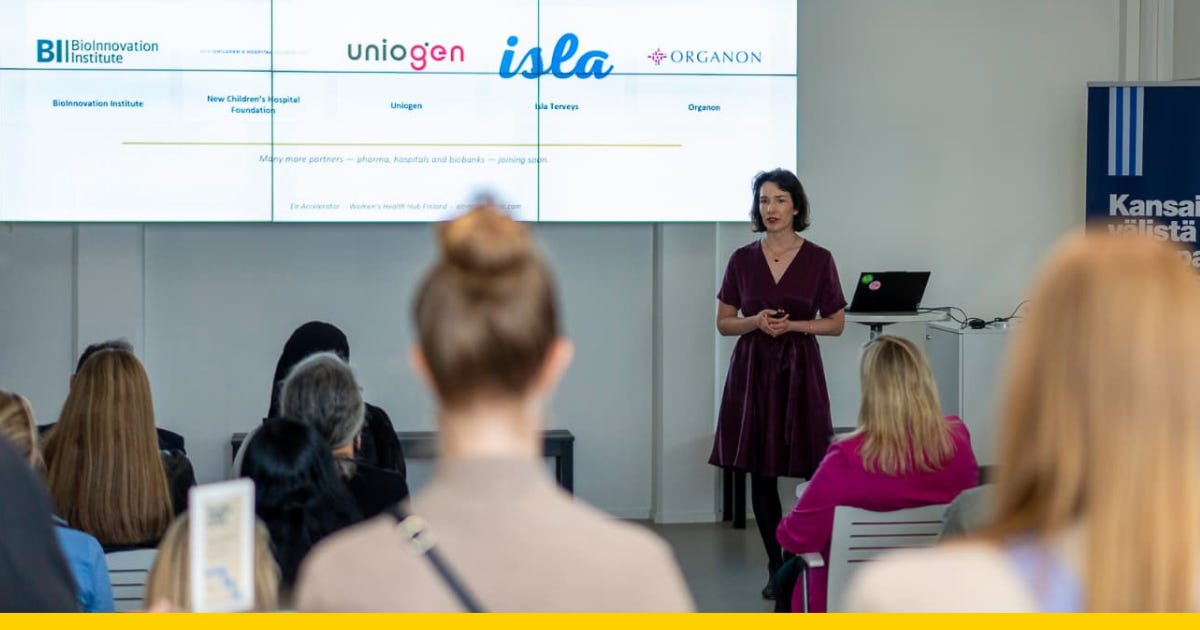
So who made the cut? The 15 companies selected for Eir’s first cohort range from early-stage biotechs developing new treatments to established businesses already bringing women’s health products to market.
Let’s meet all 15…
Rethinking screening and diagnosis
Hong Kong-based WomenX Biotech is finding new uses for menstrual blood in women’s health diagnostics. Its CE-marked PadX sample collection pad has launched in Hong Kong, where more than 1,000 kits have been sold for HPV testing. Now expanding across Asia-Pacific and exploring European opportunities, the company has ambitions to use menstrual blood to explore tests for other cancers, preterm birth risks and vaginal microbiome conditions.
In the Netherlands, decipHER women is developing a blood test taken during pregnancy that could predict a woman’s risk of developing depression before or after childbirth, potentially allowing earlier intervention. Combining biological markers with machine learning, the company is working with Erasmus MC through a €700,000 research consortium to validate its initial findings in a study involving 200 women.
New York-based medara is using AI to help identify women at greater risk of developing breast cancer. Its technology combines medical imaging and screening history to produce personalised risk assessments, potentially helping doctors tailor screening to individual patients. The NIH-funded company is preparing for clinical integration.
Finland’s Thestra is developing a test that could help doctors identify which cancers are most likely to spread, allowing treatment to be better matched to individual risk. Its AI-powered EPLINEX technology analyses existing tumour tissue samples, with the company now preparing larger clinical studies, including in breast and cervical cancer, and working towards commercial launch.
And Brazil’s Huna is using AI to analyse existing blood test results and identify patients who should be prioritised for cancer screening, including breast and cervical cancer, without requiring additional tests. Already deployed through Brazilian public health systems and private health plans covering more than one million people, the company is looking to Finland to validate its technology ahead of European expansion.
Developing new treatments and technologies
Boston-based Metri Bio, a Yale University spinout, is tackling one of the biggest barriers to developing better endometriosis treatments: researchers have struggled to recreate the disease accurately in the laboratory. Using human endometrial tissue, the company hopes to identify new drug targets and ultimately develop more effective, non-hormonal treatments. It raised $5 million in pre-seed funding in 2025.
In Finland, ATB Antivirals is developing a topical treatment for HPV-related disease that targets the virus itself, rather than simply treating visible lesions. The company has secured nearly €2 million in development financing and is working towards its first human trial in 2027.
Paris-based Optimovo is developing FERTILINE, an additive for IVF laboratory media designed to improve egg maturation and chromosomal quality. Its approach is supported by published proof-of-concept research involving more than 1,600 donated human eggs, although further studies are needed to establish whether it improves fertility treatment outcomes.
US-based NEXT Life Sciences is developing a treatment for endometriosis, a leading cause of chronic pain and infertility in women. The company is led by Dr Darlene Walley, an experienced life sciences executive who has helped raise more than $100 million in funding and overseen successful exits.
And the UK’s Yuthera is working on a wearable patch designed to provide drug-free relief for women living with endometriosis and severe period pain, while helping them track and communicate symptoms to doctors. The company is building its first prototype and preparing for clinical testing, with plans to launch initially in the UAE before expanding into Europe.
Taking innovation into the real world
Denmark’s MagCath secured CE marking in June 2026 for Obtinu, a catheter device that uses a magnetic valve to give women with urinary incontinence greater control over bladder emptying. Now preparing its first market introduction, the company is also exploring applications for women with neurogenic bladder dysfunction, including those with multiple sclerosis and spinal cord injuries.
In India, Periwinkle Technologies is bringing cervical cancer screening closer to patients with its portable, AI-enabled Smart Scope CX system, which can support screening and triage in a single visit. The technology has received US FDA clearance, and its AI has been developed using more than 500,000 images. Already operating internationally, the company is exploring expansion into Europe.
Australia’s Metluma is taking a ‘slow medicine’ approach to menopause care, giving doctors more time to understand symptoms, investigate other causes and review treatment over time. Combining clinical consultations with digital tools and ongoing support, the company reports having cared for more than 2,000 patients and is planning international growth.
And in Kenya, Misala Med is bringing new approaches to vaginal health into African markets, starting with an AI-enabled point-of-care test for bacterial vaginosis, a common but often overlooked condition. Rather than developing every technology from scratch, the company licenses scientific innovations and adapts them for local healthcare systems, with plans to expand into other diagnostics and treatments.
Finally, EloCare, is developing a smart cooling bracelet designed to provide on-demand, drug-free relief from menopausal hot flashes. Unlike wearables that primarily track symptoms, its jewellery-inspired device aims to relieve them, with an accompanying app that personalises cooling. User testing is beginning ahead of a planned consumer launch in Asia in 2027, alongside further clinical research and healthcare partnerships.
What can an accelerator actually change?
With more women’s health accelerators to choose from, how should founders decide which programme is right for them?
Federer recommends speaking to founders who have already completed a programme to understand what they actually gained from it.
“Some take equity, some invest, some are helpful and others are just a name,” she says.
As a new programme, Eir doesn’t yet have a track record for founders to assess. Instead, it has sought to attract companies through the experience of its mentors and advisors, access to Finland’s research and clinical infrastructure, and international industry and investor connections.
Gannott advises starting with what the business needs to accomplish in the next six to 12 months, whether that’s preparing for clinical trials, navigating regulation or expanding into new markets.
And an accelerator isn’t necessarily the answer for everyone. Companies still working through fundamental research may be better served by an academic laboratory or specialist advisor, while those with enough scientific or commercial progress can benefit from more concentrated support.
Liikkanen has another piece of advice for founders:
“Are you looking to develop your solution together with the programme’s stakeholders and ecosystem, or are you just in it for the next cheque? If it’s the latter, most accelerators will disappoint you.”
He also recommends checking whether mentors have actually taken women’s health products through regulation, and whether investors in the network have backed companies in the sector rather than simply expressed interest.
Eir doesn’t invest directly in participating companies, instead connecting them with a network of more than 25 international venture capital investors. This allows it to work with companies at different stages without limiting participation to those suited to a particular investment ticket.
For Eir, the test now will be what its first 15 companies achieve over the coming months. With the next cohort due to open in June 2027, their experiences will also help shape the programme for the founders who follow.
“We hope to leverage the best of both worlds - Finland’s data and scientific assets and international expertise and capital - to help our startups in a meaningful way,” says Markvarde.
For now, though, she’s taking a moment to appreciate how far the programme has already come.
“Next week we kick off Eir at Slush, and seeing 15 startups from 6 continents traveling to Finland for our program makes me very glad about what we have been able to achieve so far,” she adds.
The waiting list for Eir’s next cohort is now open: Apply now.
This article is part of a paid partnership with Eir Accelerator.