


For a condition that affects up to one in five women, polycystic ovary syndrome (PCOS) has seen no new treatment options in more than seventy years. Most women who seek help are still handed the same prescription — the contraceptive pill — and told to come back when they want to get pregnant.
“It’s totally unacceptable,” says Claire Dixon, CEO and co-founder of Neuraura, a Canadian startup developing what could become the first new, non-pharmaceutical treatment for PCOS in decades.
“You’d never dream of saying that to someone with diabetes or arthritis. But that’s the standard response for PCOS.”
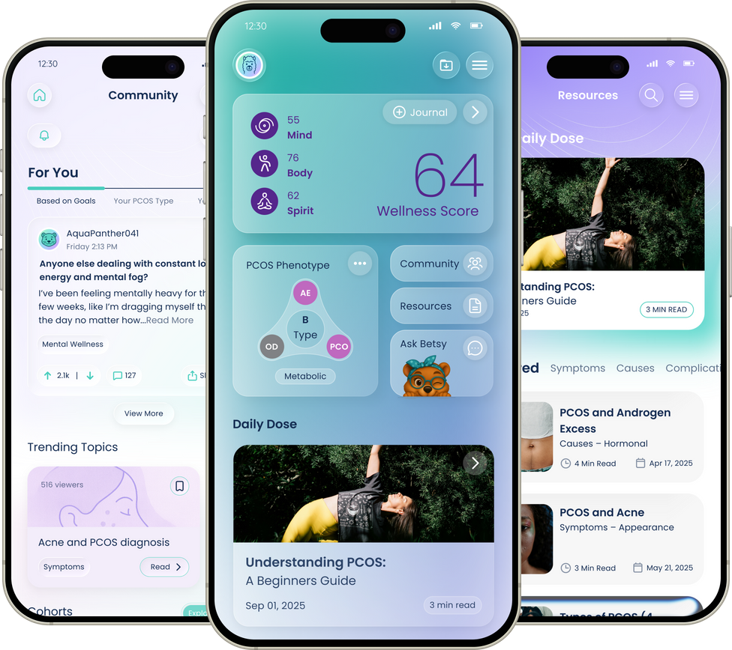
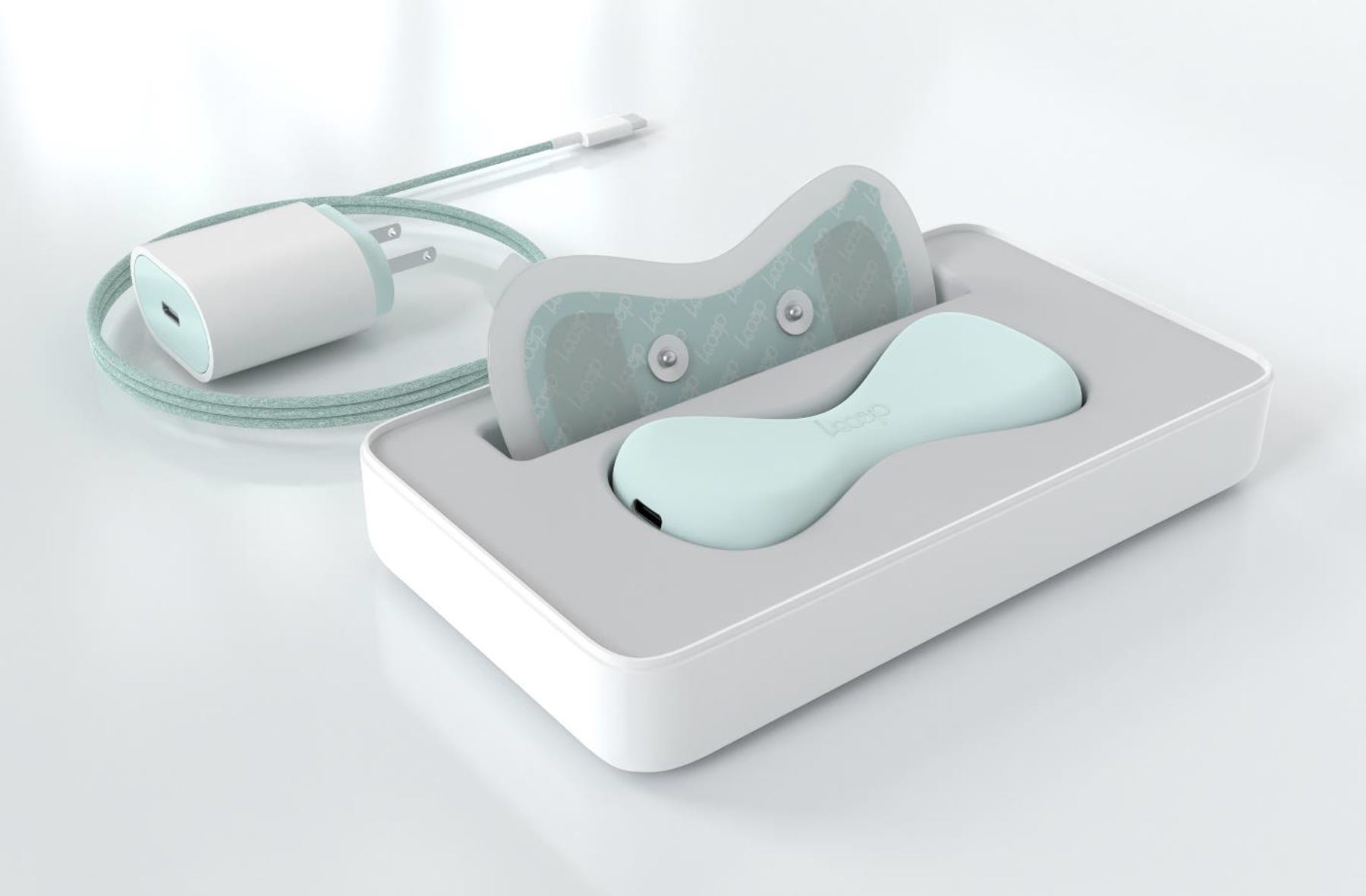
LoOop, Neuraura’s women’s health brand, is combining a digital self-management platform with an at-home neuromodulation device to help people manage PCOS more effectively. While no regulatory clearance has been secured yet, the app offers science-backed education, symptom and medication tracking and phenotyping insights, while the device delivers targeted low-frequency electrostimulation to regulate glucose, improve menstrual cycles and enhance ovarian blood flow — bringing a clinical-grade intervention into the home for the first time.
And behind that innovation lies a bigger mission: reframing PCOS as a whole-body condition, not just a reproductive issue. It’s linked to almost every major cause of female morbidity and mortality—from cardiovascular disease to metabolic syndrome—and disproportionately affects marginalised and under-represented groups, including trans and low-income communities.
“Information is power,” she says. “If people can better leverage the health system, that’s the first step.”
From neurotech to women’s health
Neuraura didn’t begin in women’s health. Spun out of the University of Calgary in 2017, Claire and her co-founder Pierre Wijdenes first focused on brain-machine interface technology until one conversation changed everything.
“One of our interns schooled us on PCOS,” Dixon recalls. “And for me, it hit home. I’d spent almost a decade in fertility treatment, had recurrent pregnancy loss, was later diagnosed with ADHD — and nowhere in that whole journey had any doctor mentioned PCOS.”
That moment of anger and recognition set the company on a new path. Inspired by research from scientist Dr Stener-Victorin, who used acupuncture-based electrostimulation to treat PCOS, the team validated they could deliver the same therapy non-invasively.
Building the platform for self-advocacy
As they spoke to hundreds of women, the team realised a new treatment alone wouldn’t solve the problem. “People weren’t just looking for a therapy,” she says. “They were looking for understanding — a way to manage their condition day to day.”
That insight led to myLoOop, a digital platform launched in alpha this autumn with a beta due later this month. The app blends symptom tracking with reflective journaling, using clinically validated scales so women can describe symptoms in language clinicians recognise. “If someone says, ‘I’m bleeding through a pad in less than an hour,’ that’s a clinical trigger. We want people to have that language.”
It also hosts over 600 pages of evidence-based content, supported by Betsy the Beaver, a closed chatbot trained only on verified sources. “Ask the internet about PCOS and half of what you find is wrong,” Dixon says. “We wanted something reliable.”
Users can also track medications and supplements to flag possible interactions — a common blind spot. “We’re not replacing doctors,” she says. “We’re helping people advocate for themselves and get better outcomes.”
Changing the care dynamic
Many women spend years — sometimes decades — trying to get a PCOS diagnosis, only to be told nothing new can be done.
“One woman told me it took her twenty years,” Dixon says. “And when she finally got the diagnosis, her doctor said, ‘I can offer you nothing different.’ That’s heartbreaking.”
By combining a therapy device with a digital platform that helps women communicate what they’re experiencing, LoOop hopes to reset that dynamic. The team plans for the hardware to first reach market under an FDA pain-management code while larger PCOS-specific studies continue. A small pilot is already under way and the company expects to file for clearance in 2026.
A new approach to long-overlooked care
Neuraura’s approach combines evidence-based technology with a mission to rewrite how PCOS is managed as a long-term metabolic and hormonal condition. The device and app are designed to complement, not replace, existing treatments.
“Our goal is to make PCOS management more proactive, not just reactive,” Dixon says.
Likewise, she sees an opportunity to relieve the strain on doctors too since they have limited time to make diagnoses.
“There are lots of overlapping symptoms with PCOS and other women’s health conditions and doctors just don’t have solutions to give patients - most get less than an hour of training on PCOS typically.
“I talked to a dementia doctor and he had no idea that PCOS was an underlying risk factor for dementia but said it made so much sense thinking about his patient population”
LoOop plans to distribute through online pharmacies and patient-advocacy networks, and it’s already supported by more than 40 affiliate partners. Europe is likely to lead adoption. “Single-payer systems take a lifetime view,” she says. “They recognise PCOS as a risk factor that touches every part of women’s health — not just fertility.”
The company is now preparing for its seed round: $2 million in early 2026 to fund pilot data and FDA clearance, followed by a $4 million expansion round.
The mission remains simple: to close seventy years of inaction.
“We have the first new treatment option for PCOS in seventy years,” Dixon says. “Now we just need the support to get it to market and get it done.”
You can sign up for the beta version of MyLoOoP at GetLoOoP.com
Use code LOOOPEARLY to access a special discount for the first 1,000 subscribers
Neuraura is one of nine startups selected for the 2025 Canadian Technology Accelerator (CTA) FemTech program organised by the Government of Canada. This program is free for the selected participants, and it provides access to mentors, a peer network, masterclasses delivered by subject matter experts on topics like the market landscape, IP considerations, fund raising, regulatory issues, public relations, and more, and a dedicated visit to the UK and France to connect founders with potential partners and customers. This article is part of a partnership with the High Commission Canada in the UK.