


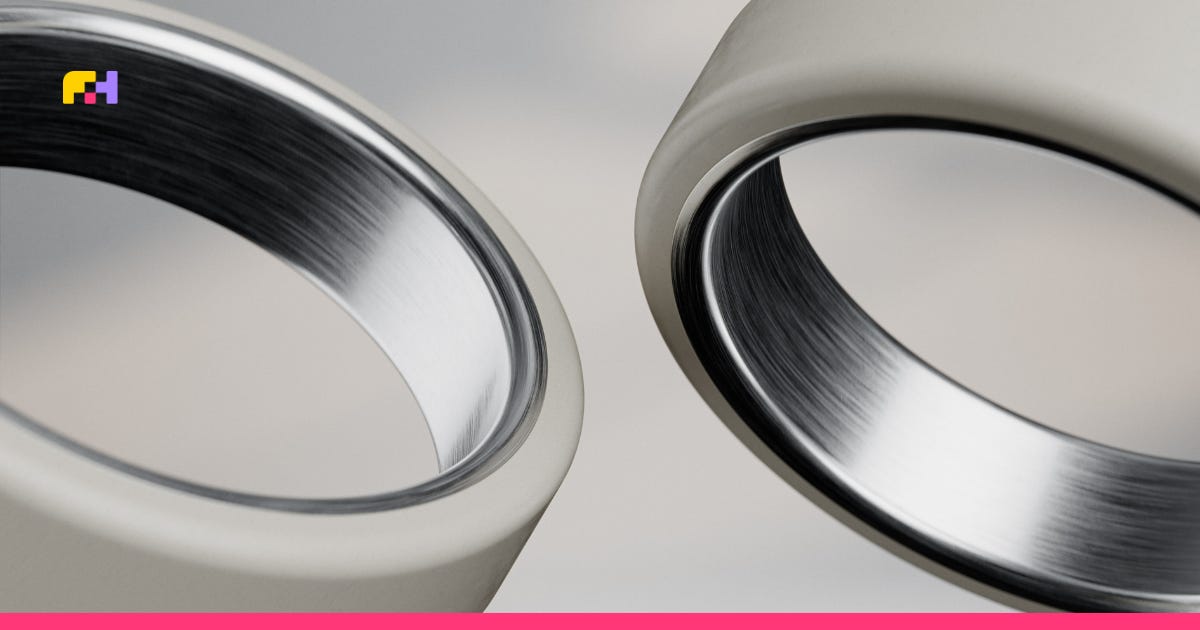
Natural Cycles has launched its first smart ring, expanding its range of proprietary wearables as it looks to make temperature-based digital contraception more accessible without requiring users to purchase an expensive third-party device.
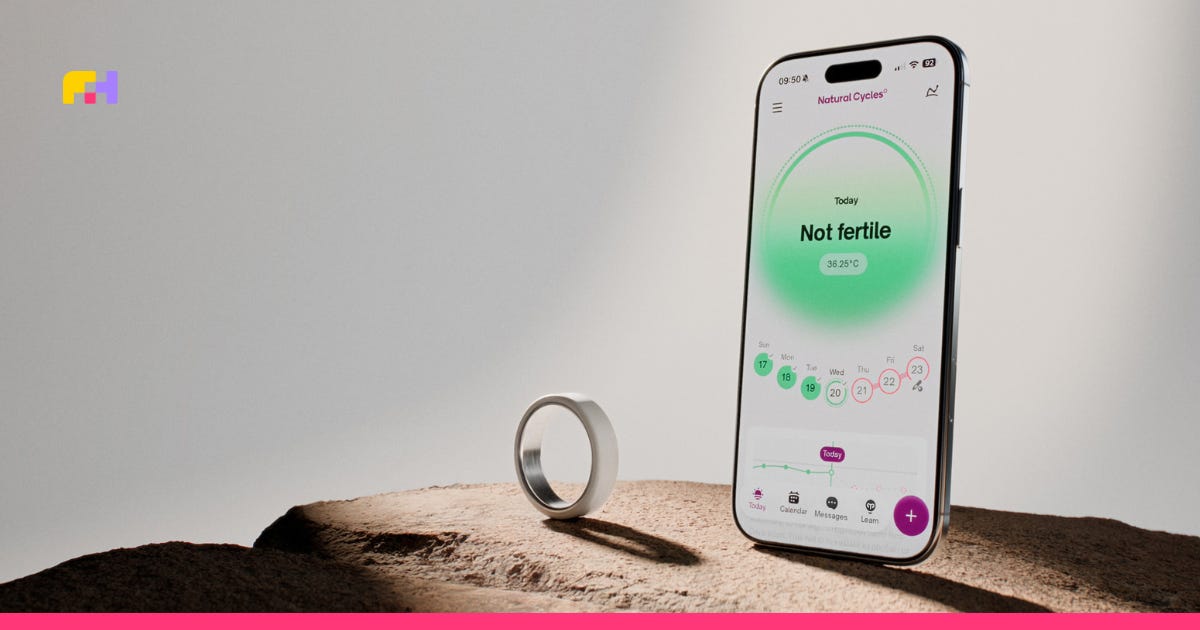
The NC° Ring, available from 17 November in Europe, Canada and Australia, measures temperature overnight and syncs with the Natural Cycles app, which uses temperature and menstrual cycle data to calculate a user’s daily fertility status.
“We’ve spent more than a decade building technology around how women’s bodies work,” said Dr Elina Berglund Scherwitzl, co-founder and CEO of Natural Cycles.
“Women have different preferences for what they wear and what feels comfortable, especially at night. NC° Ring is designed for women’s hands, from its weight to its shape. It’s the smart ring that puts women first.”
Weighing as little as 1.9 grams, the ring is described by Natural Cycles as the lightest smart ring on the market. It offers up to 14 days of battery life, a slim 5.8mm profile and temperature and movement sensors that operate without emitting light during sleep.
For a limited period, the device is being included at no additional cost with a new annual Natural Cycles subscription, an approach intended to remove one of the financial barriers to wearable-based contraception.
The launch comes as wearables have become central to how Natural Cycles users engage with the app. According to the company, approximately 80% of its active users now measure their temperature using a wearable, including devices from third-party partners and Natural Cycles’ existing NC° Band.
Accessibility and reproductive data privacy
Natural Cycles has spent several years integrating its app with established wearable platforms, beginning with Oura in 2022 and subsequently adding Apple Watch, Garmin and WHOOP.
But those partnerships don’t necessarily meet the needs of every user.
“Not everyone has an Oura Ring or an Apple Watch,” Berglund told FutureFemHealth ahead of the launch. “So we want to be able to provide a wearable for those that don’t want to buy a separate wearable, and we want to do so with the women’s body and needs in mind.”
Affordability has been a particular focus for the company’s hardware team, which has been challenged to bring manufacturing costs down. Berglund said work is already underway on next-generation devices that could potentially reduce costs further.
And privacy is another consideration. Berglund said some users prefer not to share their reproductive health information across multiple platforms, making a wearable developed by their contraceptive app provider an attractive alternative.
Natural Cycles plans to continue working with established wearable manufacturers. Berglund said the company does not see its own devices as direct competitors to general-purpose wearables, but as another option for users with different needs and preferences.
Making contraception easier to use
Developed in-house, NC° Ring is backed by two US patents covering its manufacturing process and charger design.
Alongside temperature measurement, the device offers sleep and activity tracking within the Natural Cycles app, although these features are optional and separate from its contraceptive function.
Berglund told FutureFemHealth that this choice was deliberate, noting that some users, particularly those in the postpartum period, can find sleep tracking stressful rather than helpful.
Making temperature measurement easier has long been a priority for Natural Cycles. Unlike general wellness wearables, where missing a night’s data might mean losing some sleep or activity insights, regular temperature measurement is important to using its contraceptive method effectively.
Users can measure their temperature with a compatible wearable or thermometer. Regular measurements help the algorithm identify fertile and non-fertile days, while missing data may result in more days being classified as fertile. Natural Cycles reports 93% effectiveness with typical use, which accounts for imperfect use.
Berglund said the company began exploring wearable measurement around nine years ago, recognising that removing the need to manually measure temperature each morning could make the method easier to follow.
“The more seamless we can make the measurement experience for our users, the more sticky our product will be,” she explained, adding that continuation is particularly important for contraception.
The company also conducts clinical studies to assess whether compatible wearables meet the accuracy requirements of its regulated contraceptive method.
New opportunities for research and product development

Developing its own wearables also gives Natural Cycles greater control over how temperature measurements are collected, with potential benefits for research and future product development.
The company says it has now published 30 peer-reviewed studies and uses anonymised user data for research where consent has been provided.
“The more granular data on women’s reproductive health, their cycle, their bodies we can get, obviously the more exciting science and research we can do,” she said.
Berglund also pointed to opportunities to explore additional biomarkers relevant to women’s hormonal health through future hardware development, although no specific products have been announced.
The NC° Ring launch is accompanied by NC° Band 2, an updated version of the company’s wrist-worn device, available exclusively in the US.
Founded in 2013 by physicists Dr Elina Berglund Scherwitzl and Dr Raoul Scherwitzl, Natural Cycles has more than six million registered users worldwide. Its app was the first contraceptive app to receive FDA clearance in the US, and the company now offers support across several reproductive life stages, including contraception, pregnancy planning, pregnancy, postpartum and perimenopause. Natural Cycles has received six FDA clearances and holds regulatory authorisations in markets including Europe, Canada and Australia.
Bundling the ring into the annual subscription is the interesting move. With about 80% of active users already on a wearable, the ring mostly serves people who never bought an Oura or Apple Watch, and keeping temperature data inside one app is a clear privacy point. Renewal rates after the first year will show whether the hardware cost pays back.