


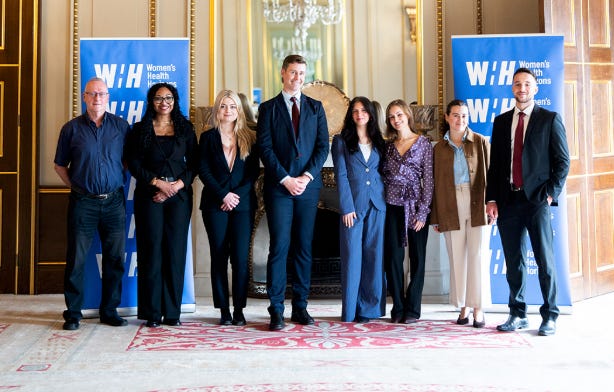
Almost a year ago, FutureFemHealth sat down with Women’s Health Horizons (WHH) ahead of its inaugural Boston summit. At the time, Founder and CEO Jason Clark described an ambitious plan to build a global platform focused on moving women’s health beyond repeatedly discussing the same problems and towards action.
A lot has happened since.
WHH has now convened more than 2,500 delegates through events in Boston, Copenhagen, London, New York and Berlin. Its global Advisory Board has grown to more than 50 members, and the organisation is preparing for its busiest period yet, with summits in San Francisco on September 1, London on September 22 and Washington, D.C. on October 7.
It is also expanding beyond events with the launch of WHH PRO, a year-round professional platform bringing together industry intelligence, investors, companies, opportunities and expertise across women’s health.
FutureFemHealth caught up with Jason Clark to discuss what WHH has learned from thousands of conversations across the ecosystem, why he believes fragmentation is becoming one of the sector’s biggest challenges, and what needs to happen next.
Anna: When we spoke last year, WHH was about to hold its first major summit in Boston. What has happened since?
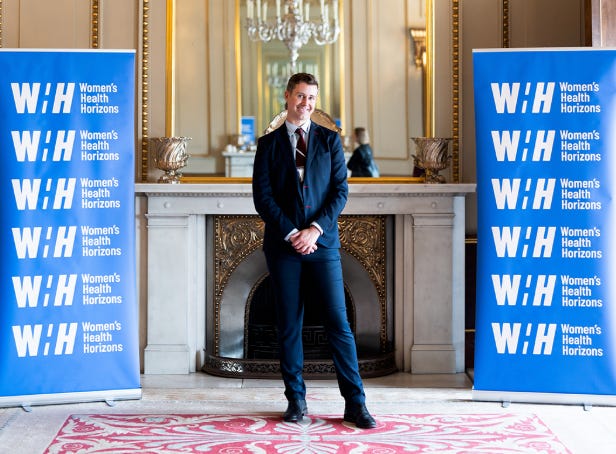
Jason Clark: It has been an extraordinary year.
When we last spoke, a lot of what we were talking about was still an ambition. We believed there was an opportunity to build a genuinely global platform for women’s health, but ultimately we had to go out and prove that people wanted it.
Since then, we have hosted events in Boston, Copenhagen, London, New York, and Berlin and welcomed more than 2,500 delegates. Our Advisory Board has grown to more than 50 people globally, and we’ve had thousands of conversations with founders, investors, clinicians, researchers, policymakers, advocates, healthcare leaders and industry.
We’re now heading into our biggest period yet: San Francisco at UCSF Mission Bay on September 1, London at the Royal College of Obstetricians and Gynaecologists (RCOG) on September 22, and Washington, D.C. on October 7.
I’m incredibly proud of the growth, but the most valuable thing we’ve gained isn’t the number of events or delegates. It’s what we’ve learned from all of those people.
Anna: What has surprised you most?
Jason: How much exists — and how difficult it can still be to find.
When I first entered women’s health, I thought one of the biggest challenges was simply getting more people interested in the sector. I don’t think that’s the whole problem anymore.
There is extraordinary innovation happening. There are specialist investors. There are clinicians with decades of expertise. There are researchers doing remarkable work. Pharma is paying attention. Employers are becoming increasingly engaged. Governments are developing strategies. There is more capital, talent and entrepreneurial energy entering women’s health.
But the market remains incredibly fragmented.
A founder might be looking for an investor with a very specific thesis. An investor might be trying to understand which companies are emerging in a particular category. A researcher might need commercialisation expertise. A startup might need a regulatory specialist. A corporate innovation team might want to understand what is happening in an emerging area of women’s health.
Often, the right person exists. They just haven’t been introduced yet.
After thousands of conversations, that has become one of the clearest opportunities we see. The ingredients for progress increasingly exist; the infrastructure connecting them often does not.
Anna: So has your view of what WHH needs to become changed?
Jason: Absolutely.
We started with a very simple belief that progress comes from connection. I still believe that completely. But we’ve realised that connection needs infrastructure around it.
An event can create an extraordinary moment. You can have a founder meet an investor, a researcher meet an industry partner or a healthcare leader discover a company they didn’t know existed. But then everyone gets on a plane the next morning. The ecosystem doesn’t stop between conferences.
So our thinking has evolved from simply asking, how do we convene this ecosystem? to asking, how do we make the ecosystem easier to navigate every day of the year?
The way I describe our approach now is: listen, convene, learn, build.
And that’s really where WHH PRO has come from.
Anna: Tell us about WHH PRO. Why launch a professional platform now?
Jason: Because the community effectively told us to build it.
WHH PRO wasn’t conceived in isolation. It is the result of thousands of conversations across our events, advisory network and wider community.
We kept encountering the same fragmentation. So we’ve created a year-round professional platform bringing together the people, companies, capital, intelligence and opportunities shaping women’s health.
Members can access curated industry intelligence, investor and company directories, startup discovery, jobs and professional opportunities, projects, advisors and services, events and community features.
It’s intended for the whole professional ecosystem: founders, investors, operators, clinicians, researchers, advisors, service providers and corporate innovation teams.
Our events create high-trust relationships in person. PRO is about creating the infrastructure around those relationships for the other 364 days of the year.
And we’ve priced full membership at €99 per year because accessibility is important to us.
Anna: You’ve also recently reduced ticket prices for WHH events. Why make that decision when the cost of running events is increasing?
Jason: It’s probably one of the decisions I’m proudest of.
Everything involved in producing events seems to be getting more expensive — venues, catering, travel and production. We decided to move our prices in the opposite direction.
If we genuinely believe women’s health progresses by bringing different parts of the ecosystem together, then we cannot build rooms that are accessible only to people working for organisations with large conference budgets.
We need the early-stage founder in the same room as the pharmaceutical executive. We need researchers meeting investors, clinicians meeting technology companies, advocates meeting policymakers and early-career professionals having access to people who have spent decades building this industry.
Being independent gives us the flexibility to make decisions like that. Of course, we need to build a sustainable organisation, but we’re also thinking about the long-term value of the ecosystem we’re creating.
There is something contradictory about trying to address inequity while making participation unnecessarily inaccessible. Access shouldn’t be an afterthought in an ecosystem trying to solve inequity.
Anna: You’re about to host three major summits within a relatively short period. Why San Francisco, London and Washington?
Jason: Because they represent three very different pieces of the same puzzle.
One of the biggest things we’ve learned globally is that women’s health cannot be treated as a single homogeneous market. Different healthcare systems have different barriers. Different markets have different capital environments, regulatory structures and strengths.
So rather than taking exactly the same conference around the world, we’re increasingly asking what question matters in that particular market.
For San Francisco, London and Washington, those questions form a natural progression: How do we build and scale innovation? How do we integrate it into healthcare systems? And how do we create the policy environment that allows it to reach people?
Anna: Let’s start with San Francisco. What’s the question you’re exploring there?
Jason: Our San Francisco Summit at UCSF Mission Bay on September 1 is built around one question:
How do we scale women’s health innovation without scaling inequality?
We’re entering an incredible period technologically. AI, genomics, precision medicine, reproductive medicine, longevity and digital health could fundamentally change women’s healthcare.
San Francisco is one of the best places in the world to have that conversation.
We are expecting more than 400 leaders and 50+ speakers, with people from organisations including UCSF, Google, Kaiser Permanente, Organon, Silicon Valley Bank, American Heart Association Ventures and Portfolia participating.
But I don’t want us simply celebrating innovation. We need to ask the difficult second-order questions.
Can we personalise healthcare without making it unaffordable? Who funds these technologies? How are they clinically validated? How do health systems adopt them? And who ultimately gets access?
We’ve spent years establishing that gaps in women’s health exist. Now we need to think very seriously about what happens when solutions arrive.
Anna: And then London takes a different approach?
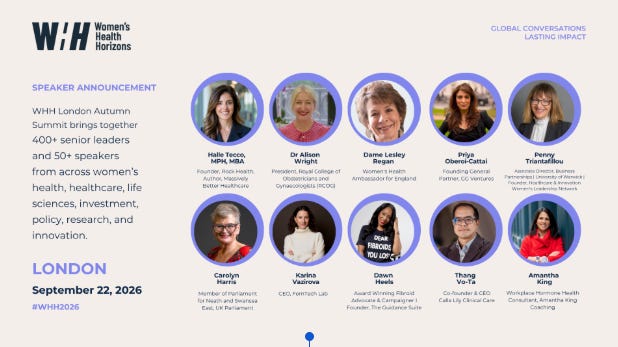
Jason: Yes. London asks:
How do we turn women’s health ambition into system-wide progress?
We’re hosting the summit at the Royal College of Obstetricians and Gynaecologists on September 22, bringing together more than 400 leaders and 50+ speakers.
The UK has enormous momentum around women’s health, but the interesting question now is how that ambition translates into healthcare delivery.
We’re looking at access to OBGYN care, delayed diagnosis, commercialisation, investment, intimate data and AI, England’s Women’s Health Strategy, employer health, prevention, pharmaceutical innovation and international models such as the Nordic Women’s Health Charter.
We have people including Dame Lesley Regan, RCOG President Dr Alison Wright, Halle Tecco, Carolyn Harris MP, Priya Oberoi, Dorothy Chou and Dr Angela Spatharou involved, alongside leaders from clinical practice, the NHS, pharma, investment, advocacy and technology.
That mix is intentional.
I’ve become increasingly convinced that the next era of women’s health will not be delivered by startups, government, pharma, clinicians, investors or advocates independently. Progress happens at the intersections between them.
Anna: Washington, D.C. then brings policy into that picture?
Jason: Exactly.
The premise for Washington is very straightforward: we don’t advance women’s health without government, policy and advocacy.
You can develop an extraordinary product, drug, diagnostic or medical device, but scientific innovation alone doesn’t guarantee impact.
Someone has to approve it. Someone has to reimburse it. Health systems have to adopt it. Clinicians need to understand it. And patients have to be able to access it.
So Washington on October 7 is focused on those mechanisms.
We’re looking at reimbursement and market access, FDA approval through to adoption, research inclusion, medical education, employer coverage, state innovation, federal policy and the international consequences of U.S. funding decisions.
We’re bringing together leaders from organisations including the Society for Women’s Health Research (SWHR), March of Dimes, the Association of American Medical Colleges, the American Medical Association, Organon, Hologic, Northwell Health and NYU Langone Health.
There’s a line that has increasingly shaped how I think about this: a breakthrough that cannot be reimbursed, adopted, taught or accessed is not yet a breakthrough for patients.
Anna: Your Advisory Board has also grown considerably. What role does it play now?
Jason: We now have more than 50 advisors around the world, and that global perspective has become incredibly important.
But I’m less interested in saying, “We have 50 advisors,” than explaining why they exist.
We don’t believe WHH should sit in a room and decide what the women’s health ecosystem needs. We need to listen.
Healthcare systems differ. Markets differ. Patient experiences differ. The challenges facing a founder in London can be completely different from those facing a clinician in California or an advocate in Washington.
Our advisors challenge our assumptions, identify issues we’re overlooking, contribute expertise and help shape our programmes and strategy.
And increasingly, that philosophy extends beyond the Advisory Board. More than 2,500 people have now attended our events, and we’ve spoken with thousands more.
I want WHH to be something that is built with the ecosystem, not simply for it.
Anna: Last year you told FutureFemHealth that WHH was tired of conferences where people discussed the same problems and then reconvened months later to discuss them again. Do you still feel that way?
Jason: Completely. But I would articulate the problem slightly differently today.
I don’t think the answer is that we need fewer conversations. We need better infrastructure around what happens after those conversations.
A conversation should be able to become an investment. An introduction should be able to become a partnership. Research should be able to find a commercial pathway. Expertise should be discoverable by the company that needs it. A promising company should be able to find the right health system, employer or strategic partner.
That is why we are thinking beyond individual events. Events remain incredibly important to us because nothing replaces high-trust human relationships, but around them we are building a global advisory network, WHH PRO, industry intelligence, company and investor discovery, professional opportunities and talent.
Our ambition is not to build another conference company. We want to help build the connective infrastructure of the global women’s health ecosystem.
Anna: Finally, are you optimistic about where women’s health is heading?
Jason: Very. But I think we have to distinguish between momentum and progress.
There is more capital entering women’s health, more innovation, more scientific possibility, more political attention and more corporate interest. Those are all reasons for optimism.
But momentum becomes progress only when something actually changes for women: when research reaches patients, founders find capital, innovation is adopted, policy enables access, expertise reaches the organisations that need it, and conversations turn into collaborations.
A year ago, we said we were tired of repeating the same conversations. After thousands of conversations across the world, I think we’ve learned something important: the challenge isn’t simply starting more conversations. It’s connecting what happens next.
That is the next chapter for Women’s Health Horizons.
Join Women’s Health Horizons
The next chapter of WHH will unfold across three major summits this autumn, bringing together founders, investors, clinicians, researchers, policymakers, healthcare leaders and industry partners working to turn momentum in women’s health into measurable progress.
San Francisco Summit — September 1, 2026
UCSF Mission Bay, San Francisco
Purchase tickets
London Autumn Summit — September 22, 2026
Royal College of Obstetricians and Gynaecologists (RCOG), London
Purchase tickets
Washington, D.C. Summit — October 7, 2026
National Union Building, Washington, D.C.
Purchase tickets
Three cities. Three critical conversations. One shared objective: turning the momentum behind women’s health into meaningful, system-wide progress.
This article is part of a paid partnership with WHH.