


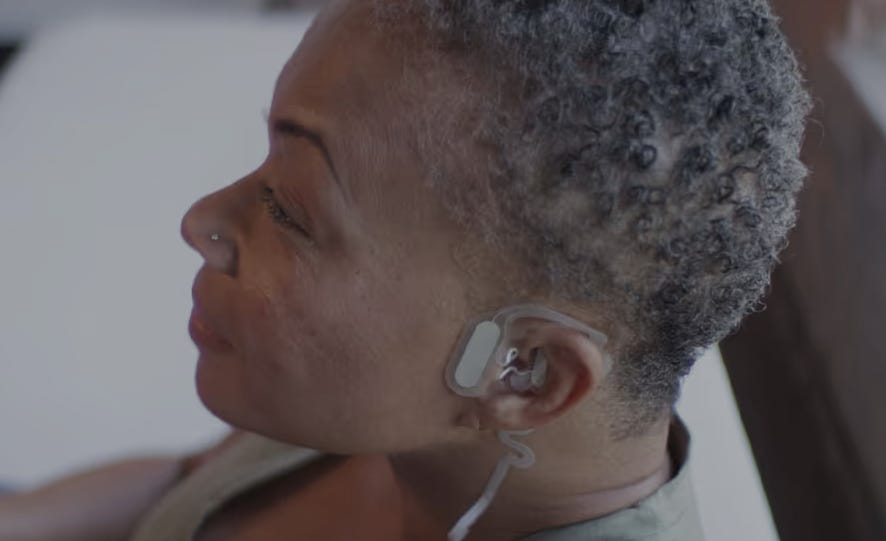
Spark Biomedical has launched a randomized Phase II clinical trial evaluating whether wearable neurostimulation can reduce heavy menstrual bleeding — marking a new step in applying bioelectronic medicine to women’s health.
The LUNA trial will evaluate a non-invasive technique known as transcutaneous auricular neurostimulation (tAN), that stimulates nerves through the ear using a wearable device. The decentralized study will enroll 80 participants across the United States and is designed as a prospective, randomized, double-blind, sham-controlled trial.
Heavy menstrual bleeding (HMB) is one of the most common reasons women seek gynecologic care. Yet treatment options have remained relatively limited for decades, typically centered on hormonal therapies, medications such as tranexamic acid, or surgical interventions including endometrial ablation or hysterectomy.
The LUNA trial reflects growing interest in whether neuromodulation - already used in conditions ranging from epilepsy to chronic pain - could offer a non-pharmaceutical alternative.
“The launch of the LUNA Trial marks an important milestone in advancing women’s health and the field of bioelectronic medicine,” said Navid Khodaparast, PhD, co-founder and chief science officer at Spark Biomedical and principal investigator of the study.
“Through this pivotal trial, we aim to generate the clinical evidence needed to support regulatory pathways and ultimately make this non-pharmaceutical, wearable therapy accessible to more women who currently have limited treatment options.”
Heavy menstrual bleeding can have significant impacts on daily life, affecting school attendance, work productivity and overall quality of life. It is also a major contributor to iron-deficiency anemia worldwide.
This trial builds on Spark Biomedical’s earlier exploration of neurostimulation for menstrual health using ear-based stimulation to target nerve pathways linked to pain, mood and blood flow regulation during the menstrual cycle. While this work has previously been explored in a wellness context aimed at symptom relief, the LUNA trial represents a more rigorous clinical step — designed to generate the data needed to evaluate whether neurostimulation could become a regulated treatment option for heavy menstrual bleeding.
Testing a wearable neurostimulation approach
During the trial, participants will complete two baseline menstrual cycles without treatment, followed by three cycles during which they self-administer neurostimulation during menstruation.
Participants will use the device for a two-hour session each day while menstruating. The study includes both active and sham stimulation groups to assess the therapy’s effectiveness.
The primary endpoint will measure whether a significantly greater proportion of participants receiving active stimulation experience a clinically meaningful reduction in menstrual blood loss compared with the control group. Secondary measures include changes in menstrual cramp pain, symptom burden and quality of life.
Notably, the trial will include adolescents aged 14 to 21 as well as adults up to age 45 — a design choice that reflects the early onset of heavy menstrual bleeding for many patients.
Clinical sites include hospitals affiliated with Oregon Health & Science University, the University of Michigan and Yale University.
“I’m particularly excited that we are going to be including a wide range of ages, including teens as young as 14 years old” said Maureen Katherine Baldwin, MD, MPH, associate professor of obstetrics and gynecology at Oregon Health & Science University.
Participants will also be able to remain on their existing therapies during the trial, allowing researchers to evaluate whether neurostimulation could complement current treatment approaches.
A broader push to rethink menstrual health treatment
Funding for the LUNA trial comes from Wellcome Leap through its Missed Vital Sign program, an initiative designed to dramatically shorten the time it takes for women with heavy menstrual bleeding to receive effective treatment.
Currently, that process can take years. The program’s stated goal is to reduce the time to effective treatment from roughly five years to five months.
The study also reflects a broader shift toward exploring bioelectronic medicine — therapies that use targeted electrical stimulation to influence nerve activity — in new clinical areas. While neuromodulation has become established in fields such as neurology and pain management, its application in gynecology remains relatively early.
Other startups are beginning to explore similar approaches. For example Samphire Neuroscience is developing brain-based electrical stimulation devices aimed at reducing menstrual pain and PMS symptoms.
For Spark Biomedical, the LUNA trial forms part of a broader strategy to apply neurostimulation to menstrual health. Earlier this month, Northwell Holdings — the investment arm of Northwell Health, the largest health system in New York — announced an investment in the company to support the growth of its OhmBody division, which focuses on wearable neurostimulation for menstrual wellness. Spark Biomedical also raised a $15m Series A in April 2025, led by Wave Financing.
While the LUNA trial remains an early-stage study with just 80 participants, it signals growing momentum behind exploring non-pharmaceutical approaches to menstrual health, particularly for conditions such as heavy menstrual bleeding where treatment options have long remained limited.