


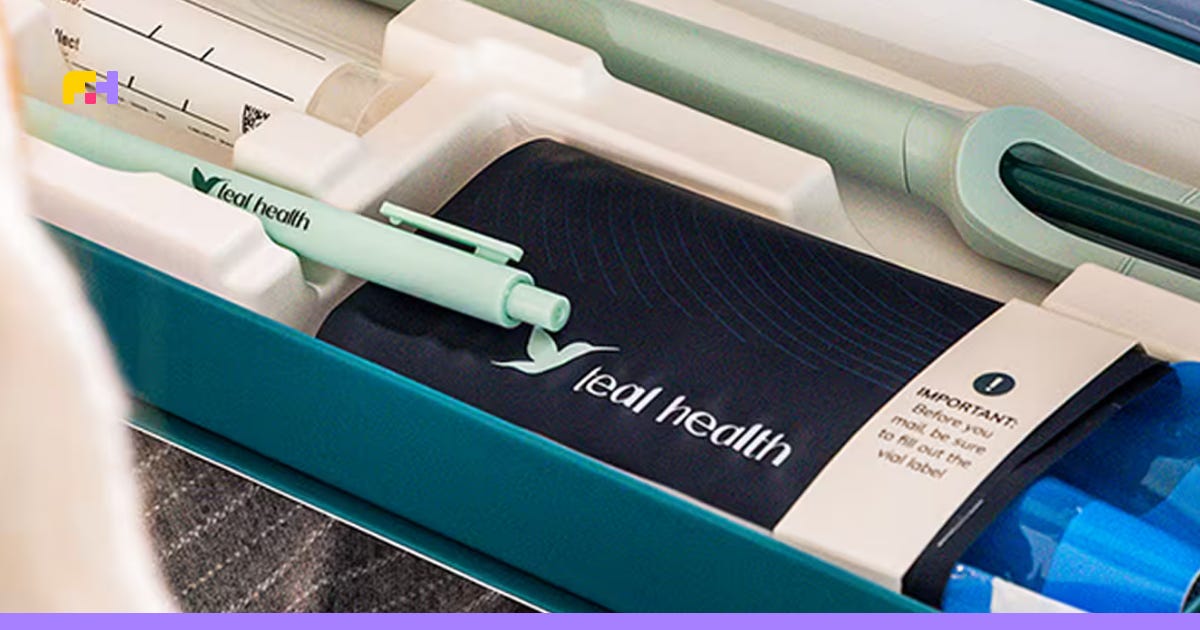
Teal Health has raised $22m in Series A funding to expand access to its FDA-authorised at-home HPV self-collection device for cervical cancer screening across the US.
The San Francisco-based company will use the funding to grow partnerships with insurers, health systems, employers and healthcare providers, as it prepares for broader insurance coverage of self-collected HPV screening from January 2027. The round takes Teal’s total funding to $45m.
The funding will also support further hiring across Teal’s clinical, commercial, technology and operational teams as it scales to serve more women and partners.
“We designed Teal for all women, whether they are behind on their screening or coming due,” said co-founder and chief executive Kara Egan.
“Screening is just too difficult today, whether that is finding an appointment, the time in your day to attend, or the physical discomfort.”
The Series A was led by .406 Ventures, a Boston-based venture capital firm investing in early-stage technology and healthcare companies. Existing investors Emerson Collective, Forerunner, Labcorp Venture Fund and Serena Ventures also participated. Japan’s MPower Partners joined as a new investor, marking its third investment in a women’s health-related company this month, following backing for Sjögren’s drug developer SiccaNova and maternal and postpartum care company Josan-she’s.
Reaching the underscreened
Almost all cervical cancers are caused by persistent infection with high-risk HPV, making screening one of the key reasons the disease is considered largely preventable.
Teal Health’s expansion could be particularly significant for women who are not being reached by existing screening programmes. Teal says 59% of women choosing its service are underscreened, while nearly one in three US women overall is not up to date with cervical cancer screening.
The Teal Wand allows women to collect their own sample for HPV testing at home, without a speculum or an in-person appointment. The service combines home collection with telehealth, digital results and support accessing follow-up care where needed, potentially removing some of the practical and physical barriers associated with conventional screening.
Since receiving FDA authorisation in 2025, Teal says it has screened thousands of women across the US. The company has also been incorporated into national screening guidelines and is working with health systems, providers, employers and payers to make the test available through existing healthcare and benefits channels.
The latest funding will support further expansion of those partnerships, as well as direct-purchase options for individuals and organisations. A significant tailwind for Teal Health is new federal guidelines taking effect in January 2027, which will require most US health plans to cover self-collection for cervical cancer screening without cost-sharing, creating a potential route for at-home testing to move beyond early adopters and into routine preventive care.