


Digital restrictions on women’s health content are continuing to carry a business cost, with 43% of organisations surveyed for new research reporting lost revenue and almost six in ten losing time trying to resolve platform issues.
One women’s health company attributed £2.3m in lost annual revenue to the removal of advertising tracking and targeting tools, despite underlying demand for its services growing by more than 6%. Its online awareness fell by 70%.
The findings come from Censorship Revealed: One Year On, a new report from CensHERship, published in partnership with The Case For Her. Its ongoing global dataset now covers 187 respondents across more than 20 countries and more than 5,000 datapoints, spanning health companies, clinical providers, charities, educators and creators.
“Women’s health is a growing sector, but digital systems critical to business have not kept pace,” said Anna O’Sullivan, co-founder of CensHERship.
“Companies should be able to talk accurately about pregnancy, periods, fertility, menopause, pelvic health and more without being incorrectly classified as sexual or inappropriate. When that affects their ability to advertise, reach customers or describe their products, there is a very real business cost.”
High reports of censorship and digital suppression
The overall prevalence of reported censorship has barely moved: 96% of respondents experienced censorship or suppression in the previous 12 months, compared with 95% in 2025. More than a third experienced ten or more incidents.
But how organisations are responding has changed. 65% now say they self-censor, up from 53% last year, including changing words or images, using vague language or avoiding topics altogether because of concerns about platform restrictions.
“The problem of women’s health censorship has not gone away, but what is particularly concerning is that nearly two thirds of organisations are now changing how they communicate in response,” said Clio Wood, co-founder of CensHERship.
“Women should be able to find clear and accurate information about their bodies online, and organisations should be able to provide it.”
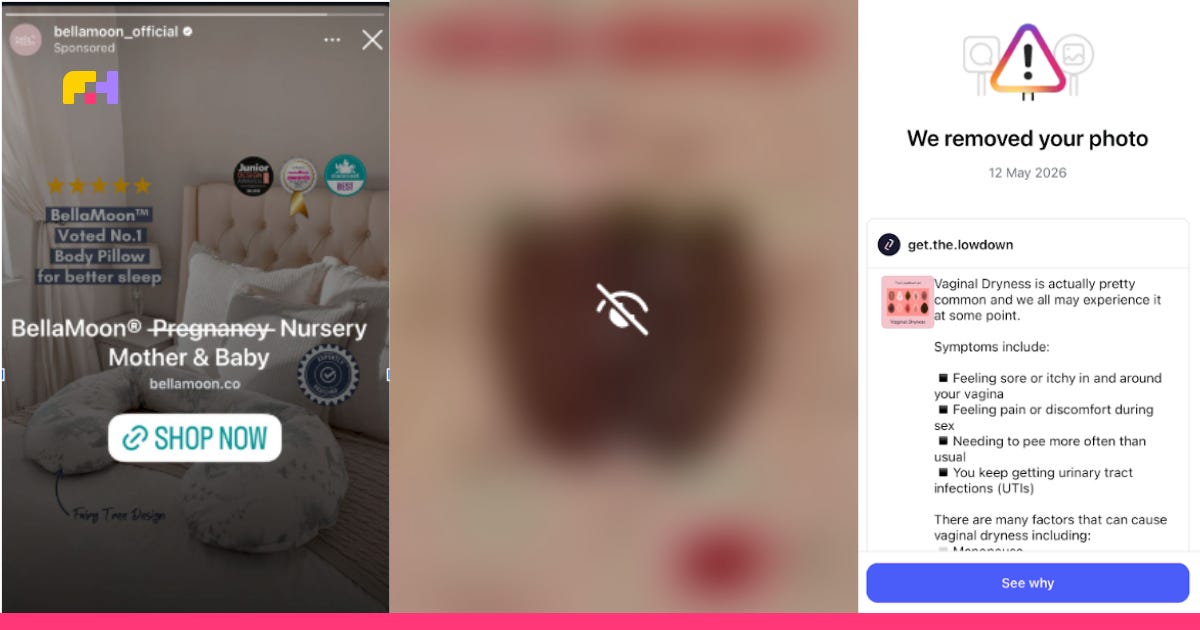
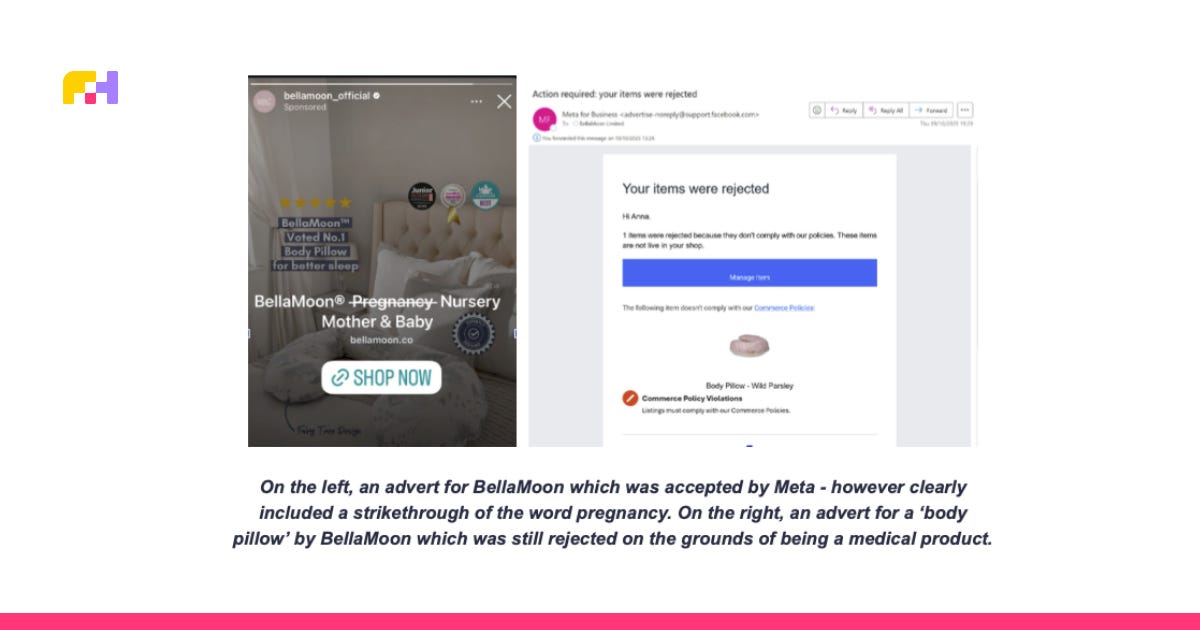
Examples documented in the report include a pelvic health company having a Meta advert for a prolapse product blocked because it used the word “kegels”, and a creator removing “uterus” from her Instagram name following repeated reach restrictions. Pregnancy pillow brand BellaMoon reported spending more than £100,000 on ineffective marketing after its pregnancy support pillow was classified as a medical device, eventually removing the word “pregnancy” from its website as it tried to navigate advertising restrictions.
Across the dataset, 78% had content flagged as inappropriate, 63% experienced restricted reach, 58% had content removed and 45% had an advert rejected.
Appealing those decisions is another challenge. 88% of respondents who rated their experience of resolving issues were dissatisfied or extremely dissatisfied, while just 1.2% were satisfied. Twenty-two respondents had made more than 15 attempts to resolve an issue.
There have been signs of progress. Over the past year, the issue has received greater parliamentary and regulatory scrutiny, while CensHERship has engaged with Meta and TikTok and supported organisations using new appeal routes under the EU Digital Services Act. The House of Commons Women and Equalities Committee cited its evidence in a March report calling for platforms to be held accountable for inappropriate shadowbanning of women’s health content.
CensHERship is calling for better moderation that distinguishes legitimate health information from sexual or adult content, greater transparency around how health content is classified and more responsive appeal mechanisms when decisions are wrong.