
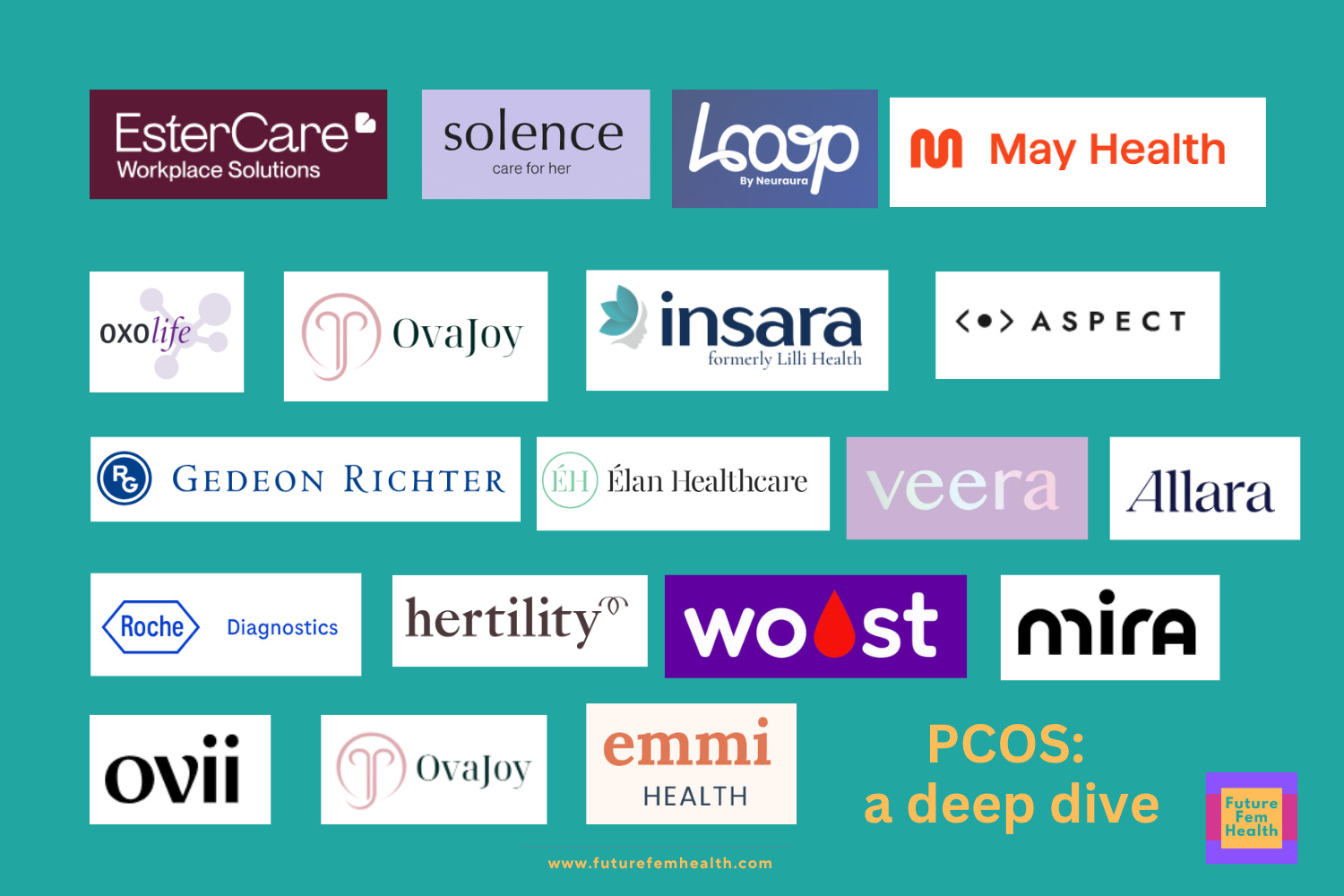
The PCOS opportunity: a deep dive into this unsolved area of women’s health
No cure, a thin pharmaceutical pipeline and huge unmet need. Here are the innovators solving for this space.
After more than a decade of campaigning work spearheaded by the UK charity Verity and Australia’s Monash University, Polycystic Ovary Syndrome is about to be renamed.
It’s a big deal - for patients, providers and anyone who has worked in the space. Because for years, the name itself has shaped how PCOS is understood, diagnosed and treated - and arguably has contributed to the speed (or lack of) progress.
Described by one patient as ‘misleading, medically outdated and emotionally invalidating’, ‘Polycystic Ovary Syndrome’ has never accurately represented PCOS as a condition. It centres the ovary, it suggests cysts and it reinforces the idea that this is predominantly a reproductive issue.
And while PCOS is a leading cause of infertility - affecting up to 80% of women with the condition - it’s never been the full picture.
PCOS is now more accurately understood as a lifelong metabolic and neuroendocrine condition - not just something that shows up when someone is trying to get pregnant. It’s associated with a 2–3x higher risk of developing type 2 diabetes, significantly increased rates of depression, and a substantially higher risk of cardiovascular disease.
The name change is therefore much more than a ‘rebrand’. It’s going to have positive impacts for innovators, investors and operators. It expands the market beyond fertility into chronic disease, brings new types of players into the space, and helps explain why some of the progress around PCOS has been slow to date - and why that is starting to change
In this FutureFemHealth deep dive we explore some of the big questions in PCOS:
what makes PCOS so complex
is it possible to build a single ‘PCOS solution’ - or whether point solutions will win
why innovation has lagged in this area
who are the companies building in this space
what other drivers might finally shift this market
What we get wrong about PCOS - and why it’s difficult to solve
Speak to any PCOS patient and you’ll likely hear variations on the same story:
“They only really cared when it came to having children — at that point it was IVF.”
“In my 20s I was just put on the pill — the go-to ‘solution’ for PCOS.”
“I’ve been left experimenting with nutrition, exercise and supplements to try to manage skin and weight.”
“I was told my symptoms were ‘normal’, or just about my weight - and I felt dismissed when I tried to push for answers.”
Part of the problem is that PCOS does not present in one clear, consistent way.
It can show up as fertility issues, irregular cycles, acne, weight changes, hirsutism, hair loss, insulin resistance and mental health challenges. Diagnosis - most commonly based on the Rotterdam criteria relies on identifying a combination of symptoms rather than a single underlying cause.
Despite affecting around 10-13% of women globally, it remains underdiagnosed, with many women navigating symptoms for years before receiving answers.
At the same time, PCOS cuts across multiple healthcare categories: fertility, metabolic disease, cardiometabolic risk and mental health. Then in practice it is still most often framed and treated as a reproductive condition, or worse, a ‘cosmetic’ one (weight gain and acne).
This is the mismatch.
Because emerging research now points to PCOS as an early-life risk profile with lifelong implications, where earlier intervention could materially change long-term outcomes.
In other words, PCOS often begins earlier - and runs deeper - than the way we currently treat it.
This is what makes PCOS so difficult to solve.
PCOS is not a single, clearly defined disease. Increasingly researchers and clinicians argue that what we call PCOS may be a set of related - and potentially distinct - conditions involving overlapping systems such as insulin resistance, neuroendocrine disruption (including LH/FSH signalling), androgen excess and chronic inflammation.
For some patients this results primarily in infertility, for others dermatological symptoms such as acne or hirsutism, and many, they may show signs of metabolic dysfunction with long-term health implications.
So, if different PCOS subtypes are driven by fundamentally different mechanisms - then a single therapy is unlikely to work for everyone.
But complex science is only part of the story.
The incentives bottleneck
The other complexity for PCOS care - and arguably the most important one - is incentives.
Clinical understanding is starting to catch up. International PCOS guidelines increasingly reflect the condition’s metabolic, reproductive and pyschological dimensions. They are well-established and adoption is expanding (the UK’s National Institute for Health and Care Excellence will adopt them soon).
But all this still doesn’t translate into aligned incentives.
For decades, most PCOS patients have been managed using inexpensive, widely available drugs.
Typically that means:
oral contraceptives to regulate cycles
medications such as metformin to address insulin resistance
anti-androgens to manage symptoms like acne and excess hair growth.
Fertility treatments are then introduced when pregnancy becomes a priority.
These options can help with symptoms, but they do not change the underlying course of the condition.
This creates a difficult starting point for innovation.
When existing treatments are cheap, widely available and ‘good enough’ for symptom management (according to the system, not patients), any new therapy has to clear a much higher bar - not just clinically, but economically.
At the same time, many of the most visible symptoms of PCOS - such as infertility or excess hair growth — are often framed within healthcare systems as lifestyle or elective concerns rather than part of a chronic metabolic condition.
So all of this shapes how treatments are reimbursed, how research is prioritised and ultimately where investment flows.
In practice, this is reinforced by how PCOS is coded and paid for - particularly in systems like the US. Rather than being recognised and reimbursed as a distinct, lifelong condition, PCOS is often broken apart into its downstream effects: fertility treatment, diabetes risk, cardiovascular health, or mental health support.
That fragmentation makes the condition harder to “see” as a single disease entity within the system. And when a condition is not clearly defined in coding and reimbursement terms, it becomes much harder to build pathways for earlier intervention - or to justify investment in treatments that aim to change its long-term trajectory rather than manage its symptoms.
So, for many companies innovating in the space, the challenge is not just scientific but economic. How do you build a clear, defensible value story when the condition itself is heterogeneous, outcomes play out over the long-term, and existing treatments - however imperfect - are inexpensive?
Without strong health economic evidence showing how earlier or more targeted interventions reduce later costs, PCOS can appear difficult to underwrite compared to more clearly defined disease areas.
This is not just a theoretical challenge. A 2026 white paper from the Artemis Women’s Health Foundation describes a structural stalemate across the system — where incentives across payers, regulators and industry are not aligned to support new therapies. As a result, the drugs pipeline for PCOS is incredibly thin.
Meanwhile, the fertility sector has built a large and profitable industry around assisted reproduction. For many patients, IVF becomes the default escalation pathway - this reinforces a model focused on late-stage intervention rather than early disease modification.
There are early signs of the scale of this mismatch. In the US alone, direct healthcare costs linked to PCOS are estimated to exceed $15 billion annually. And yet no therapies are approved specifically to treat its underlying causes.
In effect, the system is currently paying significant amounts to treat the consequences of PCOS - but not to change its trajectory.
This is the paradox at the centre of the PCOS market.
In summary, no single stakeholder is fully incentivised to solve PCOS - despite the fact it carries long term risks including diabetes, cardiovascular disease and endometrial cancer. And alongside this, the condition also generates billions in healthcare costs through infertility care, metabolic disease and associated complications.
These costs are distributed across fertility clinics, primary care, endocrinology, and long-term chronic disease management - often coded, funded and managed as separate issues across different budgets, systems and time horizons.
And when a condition isn’t fully owned by any one part of the system, the incentives to invest in long-term, disease-modifying solutions remain weak.
Now, it’s exactly this gap — between biological complexity, economic incentives and patient need — where a new generation of innovators is beginning to focus.
The forces driving new innovation
There’s a number of forces which are driving new innovation in the PCOS space:
patient-driven entrepreneurship - a number of founders in the space have experienced PCOS themselves and have a deep understanding of what gaps to fill and how to speak to patients in a way that actually resonates.
a white space left by the lack of a pharmaceutical drugs pipeline. As discussed earlier, PCOS has historically relied on repurposed medications such as oral contraceptives, metformin and fertility drugs. While these treatments can alleviate symptoms, they do not address the underlying condition - leaving significant white space for new approaches.
evolving science - PCOS is now being understood not as a single condition, but as a spectrum of metabolic, neuroendocrine and hormonal patterns. As large-scale patient datasets emerge, researchers are beginning to reveal distinct biological subtypes.
New insights into the biology of PCOS - emerging research is reshaping how scientists understand androgen excess, a key driver of symptoms. For example, a group of hormones known as 11-oxygenated androgens, produced mainly by the adrenal glands, may play a larger role than previously thought.
Taken together these shifts are starting to change how PCOS is understood and where innovation is beginning to take hold. This all shows up in how the market is evolving.
Mapping the emerging PCOS innovation landscape
Globally, estimates of the PCOS market vary around $4.79 billion in 2024, with forecasts pointing to steady mid-single-digit growth through the early 2030s. Yet most of that revenue still comes from repurposed medications — oral contraceptives, insulin-sensitising drugs such as metformin and fertility treatments.
The companies and technologies emerging around PCOS suggest that innovation is forming across several distinct layers of the ecosystem.
Rather than being driven by a single breakthrough drug, the space is evolving across therapeutics, care models, digital infrastructure, supplements and diagnostics.
This pattern reflects the unusual structure of the market itself.
In other words, the current market remains dominated by symptom management, while much of the real innovation is happening around the edges. Rather than a single category, PCOS is emerging as a multi-layered ecosystem - spanning therapeutics, care delivery, consumer health, and data infrastructure.
Several areas of activity are beginning to emerge.
1. Treatments that address the root causes of PCOS
There is no cure for PCOS which means the largest opportunity in PCOS lies in treatments that address the underlying drivers of the condition, rather than simply managing individual symptoms.
As we’ve touched on above, most drugs currently used in PCOS were not designed for the condition itself. Instead, they target individual symptoms — regulating menstrual cycles, improving insulin sensitivity or inducing ovulation.
Researchers are now exploring therapies that act earlier in the disease and target the metabolic and hormonal pathways that drive PCOS itself.
Some of the main areas of activity include:
Metabolic therapies such as GLP-1s.
One of the most closely watched areas involves metabolic drugs, particularly GLP-1 receptor agonists originally developed for diabetes and obesity.
In the US, it’s estimated that 17.6% of women with a PCOS diagnosis now have a GLP-1 prescription, up from 2.4% in 2021.
These medications - including drugs such as semaglutide and liraglutide - improve insulin sensitivity and promote weight loss, both of which are believed to influence several PCOS symptoms.
Right now, they are not currently approved specifically for PCOS, but there is early research that suggests they may help improve metabolic health and hormonal balance in some patients.
In some ways, PCOS may benefit indirectly from the rapid innovation currently happening in metabolic medicine. And given the huge growth of GLP-1s globally, this is an important area to track, not least because these therapies may displace other innovation and reshaps the future PCOS treatment landscape.
Hormone-targeting and androgen-focused therapies
Another area of research is focusing on the hormonal signalling systems that regulate ovulation and androgen production.
In PCOS, these signals become disrupted, leading to excess androgen levels and irregular ovulation. The question now is whether intervening earlier in these pathways could help reset the system - rather than managing symptoms after they appear.
There are a few different directions emerging here:
Repurposing existing drugs
One of the more tangible developments comes from drug repurposing. A 2024 study found that artemisinin - a drug traditionally used to treat malaria - improved hormone levels and helped regulate menstrual cycles in people with PCOS.
It’s still early, but this is notable. Repurposed drugs can often move faster through development, raising the possibility of nearer-term options if larger trials are successful.
Targeting neuroendocrine signalling pathways
At the same time, research is increasingly focusing on how the brain regulates reproductive hormones.
This includes pathways such as:
kisspeptin signalling, which plays a central role in triggering ovulation
the neurokinin 3 receptor (NK3R), which helps regulate hormone release
Together, these point to PCOS not just a metabolic condition, but a neuroendocrine disorder involving disrupted communication between the brain, ovaries and adrenal glands.
These approaches remain largely pre-clinical - but they reflect a deeper rethinking of where intervention could happen.
Early-stage companies building on these pathways
A small number of companies are starting to translate this science into potential therapies.
For example, Sena Therapeutics is developing treatments that target hormone signalling pathways involved in reproductive function, with the aim of helping the body regulate hormones more effectively — rather than managing downstream symptoms.
Alongside this, there are also more traditional drug development approaches emerging. Celmatix launched a PCOS drug programme in 2023 (with its pipeline now acquired by Gedeon Richter), reflecting growing interest in building targeted therapies specifically for the condition.
Continued focus on fertility outcomes
At the same time, some innovation remains focused on specific endpoints — particularly fertility.
For example, Oxolife is developing an oral drug designed to improve embryo implantation and increase pregnancy rates. While being studied in PCOS populations, approaches like this are still centred on fertility outcomes — rather than addressing the broader metabolic and hormonal drivers of the condition.
Device-based approaches
Alongside drugs, some companies are exploring device-led interventions:
May Health (France / United States) — a minimally-invasive ovarian procedure designed to restore ovulation in women with PCOS-related infertility. It has already received European CE Mark in 2025 and secured $11.7m in investment in early 2026 to continue pivotal trials and FDA submission. Note, of course, May Health targets PCOS-related infertility, not the whole syndrome.
Neuraura (Canada) — aiming to deliver the first new PCOS treatment in 70 years, Neuraura’s ‘LoOop’ is an at-home neuromodulation device that uses low-frequency electrostimulation to improve insulin resistance and menstrual cycles and enhance ovarian blood flow.
While still early, these approaches point to a broader shift - from managing symptoms to trying to change the trajectory of the condition itself.
As understanding of PCOS improves, this is also likely to become a more segmented market, with different approaches emerging for different patient profiles.
That, in turn, suggests that effective treatment may not come from a single solution, but from combinations of therapies - spanning metabolic, hormonal, and potentially data-driven or behavioural approaches.
2. Integrated PCOS care platforms
Another emerging category is integrated care models that treat PCOS as a chronic metabolic-reproductive condition.
Today, PCOS care is often split across gynaecology, endocrinology, dermatology and fertility medicine. Patients frequently move between specialists with little coordination.
A new wave of companies is attempting to redesign this pathway.
These platforms typically combine telehealth, lifestyle support, metabolic monitoring and education into a single care model.
A common pattern emerging across patient communities is what happens after diagnosis. As one founder building in the space explained, “the most common question is: I’ve just been diagnosed with PCOS - now what do I do?”
This gap - between diagnosis and ongoing support - is exactly what these care platforms are built to address.
In practice, this is less about treating PCOS as a one-off condition, or something to be addressed only at the point of fertility, and more about managing it as an ongoing, day-to-day process.
Examples
Allara Health (US) - virtual care platform combining endocrinology, dietetics and metabolic support. Founder Rachel Blank was herself diagnosed with PCOS after years of unexplained health issues. Allara raised a $26m Series B in early 2025.
EsterCare (Sweden) - Telemedicine and workplace women’s health services. In 2025 EsterCare acquired PCOS-focused digital health app Ovulai.
Solence (France) - AI-driven lifestyle programme focused on PCOS metabolic management. It offers tools for managing chronic conditions linked to PCOS. The first product is a patient app. Solence raised €1.6M in seed funding in July 2025.
Aspect Health (US) - combines a glucose sensor, at home test kits, app and health coach to offer personalized plans and aims to address underlying causes of symptoms.
Insara (formerly Lilli Health) (US) - digital care and support platform focused on hormonal health, including PCOS. Combines education, tracking, behaviour change and community.
OvaJoy (UK) – very early-stage digital health platform focused on PCOS management, progressing toward biomarker-driven personalisation and regulated diagnostic tools. Founded by Anna Davies, following lived experience of gaps in PCOS care. OvaJoy has secured Innovate UK grant funding and is opening a pre-seed funding round to support regulatory readiness and further product development.
Emmi Health (US) - very early-stage, personalized PCOS coaching platform delivering phenotype-specific lifestyle protocols across metabolic, adrenal, androgenic, and inflammatory hormonal drivers. Emmi pairs women with PCOS-specialized coaches and integrates symptom tracking, wearables, and lab data to surface what works for each individual. Founded by Jenny Westlund, who reversed her own PCOS markers through systematic biomarker tracking and n-of-1 experimentation, and built Emmi to close the evidence, support, and data gap between provider visits
In addition to the above a number of broader platforms also include PCOS as part of their offering, such as Visana, Pomelo Care and Tia. And, there is also growing interest from employers and benefits providers in women’s health more broadly, which could influence how PCOS care is funded and delivered.
3. An emerging layer of digital and data-driven PCOS care
Alongside clinical care platforms, there is a growing shift toward more data-driven and personalised approaches to PCOS.
In practice, many of these capabilities are being built into broader care platforms rather than emerging as standalone products.
PCOS generates large volumes of fragmented health data - menstrual cycles, hormone levels, metabolic labs, wearable signals and lifestyle factors. These platforms aim to bring that data together, helping patients and clinicians identify patterns over time.
AI is particularly well suited to this, given the complexity and variability of the condition.
Over time, this could enable a shift toward more personalised PCOS care, where treatment is tailored to individual profiles rather than standard protocols.
4. Supplements and metabolic support
Another major layer of the ecosystem sits in the supplement and nutritional therapy market.
In practice, supplements are often the first place patients turn after diagnosis. As I researched this article, one founder building in the space told me, “the first thing people ask is: what supplements should I take?” - highlighting both the demand for action and the lack of clear clinical guidance.
Many patients begin experimenting with supplements long before receiving formal diagnosis or specialist care - particularly those aimed at improving insulin sensitivity and metabolic health.
One of the most widely used categories is inositols (myo-inositol and D-chiro-inositol), which have been shown in some studies to support insulin sensitivity and menstrual regularity.
This has driven rapid growth in consumer-focused PCOS products - from targeted supplements to broader metabolic health programmes.
At the same time, a challenge is that unlike pharmaceuticals, supplements are often regulated under less stringent evidence requirements, making it difficult for patients to distinguish between evidence-based interventions and marketing claims.
Examples:
Veera Health (India) - supplements plus a subscription model combining coaching and metabolic support
Elan Healthcare (Canada) - doctor-led supplement company aiming to target specific conditions like PCOS, with formulations that work as well as metformin.
Ovii (US) - created by a gynecologist, Ovii aims to support women with PCOS, perimenopause, menopuase and other hormonal and metabolic issues.
A rapidly growing number of direct-to-consumer brands offering PCOS-specific formulations and hormone-support products such as India’s Gytree - a PCOS-specific protein supplement enriched with inositol.
5. Diagnostics and earlier detection
Finally, several innovations are emerging in diagnostics and biomarker testing.
Delayed diagnosis remains one of the most common frustrations for PCOS patients with many waiting for years for answers.
New approaches aim to simplify and standardise detection - especially through non-invasive and at-home testing.
Examples:
Roche Elecsys® Anti-Müllerian Hormone (AMH) Plus immunoassay. This blood test already used by the NHS as a fertility indicator received CE mark approval to support the diagnosis of PCOS.
Mira (United States) - an at-home hormone testing platform that measures multiple reproductive hormones to help monitor conditions like PCOS.
Woost (UK) - menstrual blood research company developing diagnostic tools for conditions including PCOS.
Hertility (UK) - hormone and fertility testing company with wrap-around support including a clinical results review call doctor-written report and clinical care plan.
Researchers are also exploring how metabolic biomarkers, hormone panels and digital health data could eventually enable earlier detection and more targeted care pathways.
Early stage work at Aberystwyth University is investigating whether conditions such as PCOS could be identified through non-invasive urine-based tests, pointing to a future where diagnosis may become significantly earlier and more accessible.
And of course, by identifying PCOS earlier it can be managed more proactively.
6.Evidence-based education and decision-support tools
Alongside commercial innovation there’s an important layer of the PCOS ecosystem: evidence-based education and decision-support tools.
These have often been developed by clinicians, researchers and public health institutions rather than startups - and in many cases have existed for longer than the current wave of venture-backed innovation.
Their role is different. Rather than delivering care directly, they aim to standardise information, support self-management and bridge the gap between diagnosis and ongoing support.
This matters in a condition like PCOS, where patients are often left navigating fragmented care and inconsistent advice - and where demand for information has outpaced what healthcare systems currently provide.
Examples include AskPCOS, a clinician-developed app from Monash University that provides guideline-based information, symptom tracking and decision support tools.
This deep dive is part of a new direction for FutureFemHealth:
From here, deeper analysis exactly like this - including future deep dives - will be published inside FutureFemHealth Pro.
If you’d like to continue following this work, you can join below - there’s a founding member rate on annual plans for the next 48 hours only!
Go deeper with FutureFemHealth Pro:
Where the PCOS innovation landscape could go next
Innovation in PCOS is still at an early stage. Several structural shifts could determine how the ecosystem evolves over the coming decade.
1. AI and data-driven care
The complexity and variability of PCOS make it well suited to data-driven approaches. Over time, AI systems may help identify patterns across hormonal, metabolic and lifestyle data - enabling more personalised treatment pathways and earlier detection of risk.
2. Awareness and the narrative shift
The imminent name change of PCOS will help to reframe PCOS as a lifelong chronic condition. In turn this could reshape how it is researched, funded and treated.
Right now a large proportion of PCOS cases remain undiagnosed. As awareness grows, more women are likely to seek diagnosis, treatment, and support - not just for symptoms, but for long-term health risks.
At the same time, declining use of the contraceptive pill may speed up demand for alternative approaches.
3. The economic opportunity
PCOS already carries a significant economic burden - through healthcare costs, reduced productivity, and long-term chronic disease.
Much of this cost is indirect or delayed, which makes it harder to measure - but no less real.
As understanding improves, there is a growing case for earlier intervention - not just clinically, but economically.
4. Who pays
As new diagnostics, digital tools and therapies emerge, reimbursement will become a central question.
If PCOS is recognised more clearly as a chronic metabolic condition, payers may begin to see earlier intervention as a way to prevent downstream costs in diabetes, cardiovascular disease and fertility treatment.
Until then, much of the innovation sits outside of traditional reimbursement pathways.
5. Information quality and misinformation
The rise of online PCOS communities has highlighted the demand for accessible health information - but also the risks of misinformation.
PCOS has become one of the most misinformation-prone areas of women’s health online, as patients turn to social media and digital platforms to fill gaps left by fragmented care.
Investigations have highlighted how some influencers promote expensive supplements, restrictive diets or unproven “cure protocols” for PCOS without strong clinical evidence.
Despite growing demand, the quality of products in the market varies significantly. Founders in the space I spoke to point to issues such as incorrect formulations and misleading positioning - particularly as supplements are often marketed as “quick fixes” for a condition that is fundamentally complex and highly individual.
Demand for answers is outpacing what healthcare systems currently provide.
For innovators, this creates both an opportunity and a responsibility - with trust, clinical credibility and clear evidence standards becoming as critical as the underlying technology itself.
6. Supplement regulation
The supplement market around PCOS continues to grow rapidly, but regulatory oversight remains limited in many markets.
As the category expands, clearer standards around evidence and safety may become increasingly important.
7. Access and affordability
Many PCOS interventions - from fertility treatments to digital care programmes - remain expensive and unevenly distributed across healthcare systems.
Expanding access while maintaining clinical quality will be a key challenge as the ecosystem develops.
8. Awareness, behaviour change and whole person care
Finally, and importantly, overlapping issues such as weight management, stress, and mental health are driving a move towards whole-person care which addresses behavioural, psychological and metabolic factors. This will show up as increased focus on behavioural interventions such as lifestyle support as a core part of care and a rise in more integrated care models, particularly in digital health.
Conclusion
In many ways, PCOS illustrates the broader shift now happening across women’s health.
For decades the condition has sat awkwardly between specialties - part reproductive health, part metabolic disorder, part dermatology, part endocrinology. As a result, care has often been fragmented and innovation slow.
But that fragmentation also reveals the opportunity.
Because solving PCOS is not just about developing a new drug. It requires rethinking how women’s health conditions are diagnosed earlier, managed across the life course and supported through a combination of clinical care, digital tools and metabolic health interventions.
If that model succeeds here, PCOS may become more than just a neglected condition finally receiving attention.
It may become a blueprint for how the next generation of women’s health innovation is built.
With thanks to Jenny Westland, Anna Davies and Colette Harris for their additional contributions to this deep dive.
You may also like some of our other deep dives (currently available for free):


