



What makes a strong women’s health innovation ecosystem — and which countries are leading the way?
This FFH deep dive, written by women’s health strategist Anastasiya Markvarde, accompanies her new Women’s Health Innovation Map, tracking 33 markets around the world. Anastasiya explores the different ingredients shaping women’s health innovation globally - and why capital is only one part of the picture.
What makes a women’s health ecosystem work?
Women’s health tends to downplay the role of ecosystems.
The sector’s hottest question has traditionally been how much money is flowing in. While this is definitely one of the key factors for women’s health growth, it tends to take too much attention in the media and reports. And while global venture funding for women’s health has climbed for three straight years, founders still face the same obstacles: no dedicated investor to call, no accelerator built for their area, no regulatory pathway that fits their product, no clinical network to run a trial with.
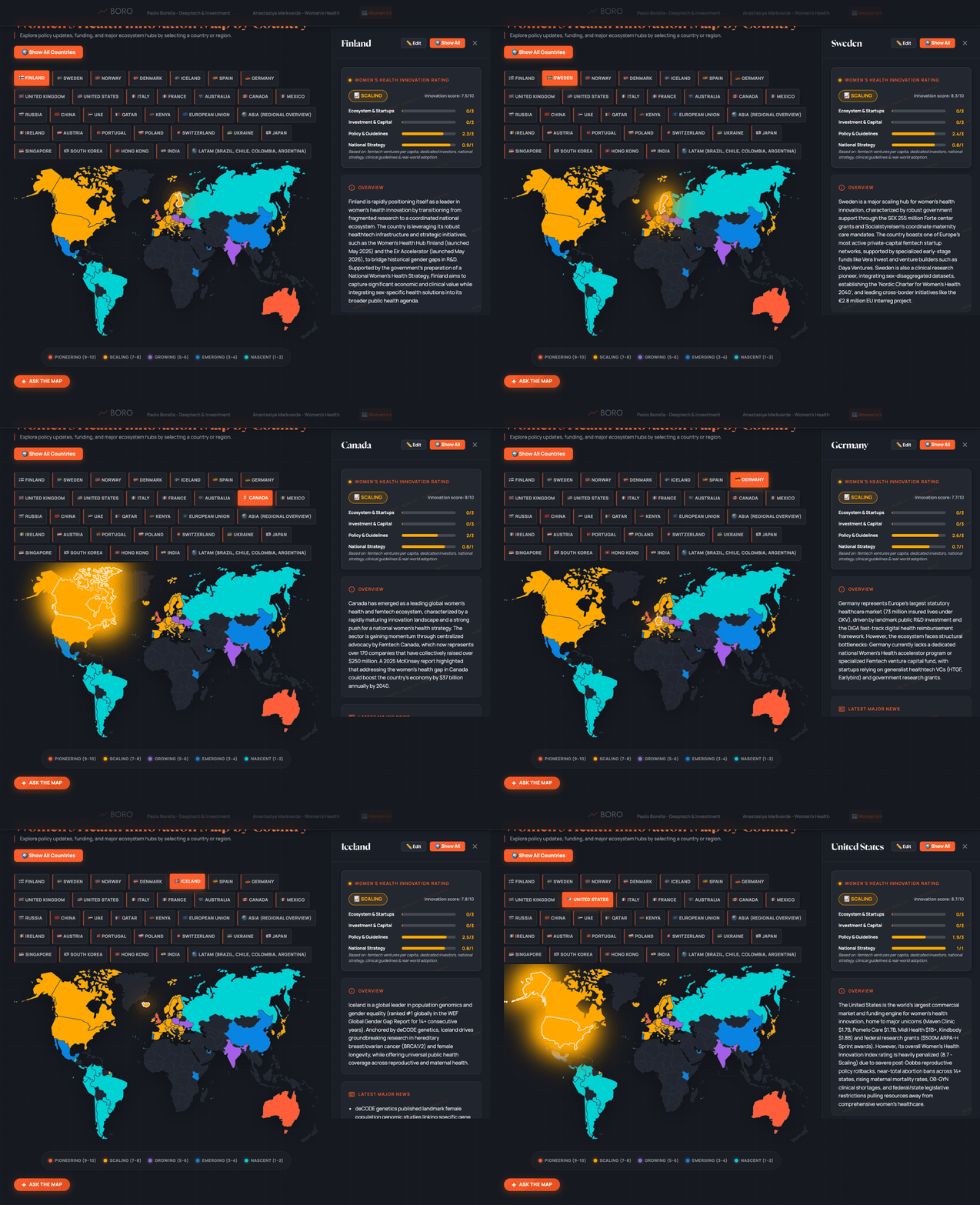
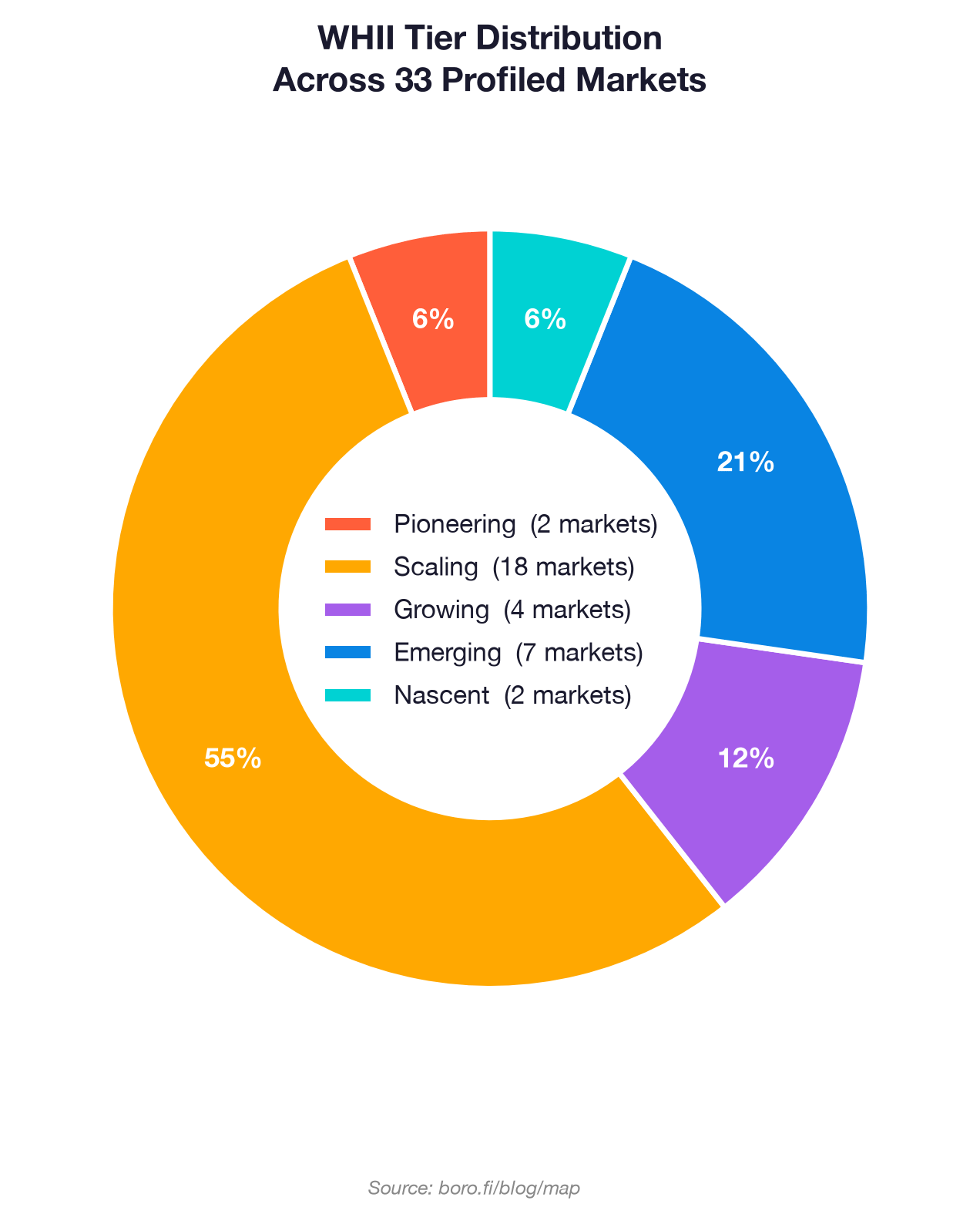
After tracking 33 national and regional ecosystems across Europe, North America, Asia, the Middle East, Latin America and Africa on the Women’s Health Innovation Map, we think that ecosystem strength may compete with capital. Or rather, ecosystem maturity may compensate for smaller pools of capital by making it easier for ideas, talent, and research to reach patients. We have analysed main hubs, investors and latest startup rounds in each country while also paying attention to policy, national strategy, dedicated public funding and overall women’s health care access level.
The purpose of the Women’s Health Innovation Map is not to assign grades to countries, but to create an easy-to-use snapshot with the key info about each country.
The Women’s Health Innovation Map measures ecosystem maturity rather than ecosystem size or scientific excellence. We looked at how effectively countries translate science, capital, policy, and clinical infrastructure into better outcomes for founders and, ultimately, for patients. A lower score does not imply weaker science, fewer talented founders, or poorer healthcare outcomes. Rather, it indicates that some elements of the ecosystem remain less connected, less specialised, or less developed than others.
This is a first attempt to capture 33 markets, and we would love to continue expanding it over time.
Not surprisingly, simply writing the biggest checks doesn’t solve all the problems. Capital without policy is inefficient, and research without the right infrastructure rarely reaches patients. The United States offers perhaps the most interesting illustration of this principle. It remains the single largest and most influential women’s health market in the world, supported by enormous public and private investment. However, regulatory fragmentation, uneven healthcare access, and widening differences in reproductive rights across states have created an environment in which scientific leadership and policy leadership do not always move in the same direction. By contrast, countries such as the United Kingdom, Australia, and several Nordic nations have pursued a more coordinated approach, combining funding with national strategies, dedicated programmes, and clearer institutional support structures.
The four pillars of a women’s health ecosystem
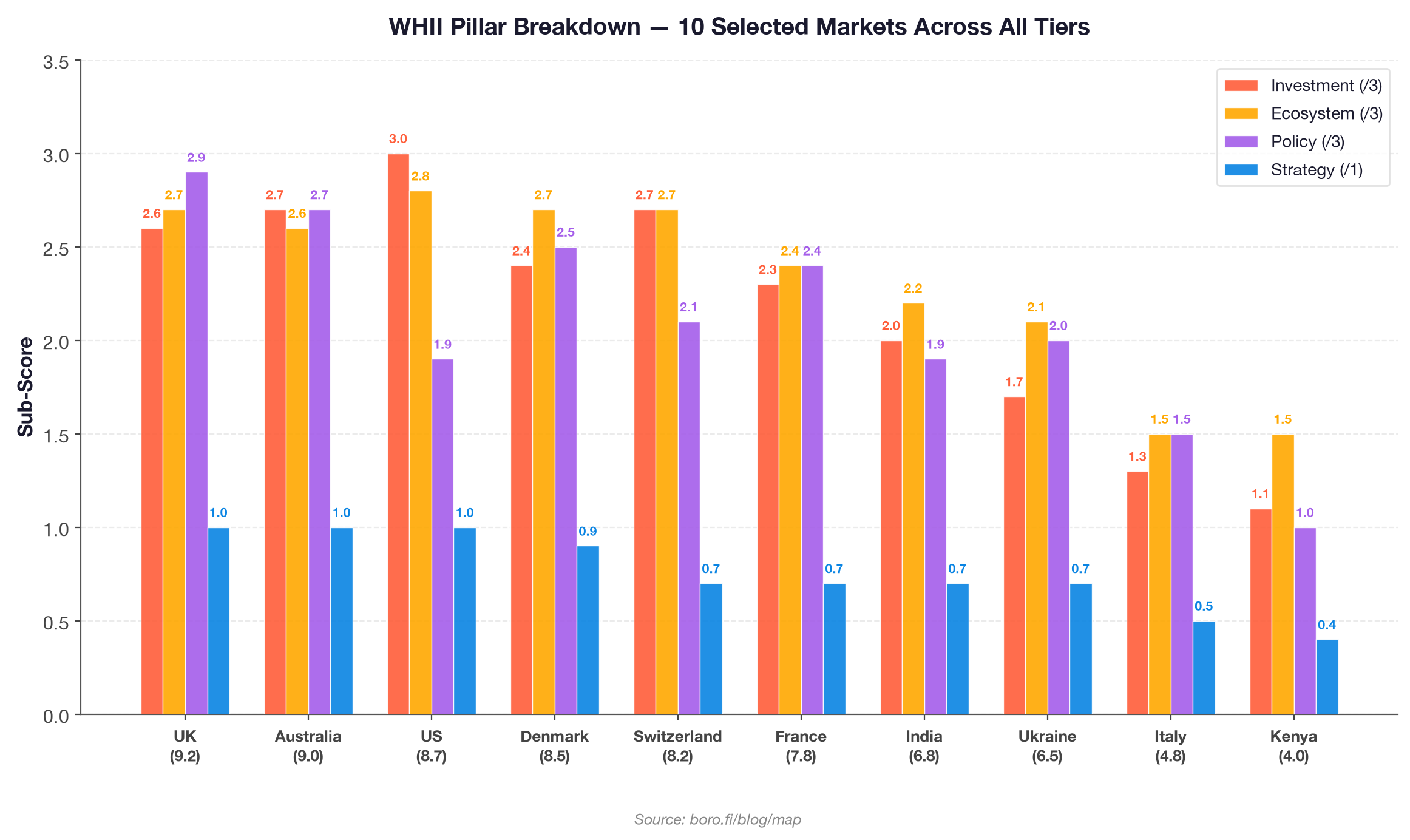
Every ecosystem on the map is scored out of 10 across four pillars that, together, form its Women’s Health Innovation Index (WHII).
Strategy is a coordinated national plan that aligns research, regulation, healthcare delivery and investment around women’s health specifically, rather than scattering it across generalist health policy. Norway set the pace, launching a national strategy in 2024 and backing it with a NOK 90 million research call in 2026. The UK published its Women’s Health Strategy in 2022 and renewed it in 2026; Finland only began building its own framework in 2026. Germany and Switzerland, despite their scientific strength, have yet to establish similarly comprehensive national frameworks dedicated specifically to women’s health.
Capital means more than occasional investment from generalist funds. Mature ecosystems build specialised networks of investors, operators, accelerators, and venture builders that understand both the scientific and commercial realities of women’s health. The United Kingdom and the Nordic countries have moved furthest in this direction, while founders in countries such as Germany and Italy continue to depend largely on generalist life-science investors.
Policy covers the clinical guidelines, reimbursement pathways and reproductive-rights frameworks that let products actually reach patients once they exist.
Community is the density of founders, hospitals, research groups and accelerator cohorts that turns isolated companies into a self-reinforcing sector. It is the hardest pillar to build quickly, and the clearest line between the challenger and builder tiers below.
One factor we have not accounted for in the index but wish to recognize here is culture. Although difficult to measure objectively, cultural attitudes profoundly influence the trajectory of women’s health innovation. Public awareness, openness around subjects such as menstruation, fertility, and menopause, the visibility of advocates and role models, and the willingness of governments and employers to engage with these issues all shape how quickly ecosystems develop.
No single pillar substitutes for another. The countries at the top of the map score well on three or four pillars simultaneously; nearly everyone else is missing at least one.
The Leaders: the UK, Australia, the US and the Nordics
There are few surprises at the top of the map, but there are important differences in how these ecosystems have evolved.
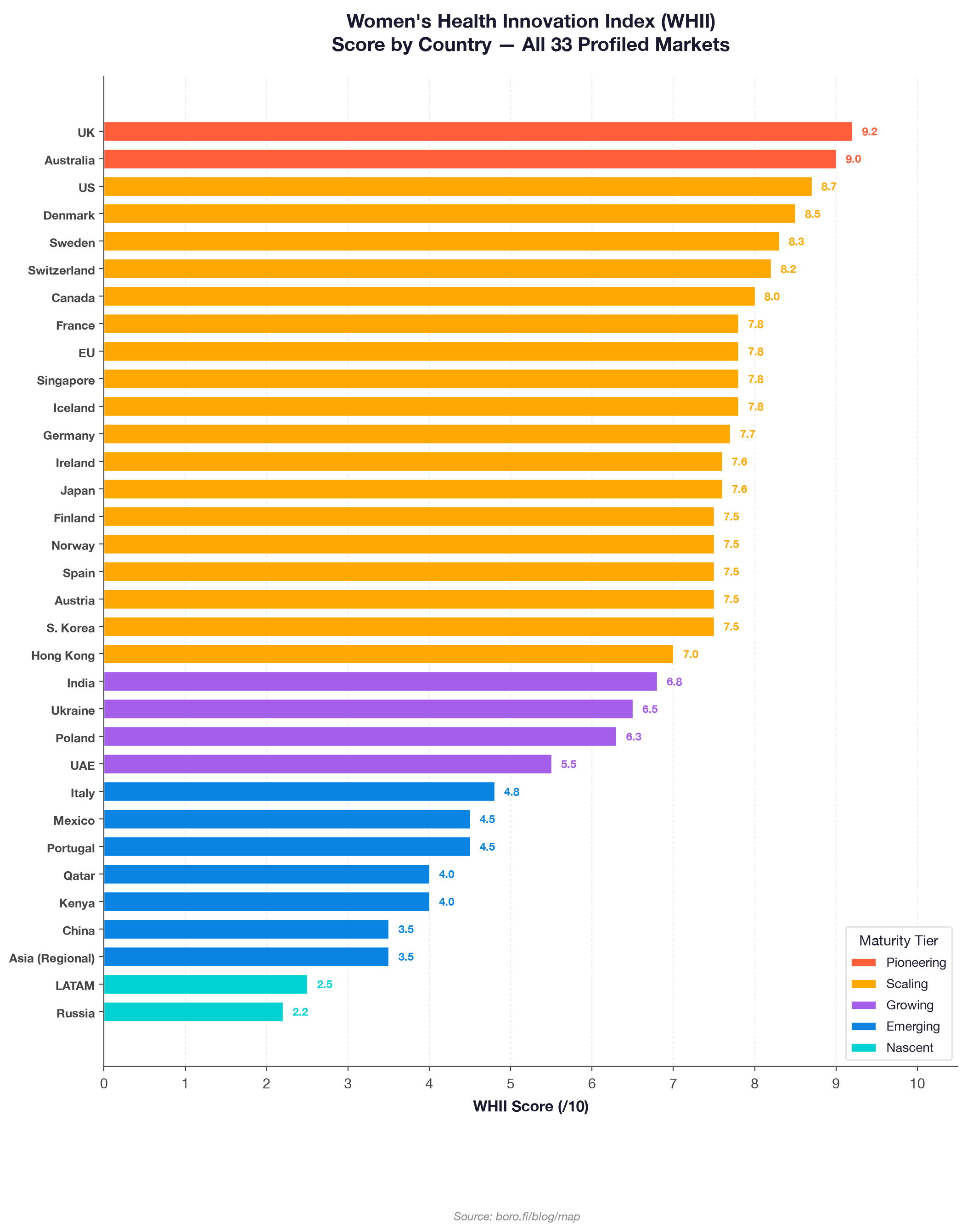
The United Kingdom and Australia stand out for the degree of coordination they have achieved across policy, research, capital, healthcare delivery, and founder support. In the United Kingdom, this includes the Women’s Health Strategy, the expansion of Women’s Health Hubs, a growing base of specialist investors, and companies such as Flo Health. Australia has followed a similarly integrated approach, combining public investment, national initiatives, dedicated clinical programmes, and the emergence of globally significant companies such as Eucalyptus.
The Nordic countries occupy a slightly different position. Sweden, Denmark, Norway, and Finland are individually smaller markets, but collectively they form one of the world’s most coherent regional ecosystems. Strong public healthcare systems, close collaboration among researchers, active early-stage investors, and a high degree of political alignment have created fertile conditions for innovation. The publication of the Nordic Charter for Women’s Health 2040 in The Lancet—a joint call to action by Nordic experts and institutions—illustrates a rare willingness to pursue long-term strategy across national borders rather than within them.
The United States optimises for scale. The Nordics optimise for coordination. The United Kingdom and Australia are attempting to do both.
The United States remains an outlier when it comes to scale, even though the map assigns higher scores to the United Kingdom and Australia in overall ecosystem coordination. No other country matches its concentration of capital, research institutions, specialised investors, clinical infrastructure, or high-growth companies such as Maven Clinic, Kindbody, and Midi Health. Programmes such as ARPA-H’s Sprint for Women’s Health have further strengthened that position. At the same time, the American ecosystem is considerably more fragmented than those of the United Kingdom or Australia. Differences in healthcare access, reimbursement, regulation, and reproductive policy mean that scientific leadership and policy leadership do not always advance in parallel.
Taken together, these ecosystems suggest that leadership in women’s health depends not only on the amount of capital available, but also on the ability to align institutions, incentives, and infrastructure around a shared objective.
The Challengers: France, Germany, Switzerland, Canada, Japan and South Korea
The second tier is perhaps the most interesting because it demonstrates that scientific excellence and abundant capital are not always enough to create a mature ecosystem. Every country in this group possesses world-class universities, established healthcare systems, and strong venture markets. Yet each is still missing an important structural component.
France has been particularly successful in mobilising capital. The €50 million Femtech Île-de-France fund and the conditional access pathway established through HAS’s Forfait Innovation programme have created one of Europe’s most dynamic environments for women’s health companies. What remains absent is a fully coordinated national strategy.
Germany presents the opposite picture. The country benefits from Europe’s largest statutory health insurance market, a strong research base, and the DiGA reimbursement framework, but founders still depend largely on generalist investors and broader life-science infrastructure rather than dedicated women’s health programmes.
Switzerland and Canada illustrate a different challenge. Switzerland combines extraordinary scientific strength with one of the world’s most active venture ecosystems, yet it lacks a coherent national framework for women’s health innovation. Canada, meanwhile, has succeeded in building one of the sector’s strongest founder communities through organisations such as Femtech Canada, but national coordination remains limited.
Japan and South Korea offer perhaps the clearest example of another emerging model: governments treating women’s health as both a demographic and an economic priority. In Japan, the Ministry of Economy, Trade and Industry (METI) estimates that untreated menstrual and menopausal conditions cost the economy trillions of yen each year. South Korea has adopted a similarly interventionist approach, supporting women-led entrepreneurship through public programmes and targeted investment initiatives. In both countries, however, the private ecosystem remains relatively small compared with the scale of state support.
Across all of these markets, the underlying pattern is remarkably consistent. The science exists. The entrepreneurs exist. In many cases, the capital exists as well. What remains missing is the connective tissue that transforms individual successes into a durable ecosystem.
The Builders: Italy, Portugal, India, Kenya, Qatar and Latin America
The final group is still assembling the foundations of a functioning ecosystem. Progress is often driven not by coordinated national strategies but by individual founders, investors, research institutions, accelerators, advocacy organisations, and grassroots communities.
Italy and Portugal illustrate this distinction particularly well. Both countries have vibrant grassroots communities, committed founders, strong clinical expertise, and an increasingly visible network of advocates and ecosystem builders. Companies such as Tensive, Syndiag, and Neopausia demonstrate that innovation is already taking place. The challenge is not a lack of ambition or talent but a lower degree of institutional coordination, together with a shortage of specialised capital and nationally coordinated programmes.
India presents a different picture altogether. With the Ayushman Bharat Digital Mission, a rapidly expanding digital health sector, and companies such as Janitri and Gynoveda, the country is building scale at remarkable speed. The challenge is not a lack of founders or demand, but the slower development of investment infrastructure, specialist expertise, and coordinated policy support.
Kenya and Qatar demonstrate two very different paths towards ecosystem formation. In Kenya, progress has largely been driven from the bottom up, with accelerators, non-governmental organisations, and local investors gradually expanding access to capital. Qatar has taken the opposite approach, relying on state-backed initiatives, including the QSTP × Merck FemTech Accelerator, to stimulate innovation from the top down.
Latin America is highly heterogeneous, but several common patterns nevertheless emerge. Brazil, Chile, Colombia, and Argentina have all produced promising companies, while founder communities and angel networks continue to expand. However, most activity remains fragmented, and the region has yet to establish the dense network of specialised investors, accelerators, reimbursement pathways, and national strategies seen elsewhere.
Russia remains an outlier. Here, geopolitical tensions, capital constraints, and increasingly restrictive reproductive policies have combined to create an exceptionally difficult environment for founders. Activity persists, but largely without the institutional support available in other markets.
The lesson across all of these countries is remarkably consistent. Ambition is rarely the limiting factor. Density is. One company can demonstrate that a market exists. One accelerator can create momentum. But it takes multiple institutions, reinforcing one another over many years, to build a durable ecosystem.
The next decade of women’s health
None of these ecosystems is finished. Norway launched its national strategy only in 2024. Finland began developing its own framework in 2026. The United Kingdom’s ten-year strategy remains in its early years, with questions around execution, and even the most mature ecosystems continue to evolve.
Perhaps the clearest finding from the map is how young the field still is. Dedicated women’s health funds are only beginning to emerge. Reimbursement pathways remain fragmented. National strategies are still the exception rather than the rule. In many countries, ecosystem development continues to depend on the efforts of a small number of founders, investors, researchers, and policymakers.
At the same time, a common pattern is becoming visible. Countries that have made the greatest progress have rarely focused on a single intervention. Instead, they have built multiple layers of support simultaneously: research funding, specialist capital, clinical infrastructure, founder communities, public programmes, and long-term policy commitments.
This suggests that the next phase of women’s health innovation will not be defined solely by the size of individual investment rounds or the valuation of individual companies. It will also depend on something less visible but potentially more durable: the ability to create environments in which innovation can move efficiently from laboratories to clinics and, ultimately, to patients.
The central question is therefore no longer simply how much capital is entering the field. It is whether countries are building the institutions capable of sustaining it.
That is ultimately what the map attempts to capture. Not who is winning and not who is losing, but how different countries are approaching the same challenge. Some ecosystems are larger, some are more coordinated, and some are only beginning to emerge. All of them are still being built.
This article was written for FutureFemHealth by women’s health strategist Anastasiya Markvarde.
This is a really interesting and detailed read. It clearly highlights the opportunities and where the women’s health ecosystem is headed.
I’m glad to be part of those helping to shape the ecosystem, and I’m really looking forward to seeing more African countries get on the map.