


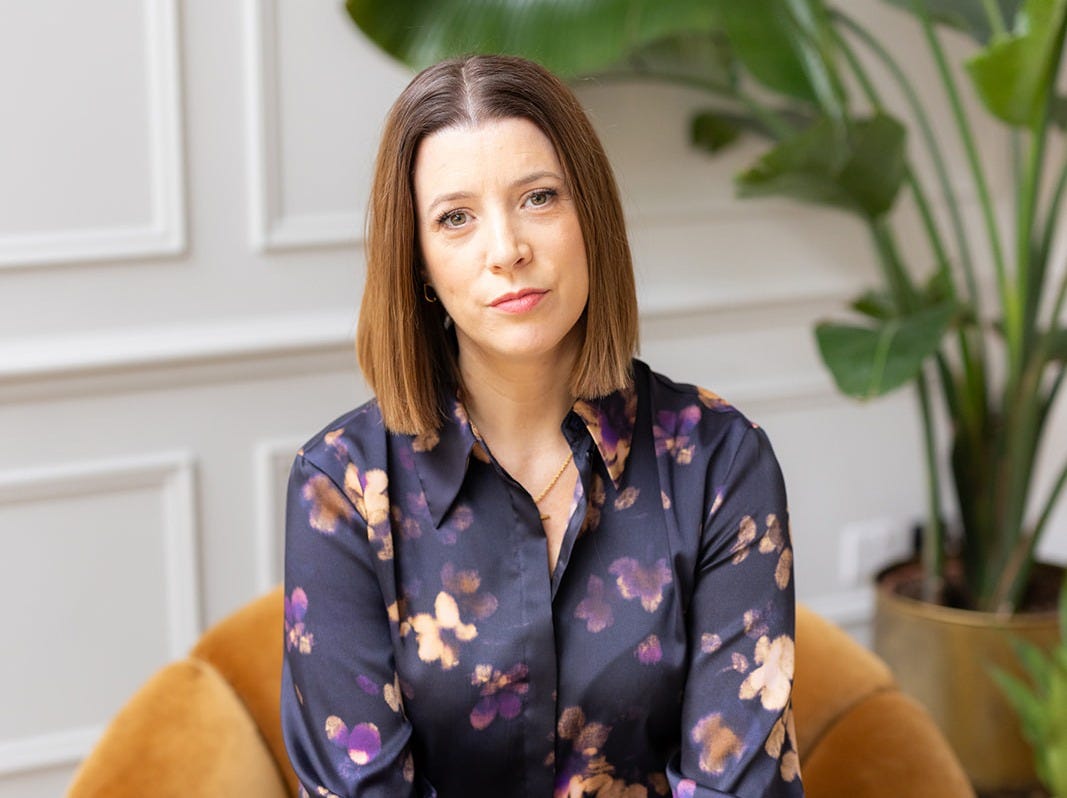
Three years ago I sat down to write the first issue of FutureFemHealth.
It didn’t start with a strategy. I wasn’t planning to build a media platform. And I didn’t have a network in women’s health - in fact, I knew no one.
I’d spent 20 years working in communications / PR and journalism across entirely different industries - education, finance, travel - but never this one.
What I did have was a growing sense that something wasn’t working, and I wanted to know why.
Eight weeks earlier, my mum had passed away from womb cancer. A friend had spent years navigating undiagnosed perimenopause. And my own experience with unexplained infertility - which gratefullly ended with two children via IVF - had left me with more questions than answers about how the system actually works.
So I started reading. And then writing.
What began as a way to make sense of it all has grown since then into something much bigger.
On this three year anniversary, I thought I’d share a little of a ‘behind the scenes’ on what’s been happening since issue one and some of what I’m planning as we enter year four.
What we’ve built (so far)
Today, I describe FutureFemHealth as both a media and an intelligence platform for the women’s health industry. It reaches nearly 10,000 subscribers globally in over 110 countries - founders, investors, clinicians, operators and researchers.
FutureFemHealth has been recommended by more than 60 other Substacks, which is also a sign of how the women’s health community is showing up on the Substack platform and the depth of interest in these conversations.
And these conversations around women’s health are ones that can often be suppressed on other platforms - because algorithms with their inbuilt bias can miscategorise them as inappropriately ‘adult’ in nature.
Which also connects directly to my work at CensHERship.
Together with Clio Wood, I co-founded CensHERship - an initiative focused on tackling systemic bias in how women’s health content and businesses are treated across digital platforms and essential infrastructure.
From social media censorship to barriers accessing financial services like banking and insurance, our work at CensHERship operates at the structural level.
FutureFemHealth sits alongside that - helping to surface, connect and interpret what’s happening across the industry.
The two are closely linked: one focused on changing the system, the other on making it visible.
And so, my work is full circle.
A censorship-free space dedicated to this industry is no longer a nice-to-have, it’s absolutely critical.
The gap behind it all
In most of the industries I’ve worked in there’s been an established layer that helps everything to function. You have trade media, events, representative bodies, shared narratives. In women’s health, all of that is still emerging. And without it, we can’t progress as fast. Innovation is harder to ‘see’. Insights don’t cut through and inform work. Collaboration takes longer to happen.
This layer is absolutely critical for the future of women’s health.
Finding my place
It has taken me most of these three years of writing FutureFemHealth to finally feel like I understand the role it plays and what impact it can have.
Here’s how I’m now thinking about that:
1. Signal
Connecting the dots, surfacing trends, and analysing what’s happening. Most people in this space don’t have time to track everything - so this is about helping them see clearly and make better decisions.
2. Inspiration
Women’s health can be a tough space to build in. If the newsletter helps people stay motivated - or even make the move into the sector - that’s a meaningful outcome.
3. Connection
We don’t operate in isolation and we aren’t alone. There’s value in seeing shared challenges - and shared progress. I regularly hear of examples of people in this space who have connected with each other because they’ve read about each other’s work in FutureFemHealth.
4. Scrutiny (when it matters)
Some of the most-read stories I’ve published - including coverage of the Flo Health data privacy jury case last year for example - show that readers want more than positive momentum. This sort of coverage is never about bringing down a single company, it’s about raising the standard across the whole industry.
Three shifts shaping what’s next
Over the past year, three main shifts have shaped what FutureFemHealth is becoming.
1. From curation to analysis
I believe the value of a industry news media is in interpretation - explaining why something matters, and how it connects to wider trends.
That’s what has led me to start creating deeper analysis - from pieces on menstrual health diagnostics to PCOS - to provide more context, tracking, and a clearer view of where the market is moving.
2. Building a paid intelligence layer
The second shift is the launch of FutureFemHealth Pro - my paid layer focused on deeper analysis and insight into where the market is going.
Within the first 10 days, it reached #9 in Substack’s rising paid publications, which - while still early - is a strong signal that there’s demand for more than surface-level coverage.
This next phase will go further: more deep dives, more data tracking, and more focus on the signals shaping the category beneath the headlines.
The goal is to build something closer to an intelligence layer for women’s health.
3. A brand that reflects the direction
The final shift is the brand itself.
FutureFemHealth started as a newsletter. What it’s becoming is something broader -and the brand hasn’t fully kept up with that.
So, over the past few months, I’ve been partnering with female-founded creative agency BOLD LIP on a full rebrand. As experts in women’s health branding, their approach has sharpened my thinking around the next chapter of FutureFemHealth - not just how it looks, but what it stands for and how it shows up.
The new brand will roll out (very!) soon and I’ll share more behind the scenes on that process.
Independence matters - but partnerships too
I’ve completely bootstrapped FutureFemHealth - firstly alongside my old corporate career and then more recently through small experimental sponsorships and partnerships.
Historically, much of media relies heavily on sponsorships.
One of the reasons that I launched my paid layer, FutureFemHealth Pro, was to create more independence in how I fund FutureFemHealth. This is for two reasons - firstly to create more predictable revenue to support growth and sustainability, and secondly to have independence over my coverage. Back to the accountability point I made earlier, I want to be able to ask the harder questions, challenge where needed and hold the sector accountable as it grows.
Partnerships will remain an important part of how I build (I’ve partnered with some incredible brands already this year) - and I’ll increasingly look to work with partners who understand the role of independent media and see the value in insight, credibility, and long-term category building.
That means working with organisations who are comfortable being part of a space that doesn’t just promote the sector - but also helps shape it.
Year four - let’s go
Three years in, my ambition for FutureFemHealth is even clearer: to help build the infrastructure women’s health needs to scale.
That’s my personal mission as well - completely aligned with my work at CensHERship too.
Because what I’ve learned is that this category doesn’t just need innovation - it needs the systems around it to help it be seen, understood, trusted and supported.
Coming up next we’ll have:
The next FutureFemHealth Pro deep dives
The upcoming rebrand reveal (coming soon!)
The continued build-out of intelligence and research products
If you’ve been reading, sharing, supporting or partnering over the past three years — thank you.
And if you’re new here, this is a good moment to be joining.
If you’re interested in partnering, contributing, or supporting this next phase, I’d love to hear from you.
This makes so much sense. I am so glad I found this article and decided to read it. 🤍
I am in Silicon Valley and have AI+Fitness experience (though new here). I must say your insights are incredible Anna. 🔥
It’s been such a joy watching all of this unfold. Looking forward to seeing what’s next. Way to go Anna!