


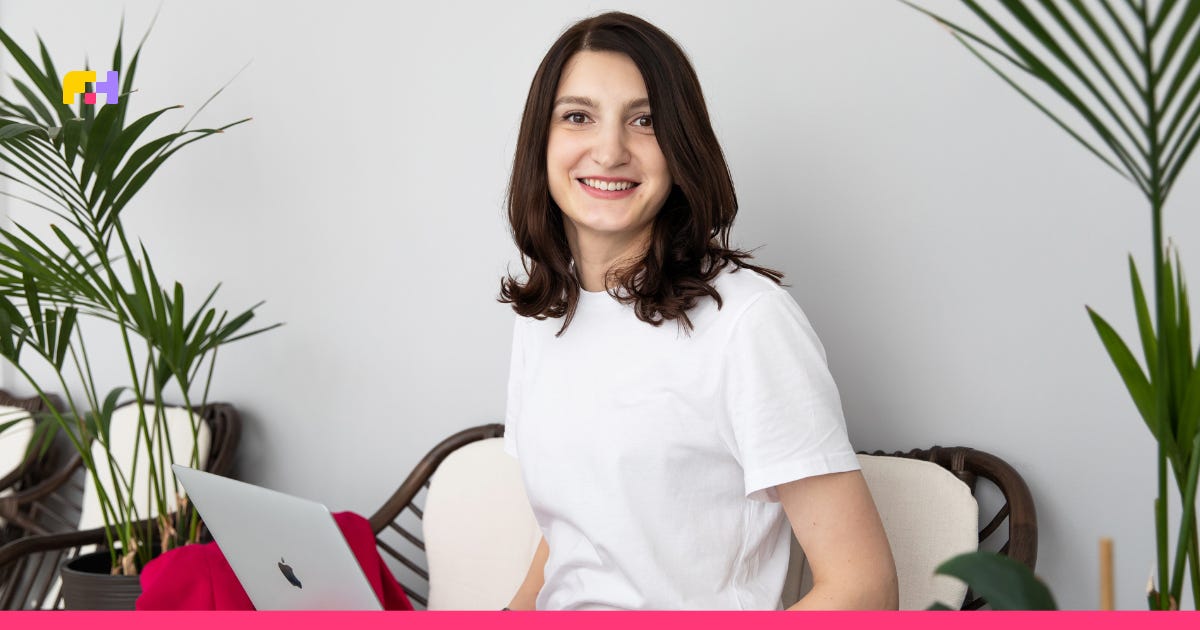
I began my career as an emergency medicine doctor. I quickly realized that many of the cases I saw were largely preventable had the patient had access to reliable, trustworthy health information. This was especially true in the arena of women’s health - an area severely lacking in research, education and consequently, health literacy. It was a huge part of the reason I wanted to join Flo as Chief Medical Officer nearly 10 years ago.
Take perimenopause, a transitional phase that will impact nearly every woman as she ages. Historically, perimenopause was rarely discussed and significantly lacking in education. For years, women were told they simply needed to suffer through symptoms, that it was all in their head, or they had to accept the pain and discomfort of their symptoms as a part of aging. The lack of education had a significant impact on their lives.
Cut to today. On one hand, we’ve come a long way. Lately, perimenopause seems to be the buzzword on every social media influencers’ tongue. It’s certainly being discussed, and women report an aggressive onslaught of marketing around it should they happen to Google any related symptom.
But this influx of “advice” from unaccredited voices that are usually trying to sell product solutions could actually be doing more harm than good - and only adding to the confusion women experience about perimenopause. In fact, in a recent survey, 66% of women told us they felt better prepared for puberty than for perimenopause.1
We have traded one problem for another. Where there was once silence, there is now a steady stream of unverified advice, quick fixes, and soundbites. In today’s social media obsessed world, women were served TikToks instead of verified, doctor-backed medical advice.
A common misconception we hear about perimenopause is that women believe they can’t get pregnant, or that it would be very unlikely they would get pregnant, during perimenopause. This isn’t accurate and poses another risk to misinformation by convincing women they are in perimenopause before they actually are.
Women are also being sold supplements, herbal blends, creams and weight loss solutions as treatments for perimenopause - when they really should discuss any product solution they are marketed with their doctor before taking it.
We are in a cultural moment where perimenopause is being openly discussed, and many brands and companies in the women’s health industry are starting to focus on addressing the very real health concerns women in their 40s and 50s are facing. The concern I see comes when unverified sources - social media influencers, unproven product solutions, etc. focus more on selling to women than educating them and empowering them to have meaningful conversations with their doctors.
Women do not need more content. The internet is full of content. What they need is better information – specific, scientifically-grounded, medically-verified, and most importantly - personalized - health information that does not flatten perimenopause into a single story. Information that acknowledges it looks different for different women. That helps them connect patterns over time, rather than forcing them to reconcile conflicting signals in isolation. If we aren’t offering this, we haven’t actually solved the problem of improving women’s health literacy on the topic.
Perimenopause is nuanced, and even many doctors don’t have adequate training in it. I know firsthand how difficult it is to get accurate information on perimenopause. I am a doctor, I work for a women’s health company - and it still took more than 4 months, 10 books and 5 doctors to figure out that the symptoms I was experiencing were indeed perimenopause and prescribe HRTs for relief. This has to change.
An added complication is that as women have babies later in life, many of the symptoms of perimenopause mimic symptoms of postpartum. Women in their 40s are also incredibly empowered and youthful in so many ways, so it can be difficult to already be thinking about something like perimenopause at this age. This is why only sharing medically-verified, doctor-backed information is so important so that women don’t get confused and bombarded with content that tells them they are in peri too early - or too late.
As Chief Medical Officer at Flo, my mission is to make this information accessible for our 460 million users2, and for any woman who is struggling to understand whether or not she is in perimenopause, and if she is, what to do about it.
If we built an entire educational infrastructure to prepare a generation of girls for puberty, we are capable of doing the same to help prepare women for perimenopause and menopause. We anticipated confusion once. We can do it again.
About the author: This article was contributed by Anna Klepchukova, Chief Medical Officer of Flo Health.
Alongside this article, Flo Health has today announced the launch of four new and updated “Flo for Perimenopause” in-app tools, powered by doctors, that work together to give women a complete picture of their health and meet them wherever they may be on their perimenopause journey.
1.Based on a nationally represented consumer survey conducted by Flo Health and Wakefield Research, among U.S. women age 38-50.
2.Based on total number of users who downloaded Flo, March 2026