


Welcome to issue #140 of FutureFemHealth, (w/c March 30 2026) - the global weekly briefing on women’s health innovation.
🌟 In this week’s briefing:
💡 Women’s health doesn’t have an innovation problem
⌚️ Wearables like WHOOP and Garmin are becoming health platforms
🛑 IVF moving into genetic selection territory?
🌍 What the African Femtech market is really telling us
Share your news for next week: anna@futurefemhealth.com
💡 Women’s health doesn’t have an innovation problem

Last week I spent time at the House of Lords in London discussing the renewal of England’s Women’s Health Strategy.
In the room were parliamentarians, clinicians, policymakers and industry. As we heard about the hopes for the updated strategy - and the calls for renewed funding into pilots that have already shown promise - it struck me, again, that we already know how to fix large parts of women’s health.
The issue isn’t a lack of ideas. It’s what happens afterwards.
This point was reinforced by a couple of stories you’ll read about in this week’s newsletter too.
In the US, DeepEcho received FDA Breakthrough Device Designation for its ‘blind sweep’ ultrasound - a technology designed to make basic prenatal imaging possible without highly-trained operators. If it works at scale and is supported through funding, it could expand access significantly, particularly in settings where resources are scarce and skilled staff are limited.
At the same time, Unitaid announced a $52m investment into scaling interventions that already exist to tackle maternal mortality. These are not new products, but basics like magnesium sulfate, iron therapies and blood pressure monitoring that we already know can work.
And back to the House of Lords. At that event, we heard about England’s Women’s Health Hubs - integrated, community-based ‘one-stop-shops’. They have so far been trialled and where implemented well they have improved access and outcomes for women.
There’s also diagnostics like Hertility, which can help with earlier triaging through at-home hormone testing - absolutely crucial at a time when over 570,000 women are on NHS gynaecology waiting lists.
These are all tools that already exist and there are many, many more.
But this is the pattern - progress is fragmented, often happening in pilots, local rollouts and inconsistent adoption. Lack of proper funding is one reason why, and a real drive and appetite for change is another. And so waiting lists grow and inequalities go on.
Women’s health doesn’t need more ideas.
It needs follow-through.
💰 Capital flows: where are investors placing bets?

📌 GLOBAL: WHOOP raises $575 million at $10.1 billion valuation to advance global health platform. WHOOP is pushing beyond performance tracking into a broader health platform. The company is expanding into Europe, Asia and beyond, hiring globally (with 600 new roles lined up) and has notably layered in clinical signals recently like its newly launched women’s health blood test. This Series G was led by Collaborative Fund, and yet while the cap table features big names and strategic backing from Abbott, there’s a near absence of women among the 10 individual investors named in the press release. (Continue reading: Business Wire)
📌 CANADA: myStoria raises $1.6M to expand AI-powered reproductive health platform. myStoria is building a patient-facing tool to help people organise their health history, track symptoms and prepare for appointments across fragmented care systems. With fresh seed funding led by Graphite Ventures, the company is expanding beyond fertility into areas including PCOS, endometriosis and perimenopause, and launching a mobile app with a freemium model. The broader play here is to become that much needed, long-term “navigation layer” for reproductive health, addressing a gap that’s historically left patients to manage dismissal, delays and fragmented care on their own. (Continue reading: FutureFemHealth)
📌 US: Prickly Pear Health expands beyond menopause with fresh pre-seed funding. Women’s brain health - especially across hormonal transitions - remains largely unaddressed. Prickly Pear Health is building into that gap, expanding its pre-seed round to $600K+ with backing from Emmeline Ventures and others. Originally focused on menopause, the company is now targeting cognitive and emotional health across the full hormonal lifecycle - from pregnancy to postpartum to perimenopause - using AI, voice, and wearable data to track symptoms like brain fog and stress. With early traction (~2,000 users) and a provider-led distribution strategy, the bet is on plugging into mental health through the lens of hormonal change. (Continue reading: FutureFemHealth)
🌟 Industry moves and strategic shifts
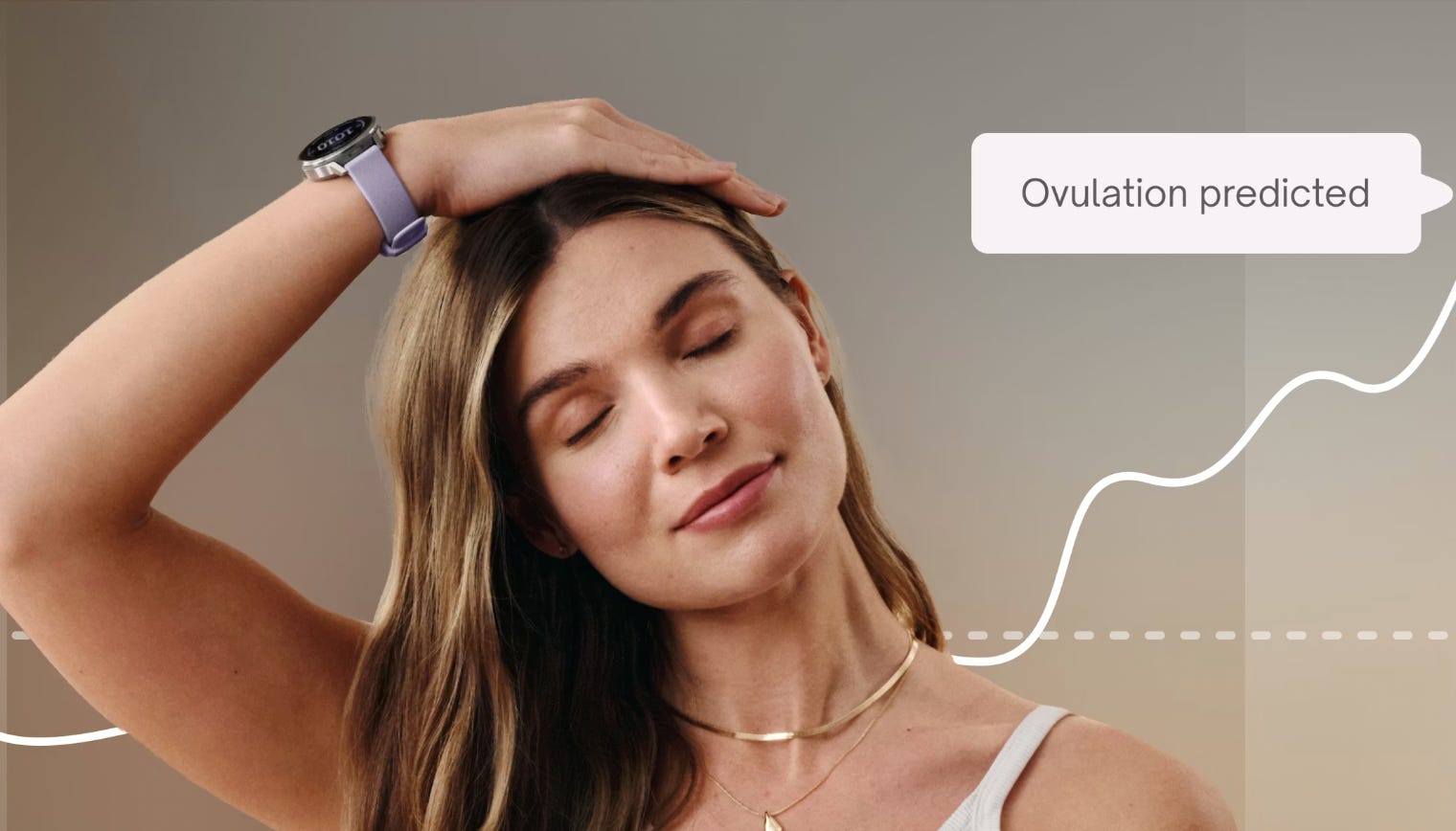
📌 GLOBAL: Garmin and Natural Cycles integration brings FDA-cleared birth control app to smartwatches. Garmin is stepping deeper into women’s health by integrating the Natural Cycles app directly into its smartwatches. The move brings an FDA-cleared, non-hormonal contraceptive method onto users’ wrists, using temperature data and cycle tracking to predict fertile windows. For women already using wearables daily this is less friction for contraceptive management. (Continue reading: Garmin rumors)
📌 GLOBAL / INDIA: Genetic “optimization” starts to move through IVF clinics. Genetic testing in IVF has mostly been about screening for serious conditions. Somewhat more controversially, Nucleus Genomics goes further - analysing embryos for all sorts of traits. It’s now bringing this into IVF clinics in India and the Middle East, moving the practice into clinical decision-making rather than just as an add-on. The argument is that scoring embryos makes selection more structured and easier to standardise. But critics worry about the ethical implications that feel less like screening and more like genetic selection. (Continue reading: Newswire)
📌 US: DeepEcho gets FDA boost for simplified prenatal ultrasound. Prenatal ultrasound still depends heavily on skilled operators - making access uneven, especially outside major care centres. DeepEcho is taking a different approach with a “blind sweep” platform: instead of hunting for perfect images, a provider simply sweeps the probe across the abdomen while software analyses the video and pulls out key measurements. The company has now received FDA Breakthrough Device Designation, giving it a faster path toward approval - although the tech is still early and unproven at scale. If validated, it could make basic prenatal imaging far more accessible in primary care and low-resource settings, where specialist capacity is limited. (Continue reading: Access Newswire)
📌 AFRICA: $52m push to deliver maternal health tools that already exist. As we wrote in our opening article, the future of women’s health isn’t just new products - it’s better distribution of what already works. Preeclampsia and anemia still drive maternal deaths at scale - despite cheap, effective treatments being available for decades. Unitaid is investing $52m to fix that gap, partnering with Clinton Health Access Initiative and Amref Health Africa to scale access to tools like magnesium sulfate, blood pressure screening, and iron therapies across multiple African countries. (Continue reading: Clinton Health Access)
📌 US: Joi + Blokes expands platform with fertility division led by serial founder Gina Bartasi. After acquiring HerMD in December 2025, virtual care clinic and precision health platform Joi + Blokes is now leading more consolidation in the space - tapping Kindbody founder Gina Bartasi and her new company YourJoy.ai to lead a new fertility division ‘JOY.’. The company says it believes fertility will support its growth while making use of existing clinical, operational and distribution infrastructure. Joi + Blokes now unifies care across weight, hormones, fertility and longevity. (Continue reading: Yahoo)
📌 DENMARK/ GLOBAL: BioInnovation Institute (BII) and Organon collaborate on women’s health. This new partnership pairs startup funding and incubation with real-world clinical, regulatory and market expertise to help speed up bringing viable solutions to market. Denmark-based BII is an incubator and accelerator supporting early stage startups through the earliest stages of building, and it is backed by the NovoNordisk Foundation. (Continue reading: BII on LinkedIn)
📌 SCOTLAND: Scottish health board to roll out miscarriage cradle kits. Founder Laura Corcoran created her startup Dignity Care after experiencing her own miscarriage at home. Her device fits beneath a toilet seat and provides a more respectful way to manage the loss of a pregnancy at home or in hospital. This is the first NHS roll-out for the device. (Continue reading: Pharmacy Biz)
💡 Perspectives

📌 What the African Femtech market is really telling us. More than 580 million women live on the continent of Africa, navigating health systems that were rarely built with them in mind and with digital health adoption rising fast. In this guest post, Dr Ayomide Owodunni explains how Africa isn’t a Femtech frontier waiting to be discovered, it’s one of the most commercially significant women’s health opportunities the global industry has yet to fully recognise. (Continue reading: FutureFemHealth)
📌 What happens when investors dismiss women’s health - before companies even exist? Bias and discomfort among investors is showing up even at the earliest stages, and could even be influencing the next generation of founders building in Femtech. In this guest post, we hear from student Sophia DeVillex about her experiences taking part in a student pitch competition. As Sophia explains ”One [investor] even explained to us how his wife solved her postpartum depression with “some neighborhood friends and a bottle of wine.”’ (Continue reading: FutureFemHealth)
🩸 Research and women’s health news
📌 Global: Participation is rising in ultrarunning - but research on women is still catching up. Women’s participation in ultrarunning has climbed sharply - rising from roughly 20–25% of competitors a decade ago to around 40% today - yet the science hasn’t kept pace. A new women’s health research programme, convened by World Trail Majors, aims to close that gap by studying how female physiology responds to extreme endurance, from hormonal shifts to recovery and performance. It should be no surprise that right now much of the evidence guiding training and care is still based on men. (Continue reading: I Run Far)
📌 US: Scientists uncover hidden immune driver of pregnancy complications. A newly identified immune “switch” may explain why some pregnancies develop complications like preeclampsia. When the switch is turned down, fewer natural killer cells make their way to the uterus - and pregnancy complications may follow. The finding also raises questions about common drugs like Tacrolimus which may affect this pathway. Early - but potentially foundational for complications and early pregnancy losses. This peer reviewed study was led by University of Alabama at Birmingham. (Continue reading: EurekAlert)
✅ Hiring now
📌 US: Women’s Health International Sale and Business Development Lead, Granville Biomedical
📌 US: Head of Marketing, Cofertility
That’s all for this week! If you’ve missed any previous newsletter issues catch them all at futurefemhealth.com and do make sure to follow us on LinkedIn and you can connect with me directly.
Anna

Before you go: FutureFemHealth reaches 100,000+ women’s health innovators each month - founders, operators, clinicians and investors. Want to partner with us? Explore opportunities or request our media pack: anna@futurefemhealth.com
Whoop: is that because it's not primarily a "women's health" company? Let's see whether these investors support the direction they are taking here.