


Welcome to issue #167 of FutureFemHealth, (w/c October 12 2026) - your weekly briefing on the global women’s health market.
Two of femtech’s biggest names made major moves this week, in very different directions. While Flo deepens its relationship with Google, Clue is turning its cycle-tracking app into a gateway to healthcare services. Both offer an interesting glimpse of where the next phase of femtech might be heading.
🌟 In this week’s briefing:
🤝 Google Health partners with Flo, including a strategic investment
💰 Allara raises $30m to expand insurance-covered women’s healthcare
✅ Gates Foundation and Wellcome Leap commit $100m to stillbirth prevention
🩺 Clue moves beyond cycle tracking to connect users with healthcare providers
Share your news: anna@futurefemhealth.com
But first…
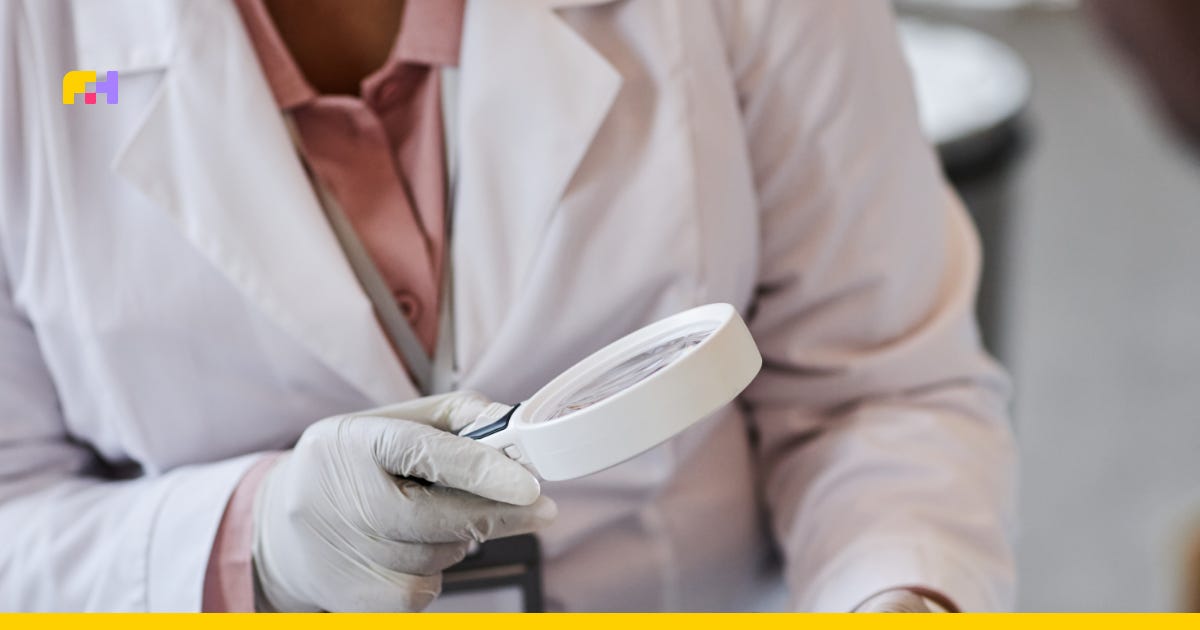
Up to 80% of people living with autoimmune diseases are women - so who is building better ways to diagnose and treat them?
I’ve tracked $773.8m in funding since 2022 for companies with a primary or majority focus on women’s health within the autoimmune disease market.
But where is that money going? What are these companies developing? And could autoimmune disease become a bigger focus for women’s health innovation?
My latest piece:
💰 Capital flows

📌 US: Allara raises $30m to expand insurance-covered women’s healthcare. Unlike many virtual women’s health providers that rely on subscriptions or out-of-pocket payments, New York-based Allara works with major US insurers to provide ongoing specialist care for hormonal, metabolic and reproductive conditions. Originally focused on PMOS, the company has expanded into menopause, weight management and other areas, serving more than 120,000 women. The funding will support further expansion through employers and healthcare partnerships, alongside AI tools to improve clinical efficiency. The round brings total funding to $75m, with backing from Index Ventures, GV, Camino Partners, Foreground Capital and Family Fund. (Continue reading: FutureFemHealth)
📌 GLOBAL: Gates Foundation and Wellcome Leap commit $100m to tackle stillbirths. Almost two million babies are stillborn each year, yet stillbirth prevention remains an underfunded area of maternal healthcare. The Gates Foundation and Wellcome Leap are committing $50m each over three years to Uzima, a new programme aiming to halve stillbirth rates in selected countries over the next decade. Initially focused on sub-Saharan Africa, the programme will identify and validate technologies including AI-assisted ultrasound, pregnancy diagnostics and labour monitoring, with the aim of bringing effective solutions into routine care. The first technologies are expected to be selected by early 2027. (Continue reading: Gates Foundation)
📌 US: Collective X Health raises $3.2m to launch women’s health intelligence platform. As wearables and digital health companies introduce more female-specific features, Collective X Health is developing a way for them to access the scientific evidence behind those products. Co-founded by women’s health researcher Dr Stacy Sims, the company reviews and structures existing research and female-specific data, which businesses can license through an API to inform their health and performance insights. Collective X has launched with its first paying customers and research partnerships, including WildAI and Open Medicine Foundation. The pre-seed round was co-led by Council Capital and Anthemis Female Innovators Lab Fund.(Continue reading: Collective X Health)
📌 INDIA: B-Arm raises ₹4.8 crore to expand women’s health portfolio. From pregnancy and breastfeeding to pelvic health and menopause, Tamil Nadu-based B-Arm Medical Technologies is developing products across different stages of women’s lives. The company has raised ₹4.8 crore (approx $540,000) in pre-Series A funding to expand its product portfolio and reach across India. The investment brings its total funding to approximately ₹9 crore, including debt financing, with the latest round led by Mudhal Partners. (Continue reading: Indian startup news)
🌟 Industry moves and strategic shifts

📌 GLOBAL: Google Health and Flo Health partner to connect wearable and menstrual health data. It was just last year that Google and Flo agreed to a multimillion-dollar settlement following allegations of sharing sensitive reproductive health data without consent. Now, the two are teaming up to, well, share data. With explicit user consent this time, both emphasise. The multi-year partnership will combine Flo’s cycle tracking with Google’s wearable data to develop personalised health insights, AI-powered coaching and new products, alongside research into areas including perimenopause and PMOS. Google Health has also made an undisclosed strategic investment in Flo, with the first integrations expected in early 2027. Google Health also made a bigger push into preventative and personalised healthcare this week, with announced partnerships with Function and Abbott too. (Continue reading: FutureFemHealth)
📌 GERMANY: Clue moves beyond period tracking to connect users with healthcare providers. Reaching consumers in women’s health is hard, and getting harder with social media censorship, tighter health advertising rules and rising platform costs. Now, Clue is positioning its cycle-tracking app as a gateway for women’s health brands to reach potential customers, while offering users a more connected route to care. Its new Get Care service links users with specialist providers across contraception, fertility, diagnostics, metabolic health and mental health, with partners including Hertility, Embla and Evaro. Clue is also working with Novo Nordisk on women’s metabolic health. Available in the UK, US and Germany, the service is free to users, with menopause care planned from November. (Continue reading: FutureFemHealth)
📌 US: Nine fertility clinic brands unite under Everleap Fertility. Consolidation in the US fertility market is taking another step, with IVI RMA North America bringing nine established clinic brands, including RMA and Boston IVF, under a single identity. The new Everleap Fertility network spans more than 65 clinics and 26 IVF laboratories. Alongside the rebrand, Everleap has launched AiVA, an AI-powered clinical decision-support tool integrated with its electronic medical records system, for more consistent and personalised fertility care at scale. (Continue reading: Everleap Fertility)
📌 SWITZERLAND: Scanvio secures CE marking for AI-assisted endometriosis ultrasound software. Diagnosing endometriosis through ultrasound needs specialist expertise that isn’t always widely available. Zurich-based ETH spinout Scanvio Medical has received Class IIa CE marking for Scanvio Assist, which uses AI to help clinicians identify signs of endometriosis during routine ultrasound examinations. Designed to work with existing equipment, the technology could make specialist diagnostic support more accessible without requiring clinics to invest in new scanners. The company is now beginning its rollout to gynaecologists, fertility clinics and endometriosis centres across Europe. (Continue reading: Startup ticker)
📌 US: Dry Days Health partners with Parkview Health to connect virtual and in-person bladder care. Rather than competing with traditional healthcare providers, specialist women’s health startups are finding opportunities to work alongside them. Dry Days Health has partnered with Parkview Health to offer women with urinary incontinence a more connected care pathway. Patients who can be treated remotely will receive care through Dry Days’ virtual clinic, while those needing diagnostics, procedures or surgery can access Parkview’s existing services. The partnership offers an interesting model for how specialist telehealth companies can expand their reach without building their own physical infrastructure. (Continue reading: Health Tech World)
📌 NETHERLANDS: Sibyl expands into UK fertility care through new partnership. Pregnancy loss support often ends when patients leave the clinic, a gap Rotterdam-based Sibyl is looking to address. The company has partnered with UK virtual fertility clinic Plan Your Baby to offer patients free access to its digital companion, providing clinically reviewed information and emotional support. The agreement marks Sibyl’s first UK partnership, following pilots with two Dutch healthcare providers that have requested to continue offering the service. (Continue reading: Plan Your Baby on LinkedIn)
📌 PORTUGAL: Sword Health expands pelvic health care into national healthcare system. Doctors across Portugal’s National Health Service can now prescribe Sword Health’s digital pelvic floor rehabilitation programme free of charge to patients. The service combines at-home treatment, AI-enabled technology and specialist clinical support for conditions including urinary incontinence, pelvic pain and postpartum recovery. The government estimates that up to one million women could benefit.(Continue reading: Sword)
📌 AUSTRALIA: Investors recognise the women’s health opportunity, but few are changing how they invest. A new white paper from the Centre for Sex and Gender Equity in Health & Medicine found that while 11 of 14 Australian investors surveyed considered gender equity in investment decisions, fewer than a quarter had structured due diligence questions on gender-related health data. The report argues that women’s health remains undervalued, particularly across major healthcare markets including cardiovascular disease, autoimmune conditions and cancer. It also identifies a shortage of mid-stage capital as a major barrier to scaling Australian women’s health innovations. (Continue reading: Centre for Sex and Gender Equity in Health & Medicine)
🩸 Research and women’s health news
📌 US: New women’s health institute aims to turn mammograms into an opportunity for heart disease prevention. Mammograms can reveal breast arterial calcification (BAC), a marker associated with cardiovascular disease, but the finding is not routinely reported or followed up. The newly launched Institute Advancing Women’s Health is working with Washington Research Foundation to develop approaches for integrating BAC reporting into clinical care. The technology isn’t new; the challenge is getting health systems to act on information they already collect. Maryland became the first US state to require BAC reporting this month, adding momentum to efforts to connect breast screening with cardiovascular prevention. (Continue reading: InAWH)
📌 US: AOA Dx explores expansion of ovarian cancer test into endometrial and cervical cancers. New data from AOA Dx suggests its multi-omics liquid biopsy technology could have applications beyond ovarian cancer. Its lead test, Omira OC, showed promising performance in an independent patient dataset, while early findings point to potential applications in endometrial and cervical cancer detection. The company is also adapting the technology for use on existing clinical laboratory equipment, which could make it easier to scale. Further clinical validation is needed. (Continue reading: Clp)
📄 Policy watch: risks and opportunities
📌 BANGLADESH: €250m in existing development finance to be redirected towards women’s health. Women’s health is often funded through relatively small, standalone programmes. Bangladesh and the European Investment Bank are taking a different approach, with plans to redirect €250m from an existing healthcare loan towards maternal and newborn care, breast and cervical cancer services, and hospital improvements. The initiative could benefit 47 million women and girls and offers an interesting example of how women’s health can be incorporated into mainstream development financing. (Continue reading: United Nations)
📌 GLOBAL: Changing ulcer treatments could threaten access to a vital reproductive health medicine. What happens when a medicine essential to reproductive healthcare depends on a market originally developed for something else? Misoprostol is widely used for miscarriage management, labour induction, postpartum haemorrhage and abortion, but was originally developed to treat stomach ulcers. A new study examining global sales between 2007 and 2020 found that demand for some misoprostol-containing ulcer treatments has declined, raising questions about the longer-term resilience of supply for reproductive healthcare. While the study does not identify an imminent shortage, it highlights a potential vulnerability in access to an essential medicine. (Continue reading: Journal of Pharmaceutical Health Services Research)
📆 Save the date

📌 Women’s Health Europe Forum. Paris, France. November 27. A full day bringing together 200+ key players from across the European women’s health ecosystem. 👉 Register here
New for FutureFemHealth Pro subscribers
We’ve added four new pieces to Pro over the past few weeks:
Understanding the autoimmune market: where has $773.8m in funding tracked since 2022 gone?
Q3 funding analysis: 45 deals, $456m invested and the trends behind the numbers.
Women’s health research: New approaches to tackling longstanding research gaps.
Vaginal microbiome: Where the market goes next following Evvy’s $40m Series B.
You can find all four in the Pro archive, alongside our previous market analysis and research.
Not yet a Pro subscriber? Upgrade here to access the full archive. Your subscription also helps keep this weekly briefing free for everyone.
A quick note: For the best subscription price, please upgrade directly through futurefemhealth.com in your web browser rather than through the Substack iPhone app, where Apple may apply additional charges.
That’s all for this week! If you’ve missed any previous briefings catch them all at futurefemhealth.com and do make sure to follow us on LinkedIn and you can connect with me directly on LinkedIn.
Anna
