


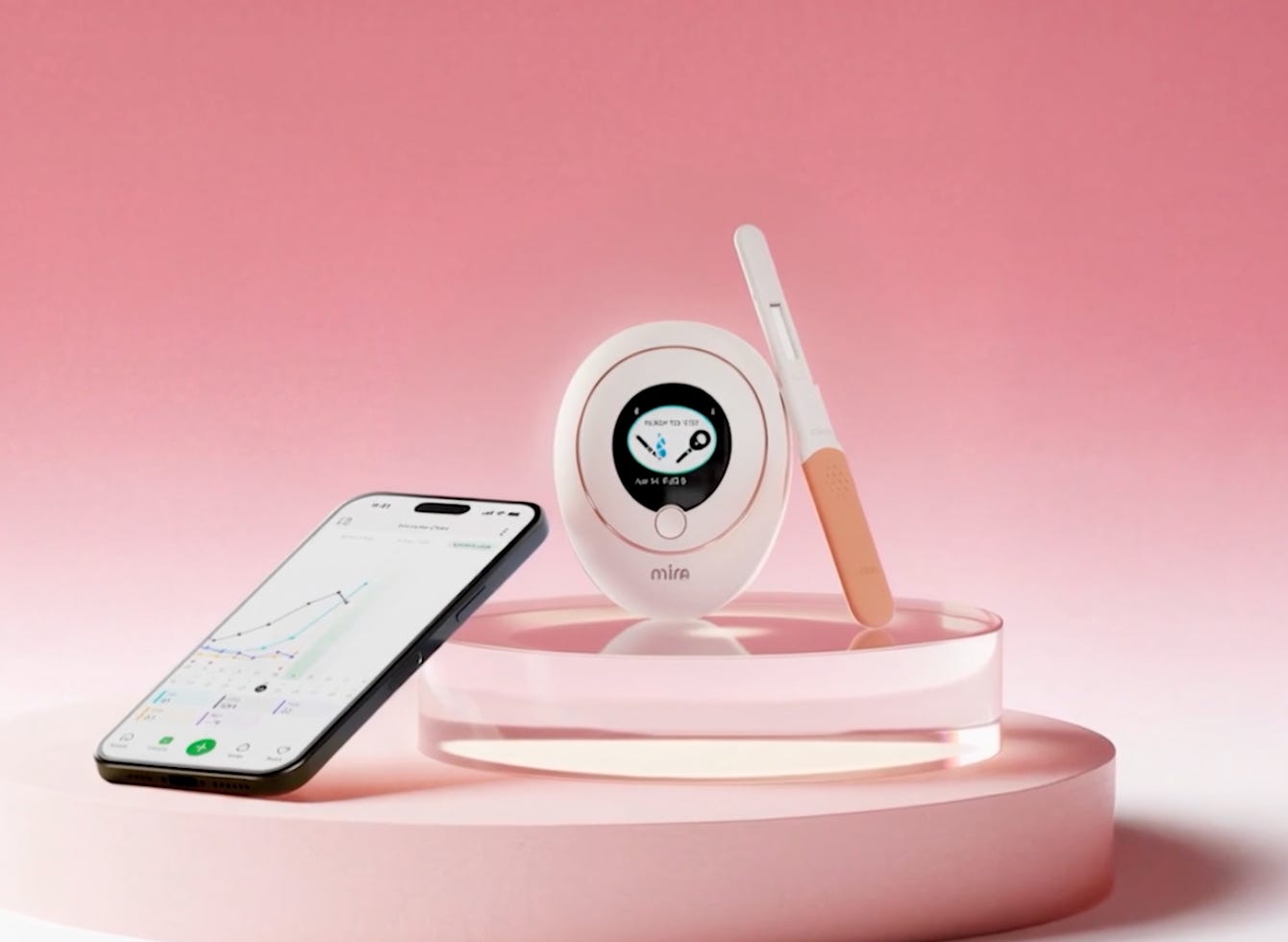
Hormone testing company Mira has announced a new partnership with wearable tech brand ŌURA that will allow women to see their hormone data alongside sleep and temperature trends in a single app.
The San Francisco-based company said the integration enables users of the Mira app to view sleep, readiness and temperature data collected by the Oura Ring next to their lab-grade hormone readings. The aim, it said, is to help women understand how hormonal changes affect how they feel, sleep and function day to day.
Hormones influence nearly every system in the body, but are rarely measured in tandem with everyday health signals. By combining the two streams of data, Mira and ŌURA say they want to move users beyond isolated metrics and towards pattern recognition.
“By connecting hormone data with daily health signals, we’re giving women insights they can act on – whether managing fertility, navigating perimenopause, or addressing hormonal imbalances,” said Sylvia Kang, chief executive and founder of Mira.
The integration is based on user consent. ŌURA members must opt in to share their data with Mira, a step both companies described as foundational to maintaining trust and control over personal health information.
Bringing together datasets
The collaboration reflects a wider push in women’s health technology to bring together previously siloed datasets – from wearables, hormone tests and cycle tracking apps – in the hope of producing more personalised insights.
In recent weeks Garmin has announced a hormone-metabolic integraton with Hello Inside, and new women’s health start-up Clair emerged from stealth aiming to be what they claim will be the first non-invasive continuous hormone monitor.
Mira’s existing at-home testing system allows users to track hormones such as luteinising hormone and oestrogen metabolites through urine samples analysed by its device. ŌURA’s ring, worn on the finger, collects continuous biometric data including body temperature trends, heart rate and sleep patterns.
Together, the companies say, the data can support several health journeys.
For women approaching perimenopause or menopause, temperature and sleep trends can be viewed alongside hormone fluctuations to identify patterns linked to night sweats or disrupted rest. For those tracking fertility, combining hormone readings with temperature data may help confirm ovulation and understand cycle variability. And for women experiencing suspected hormonal imbalances, the paired data could help correlate symptoms such as fatigue or low energy with measurable hormonal shifts.
Dr Chris Curry, clinical director of women’s health at ŌURA, said:
“Hormonal changes play a critical role in how women feel each day and are a through line that connects so many aspects of health, from first periods, to menstrual cycles, pregnancy, perimenopause and beyond”.
“By combining Mira’s lab-grade hormone data with Oura’s continuous biometrics, we’re helping women see how hormonal shifts show up in their everyday lives. This integrated view supports our goal of always supporting body literacy.”
The integration is now available to Mira users.
I would be highly skeptical of using the Oura ring. The company has a business relationship with Palantir whose software is being used by ICE to facilitate its deportation activities. While there is no evidence of data sharing, it still calls into question the ethical nature of Oura.