


Welcome to issue #144 of FutureFemHealth, (w/c April 27 2026) — the global weekly briefing on women’s health innovation.
🌟 In this week’s briefing:
🔥 Sun Pharma acquires Organon in $11.75bn deal
🛑 HRT maker Theramex censured over safety failures - and exits industry oversight
🦴 Bone health is moving earlier - but the system hasn’t caught up
💰 Future Fertility raises $4.1 Series A for egg quality AI decision tool
Share your news for next week: anna@futurefemhealth.com
This week’s newsletter is powered by Lumia

Lumia 2 is now live on Kickstarter: smart earrings that track 20+ health metrics including sleep, cycle, readiness, and temperature, indistinguishable from fine jewelry. Wear them as hoops, studs, or cuffs in gold, silver, and titanium or attach to almost any earring you already own. Limited quantities available.
🦴 Bone health is moving earlier. The system hasn’t caught up

A woman in her early 60s slips, falls, and breaks her hip. Within a year, there’s a one in five chance she won’t survive.
And yet, for most of her life, bone health was barely part of the conversation.
That’s starting to change - but not in the way the system is built to handle.
Bone health is being pulled earlier by the convergence with longevity, strength training and metabolic health. We’re seeing the signs of commercial momentum too: Osteoboost Health recently raising $8M to target low bone density before osteoporosis, and longevity platforms like Hone Health are bringing DEXA scans into earlier, data-driven care.
But better diagnostics or new devices are also only part of the story.
When risk appears is crucial - and linked to that, who is responsible for acting on it.
As Jenni Dowley, founder of Building Bones, told me: peak bone mass is reached by around age 25- to 30 years-old and “that’s effectively your bone bank.” So, what gets built early shapes risk decades later.
And yet, most systems still treat bone health as an event, with screening starting much later in life - often after significant loss has already occurred.
So while awareness is rising, the infrastructure to act on early risk isn’t. And that’s the key opportunity.
As Jenni explains: “You wouldn’t tell someone with high blood pressure to come back after they’ve had a heart attack. But with bone health, we often wait until a fracture.”
In this week’s FutureFemHealth Pro, I break down:
the commercial opportunity in bone health
the companies building into it
and why the most important layer of bone health is still missing
💰 Capital flows
📌 US/INDIA: Sun Pharma to acquire women’s health company Organon in $11.75bn deal. This highly-anticipated transaction will create one of the world’s largest women’s health platforms and is a positive signal that large pharma players want to expand into and scale up women’s health. It combines Organon’s women’s health portfolio of 70+ products across contraception, fertility and menopause, as well as its presence in 140+ countries, together with Sun Pharma’s global generics and established medicines business. (Continue reading: FutureFemHealth)
📌 CANADA: Future Fertility raises $4.1m Series A to scale AI tools for IVF decision-making. Future Fertility is using AI to analyse egg quality - something that has historically been difficult to assess - to help predict fertilisation and embryo development outcomes. By adding a new data layer into IVF, the platform aims to improve clinical decision-making and increase success rates. And for patients of course, earlier clarity on egg quality can help with managing expectations and guiding decisions on next steps. The funding will support global expansion and was led by M Ventures (the corporate arm of Merck Germany) and Whitecap Venture Partners. (Continue reading: EIN)
🌟 Industry moves and strategic shifts
📌 UK: HRT maker Theramex censured over safety failures — and exits industry oversight. The company behind widely-used HRT products Evorel and Intrarosa has been publicly reprimanded after regulators found it failed to update key prescribing information for years - including not clearly stating that one treatment should not be used during pregnancy. The breaches were flagged by whistleblowing staff and described as “alarming”, with regulators warning they could put patient safety at risk. This is significant given the scale of use, with hundreds of thousands of HRT prescriptions issued each year. In an unusual move, Theramex has also left the UK’s pharmaceutical self-regulatory system, meaning it will no longer be held to the industry’s voluntary code and will instead fall solely under the national regulator. Thermax said the approach “allows us to focus our resources on maintaining high standards of ethical and compliant behaviour, with patient safety paramount.” (Continue reading: The Guardian)
📌 US: Vida Health integrates ŌURA data into virtual care for chronic conditions. Vida works with employers and insurers to manage conditions like obesity and diabetes, and this integration brings continuous biometric data (sleep, recovery, heart rate) into clinical decision-making. While not positioned as women’s health, many of these conditions - from menopause-related metabolic changes to PCOS - disproportionately affect women, pointing to how women’s health is increasingly being built into broader care models. ŌURA is also reinforcing this approach at the infrastructure level - it announced an acquisition of Galen AI aimed at integrating clinical records, labs and wearable data into a single health layer. (Continue reading: Athletech News)
📌 US: Yōni.Fit expands FDA-cleared bladder support device to include menstrual use. Originally designed to prevent leaks from stress urinary incontinence, the Yōni.Fit insert can now also be used to collect menstrual fluid - making it one of the first dual-purpose devices spanning continence and period care. Affecting up to two-thirds of women at some point, urinary incontinence remains under-treated - and often managed separately from other aspects of pelvic health. This kind of product convergence shows how product design meets how women actually experience overlapping conditions in real life. (Continue reading: FutureFemHealth)
📌 UK: Carea launches a dedicated miscarriage support feature within its pregnancy app. In traditional healthcare settings like the NHS, women are often advised to “wait and see” during early miscarriage, with limited guidance and long waits for mental health support. The new “Healing After Loss” mode from Carea aims to offer expert guidance, mental health tools and peer support - addressing a point where it says many apps and care pathways still fall short. (Continue reading: FutureFemHealth)
💡 Perspectives

📌 Building a medical advisory team on a startup budget. Many women’s health startups treat clinical input as a ‘later’ problem - but that’s where costly mistakes happen. In this guest piece, Dr. Caitlyn Tivy outlines three practical ways to bring in medical expertise early, from low-cost reviews to short-term retainers. The key point: even a few hours of clinical input can help avoid regulatory risk and build better products from the start. (Continue reading: FutureFemHealth)
🩸 Research and women’s health news
📌 CANADA: New migraine research programme launched to address gender gap in care. Brain Canada and the Women’s Brain Health Initiative (WBHI) are funding new research into migraine, a condition that affects women up to three times more than men but remains underfunded and poorly understood. The programme will focus on sex- and gender-specific drivers across the life course. The Accelerator Grants: Migraine Research program aims to bring together researchers to catalyse new ideas to address these critical gaps. No specific funding amounts were revealed in the announcement. (Continue reading: Brain Canada)
📄 Policy watch: risks and opportunities
UK: Men’s health strategy receives 60% more new funding than women’s, analysis finds. Despite government commitments to tackle “medical misogyny,” The Times has calculated that while the new women’s health strategy allocated £5m of new investment, the men’s health strategy last November actually received £8m. And when you add in pre-existing commitments, men’s overall investment still comes out slightly higher. Of course, the gap comes as women continue to face longer wait times, poorer health outcomes, and chronic underinvestment - with just 2% of UK research funding going to female reproductive health. Critics warn that without ring-fenced funding, the women’s health strategy risks falling short of delivering meaningful change. (Continue reading: The Times (paywall)
📆 Save the date
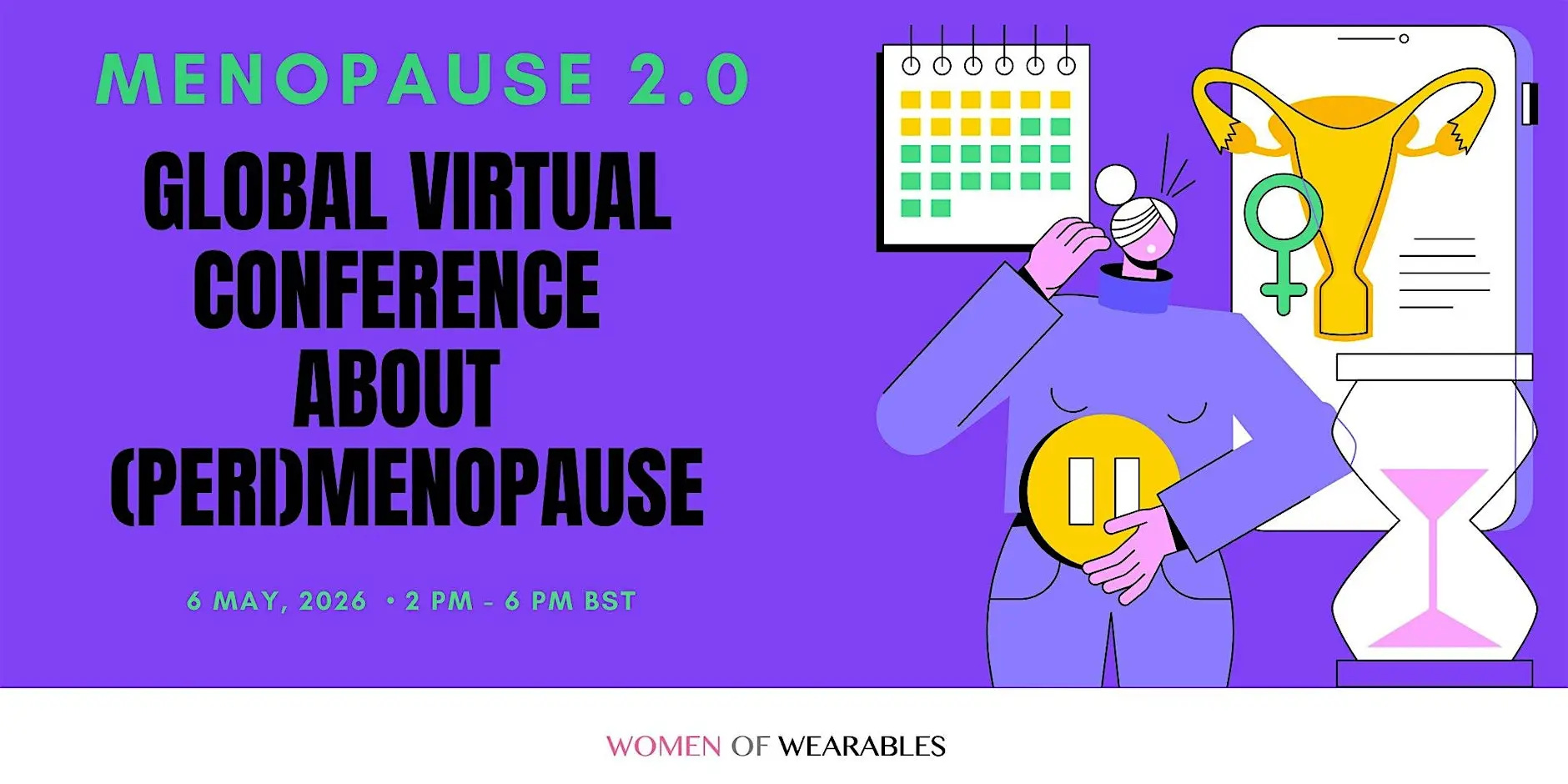
📌 VIRTUAL: Menopause 2.0 ‘Understanding perimenopause before menopause’. May 6. Women of Wearable’s third annual virtual conference on menopause, this year featuring speakers from Natural Cycles, Amissa Health, Mayo Clinic and more.
🎟️ Use code ‘FUTUREFEMHEALTH’ at the checkout for a free ticket here.
📌AUSTRALIA: Breaking the silos: the women’s health medtech summit. Sydney, May 27-28. This inaugural event is dedicated to addressing long-standing gaps in research, innovation, and policy affecting women’s health in Australia. The program brings together leading voices shaping the national conversation on women’s health in MedTech - spanning media, policy, research, and industry - to drive real system change.
🎟️ Tickets here.
📌 LONDON: How do we move women’s health along? Wed 6 May 5.30pm BST. How do we engage more male VCs in the women’s health conversation? Why doesn’t women’s health innovation make it to seed and beyond? This double panel event will hear from male VCs directly, alongside female founders who are building or who have exited.
🎟️ Register here
That’s all for this week! If you’ve missed any previous newsletter issues catch them all at futurefemhealth.com and do make sure to follow us on LinkedIn and you can connect with me directly.
Anna


Before you go…
FutureFemHealth now offers FutureFemHealth Pro - our new paid layer focused on deeper analysis on where women’s health is going.
Founders, investors, operators and leaders across the space are already joining FFH Pro and you can explore our first pieces: our Q1 funding tracker and key signals, or our feature on the bone health market.
Looking ahead, Pro is where I’ll now be sharing:
deeper dives into specific areas
more context and analysis behind the headlines
and the thinking that doesn’t fit into a weekly briefing
This weekly newsletter will continue as normal - but this is the direction FutureFemHealth is evolving in.
If you’d like to go deeper, you can join FutureFemHealth Pro here and receive our next piece later this week:
This newsletter is for informational purposes only and should not be considered medical or financial advice.
Big news week. Do we think the Organon acquisition is good? I'm hopeful. Organon was saddled with a lot and it will be interesting to see if this means they can start putting muscle behind earlier innovations.