


Welcome to issue #168 of FutureFemHealth, (w/c October 19 2026) - your weekly briefing on the global women’s health market.
🌟 In this week’s briefing:
🇺🇸 Trump signs an executive order on women’s health research - but will it mean more funding?
💰 New funding: Sprout Family raises C$3.55m, while Unravel Health secures £2.5m to develop at-home hormone testing.
🤝 Millie and El Camino Health offer another model for integrating specialist women’s health startups into hospital care.
🔬 Women’s health receives just 1.86% of Horizon Europe funding contributions, according to new research.
Share your news: anna@futurefemhealth.com
But first... launching FemTick!
Something a little different from me this week! After three years investigating censorship and bias affecting women’s health businesses, my CensHERship co-founder Clio Wood and I are launching FemTick.
Our research found that barriers go well beyond social media. Women’s health founders can face problems accessing banking, insurance and payment services, sometimes because their products are incorrectly classified as adult or high-risk. In other cases, existing policies and risk frameworks haven’t kept pace with innovation, such as the use of menstrual blood for diagnostic testing. And sometimes, it’s just suppliers who get a bit, well, squeamish talking about certain parts of women’s health. All of this costs businesses valuable time and revenue.
FemTick is a new standard to help founders identify service providers committed to supporting women’s health businesses without bias.
Providers undergo an assessment, and those meeting the standard can display the FemTick badge.
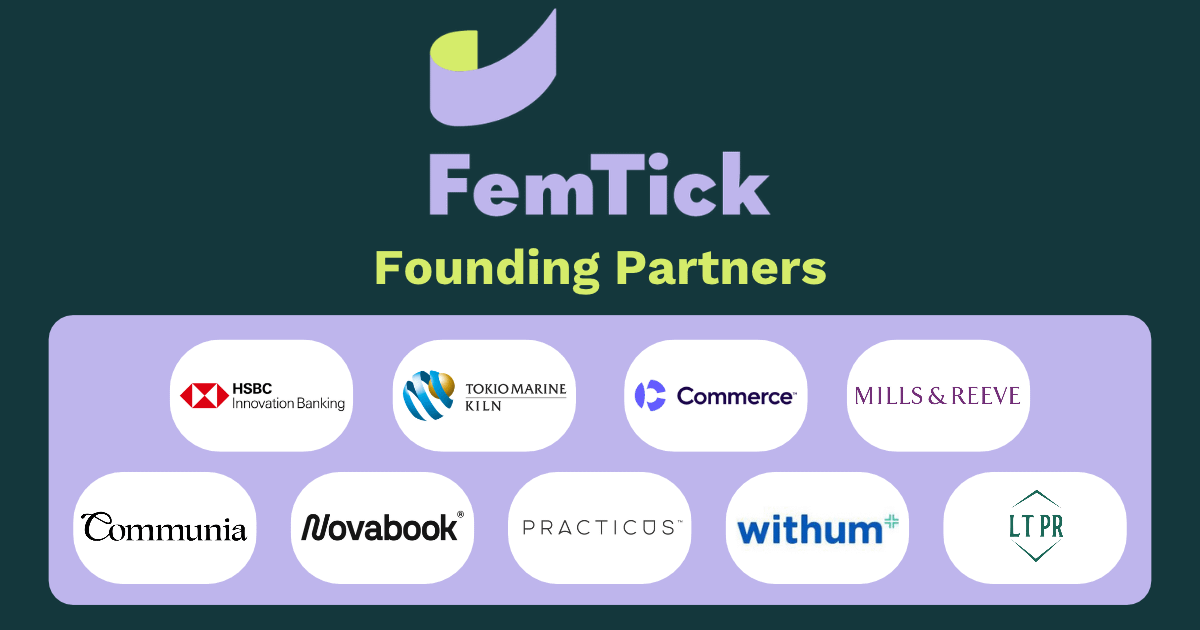
We’re delighted to launch with nine founding partners: HSBC Innovation Banking, Tokio Marine Kiln, Commerce, Mills & Reeve, Withum, Practicus, NovaBook, LT PR, and Communia.
If you’re a founder, look out for the FemTick badge. And if you’re a service provider interested in getting involved, we’d love to hear from you.
👉 Read the full FemTick story or get in touch at anna@censhership.com and clio@censhership.com.
Disclosure: FutureFemHealth founder Anna O’Sullivan is also co-founder of CensHERship, the organisation behind FemTick.
💰 Capital flows
📌 US/SPAIN: Hologic to acquire breast cancer diagnostics startup Reveal Genomics. Personalised breast cancer treatment is the focus of Hologic’s latest acquisition, with the diagnostics group agreeing to buy Barcelona-based Reveal Genomics. Its HER2DX genomic test helps clinicians guide treatment decisions for patients with HER2-positive breast cancer, adding to Hologic’s precision oncology portfolio. The deal follows Hologic’s acquisition by private equity firms Blackstone and TPG earlier this year. Financial terms were not disclosed. (Continue reading: Hologic)
📌 US: Labcorp to acquire Myriad Genetics’ prenatal testing business for $210m. A sizeable deal in reproductive diagnostics, with Labcorp agreeing to acquire Myriad’s prenatal testing portfolio, including its Prequel and Foresight genetic screening tests. The business has served more than 600,000 patients over the past year and is expected to add around $160m in annual revenue to Labcorp. For Myriad, the sale will free up resources to focus on cancer diagnostics, while Labcorp expands its women’s health testing portfolio. The deal is expected to close by early 2027, subject to regulatory approval. (Continue reading: Labcorp)
📌 CANADA: Sprout Family raises C$3.55m to expand fertility and family-building benefits. With infertility now as prevalent as diabetes in Canada and a single IVF cycle costing upwards of $20,000, employers have a growing role to play in supporting staff. Toronto-based Sprout Family has raised an oversubscribed seed round to expand its benefits platform across fertility, pregnancy, postpartum and return-to-work support. Founded in 2023, Sprout says access to its services has grown elevenfold. BDC’s Thrive Venture Fund led the round. (Continue reading: Sprout Family)
📌 UK: Unravel Health raises £2.5m to develop at-home hormone monitoring technology. Blood tests offer a snapshot of hormone levels, while wearables can track patterns but can’t measure hormones directly. London-based Unravel Health wants to bridge that gap with a palm-sized device that measures four hormones simultaneously from saliva in minutes. Developed over ten years at the University of Glasgow, the technology could help women track hormonal changes from PMOS to perimenopause. Conduit EIS Impact Fund and Wrightwood led the round, with early-access devices planned for 2027.(Continue reading: EU startups)
Also funded: US-based LGBTQ+ therapy platform Allswell raised $7m; Danish perineal-tear prevention device Oasicare secured funding from Unconventional Ventures (no amount disclosed).
🌟 Industry moves and strategic shifts
📌 US: Millie and El Camino Health launch joint maternity care model. Another interesting example of women’s health startups working with hospitals rather than competing against them. Maternity startup Millie is partnering with California’s El Camino Health to open a joint clinic in Palo Alto later this year, combining midwifery-led pregnancy and postpartum care with hospital delivery and specialist services. It follows last week’s Dry Days Health–Parkview Health partnership, which similarly connects virtual care with hospital services. A second Millie clinic is planned. (Continue reading: Millie)
📌 US: SimBioSys receives FDA clearance for AI breast cancer risk tool. Could existing breast MRI scans help doctors assess recurrence risk before surgery? Chicago-based SimBioSys has received FDA clearance for TumorSight Risk, which combines MRI, pathology and clinical data to estimate five- and ten-year recurrence risk in certain early-stage breast cancers. The software was validated using data from 2,129 patients. (Continue reading: SimBioSys)
📌 GLOBAL: Women’s health innovations feature in TIME’s Best Inventions of 2026. Congratulations to the femtech companies on this year’s list! Among them are Peri, a wearable tracking perimenopause symptoms; MyCelsius, a cooling bracelet for hot flushes; and Samphire Neuroscience, whose Nettle headband uses neurostimulation to help manage menstrual pain and mood symptoms. (Continue reading: TIME)
📌 GLOBAL: Withings analysis of 469,000 menstrual cycles finds three in four women sleep worse before their period. Women may be getting almost as much sleep before their period as during the rest of their cycle, but the quality appears to suffer. Analysing 469,000 menstrual cycles, Withings found that 76% of women experienced poorer sleep quality before menstruation, including less deep sleep, higher nighttime heart rates and lower heart rate variability. Women using hormonal contraception showed smaller fluctuations. (Continue reading: Withings)
📌 US: Midi Health expands beyond menopause into common infections. Having built its business around menopause care, Midi is moving into more everyday women’s health needs. Its new service offers same-day virtual consultations for UTIs, bacterial vaginosis and yeast infections across all 50 states, with prescriptions where appropriate and visits covered by most major commercial insurers. (Continue reading: Midi Health)
📌 US: ProMom relaunches app with more focus on mothers’ health. Pregnancy apps often focus heavily on the baby, but what about the mother? San Francisco-based ProMom has relaunched its app with personalised guidance from preconception through the first two years postpartum, including appointment preparation, meal planning and tracking for mothers as well as babies. The AI-powered app uses clinically reviewed guidance and promises no advertising or sale of user data. (Continue reading: ProMom)
🩸 Research and women’s health news
📌 GLOBAL: New research reveals a biological ‘cliff’ around menopause. Menopause affects far more than reproductive health, and some of the changes may be more sudden than we previously thought. Analysing over 300 million blood tests from more than one million women, researchers found sharp changes around menopause in markers linked to bone health, cholesterol, liver and kidney function. Women using hormone therapy showed smaller changes in several measures. Published in Nature Medicine, the findings add to our understanding of menopause as a whole-body transition. (Continue reading: Nature Medicine)
📌 US: Ovaries may remain biologically active long after menopause, new research finds. It turns out the ovaries don’t simply retire once their reproductive work is done. Researchers at Northwestern University and the Buck Institute analysed ovarian tissue from 28 women aged 50 to 75 and found that the organs continue to change decades after menopause, including changes linked to inflammation and tissue structure. Some of the molecular patterns were also associated with ovarian cancer, raising new questions about the role ovaries play in women’s health later in life. (Continue reading: Northwestern University)
📌 UK: SheMed publishes one of the largest real-world studies of GLP-1 treatment in women. More than 8,000 women participated in the study with UCL, published in Nature Medicine. After six months of digitally delivered GLP-1 treatment, participants with follow-up weight data had lost an average of 15.5% of their body weight, with improvements in metabolic health. More than 91% remained on treatment. The findings offer valuable real-world evidence for digital obesity care in women, although the study had no comparison group.(Continue reading: SheMed)
📌 EUROPE: Women’s health receives just 1.86% of Horizon Europe funding contributions, new analysis finds. Despite growing attention on women’s health, a new report from the Centre for European Policy Studies found that just 596 of 22,528 Horizon Europe projects examined between 2021 and July 2026 were related to women’s health. These accounted for 2.65% of projects but only 1.86% of European Commission contributions. The researchers also identified gaps in cardiovascular and autoimmune disease research and a lack of funding to move discoveries towards clinical use and commercialisation. (Continue reading: CEPS)
📄 Policy watch: risks and opportunities
📌 US: Trump signs executive order on women’s health research. Trump signing an executive order on women’s health was certainly not on my predictions list for 2026! What’s promising is that the order takes a broad view of women’s health beyond reproductive health including cardiovascular disease, autoimmune conditions, endometriosis, menopause, osteoporosis and Alzheimer’s disease. But the big question is whether it will bring genuinely new investment into women’s health research or simply redirect funding and resources already allocated elsewhere. (Continue reading: The White House)
📌 US: ACOG gives hormone therapy a strong recommendation in updated menopause guidance. In its most comprehensive menopause treatment guidance in more than a decade, the American College of Obstetricians and Gynecologists has formally given systemic hormone therapy a strong recommendation for hot flushes, night sweats and related sleep problems in women without contraindications. While ACOG already considered hormone therapy the most effective treatment, the new guidance uses an updated evidence-grading framework and provides clearer recommendations on treatment timing.(Continue reading: Contemporary OB/GYN)
📆 Save the date
UK: Rules of reproduction - who gets to build the future of fertility? London. November 3. 👉 Register here.
CANADA: Annual Femtech Canada Forum. Toronto. November 3. 👉 Register here. Use code FTC_25promo for 25% off tickets.
CANADA: Women’s Health Investor Networking Event. Toronto. November 9. 👉 Register here.
FRANCE: Women’s Health Europe Forum. Paris. November 27. 👉 Register here
That’s all for this week. If you found this briefing useful, please forward it to someone working in women’s health.
Anna

PS - even more from FutureFemHealth….
📊 Go deeper with FutureFemHealth Pro. Explore original funding data, emerging markets and analysis of the businesses shaping women’s health. Explore Pro.
🔎 Interested in women’s health funding intelligence? We’re building a searchable database of companies, investors and deals. Get in touch if you’d like early access.
🤝 Want to reach the sector? Ask about newsletter sponsorships and research partnerships. Get in touch.
This newsletter is for informational purposes only and should not be considered medical or financial advice.