



In recent years there’s been a transformation in the wearables space as they shift from designs centred around male athletes and sports performance to instead including - and sometimes even leading with - a female-focused approach.
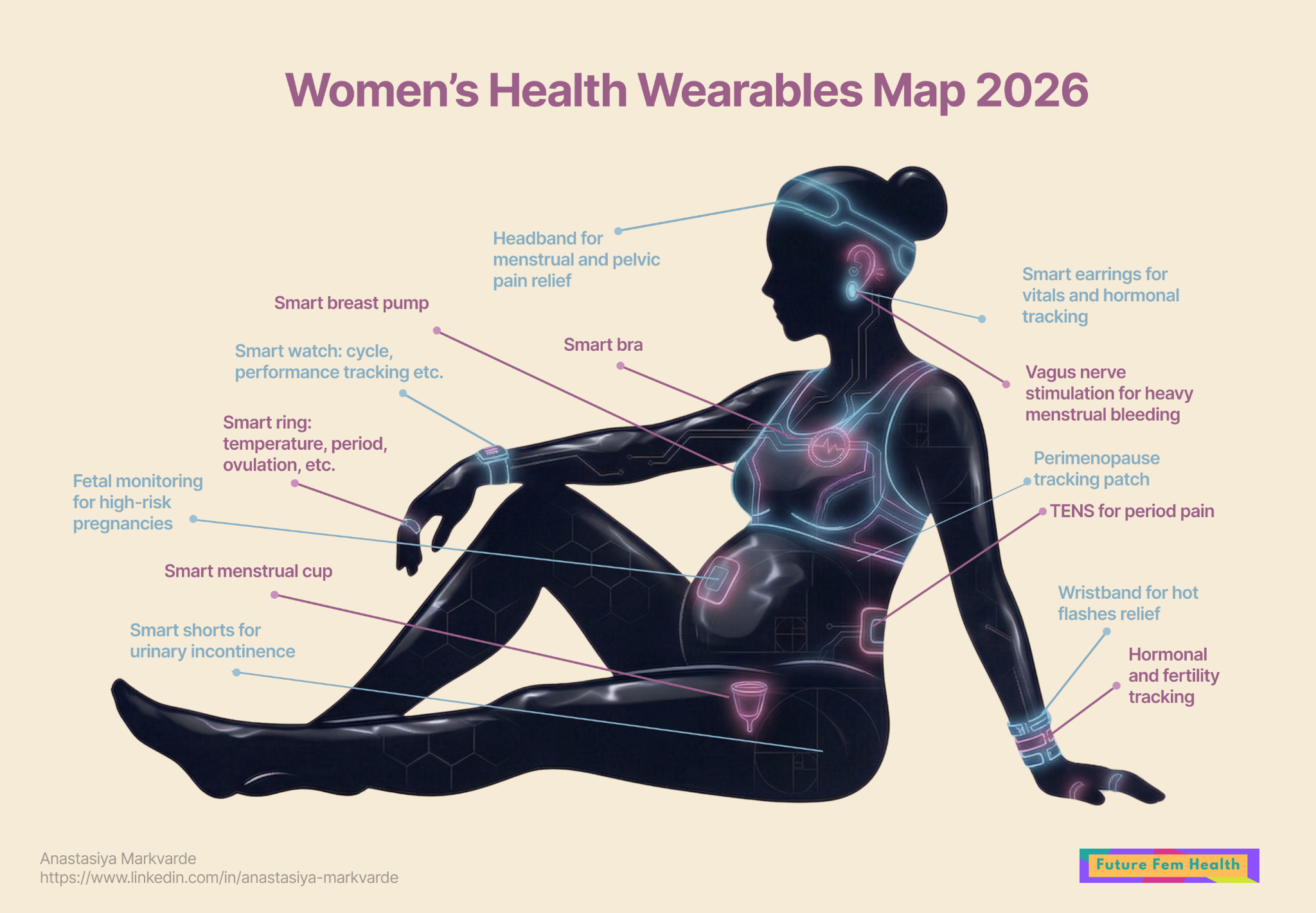
In a new FFHi report, written by women’s health strategist Anastasiya Markvarde, we share a curated map to describe every major category of women’s health wearable - literally from head to toe - mapping them onto a silhouette of a pregnant woman.
While most devices included in the article serve women at all life stages and go further beyond fertility, the pregnant woman’s body concentrates one of the fullest spectrums of physiological demands these devices address: cardiovascular shifts, hormonal flux, sleep disruption, pelvic load, fetal wellbeing, and postural change.
As always, this map highlights some of the leading devices in the area and is non-exhaustive. We welcome your feedback on the recommended additions to our list!
Why are “imperfect” wearables worth our attention?
Before we dive into the wearables landscape, let’s address the ‘imperfection’ of these devices and the early stage of development.
Wearables are routinely criticised for being imprecise, not FDA-approved, or insufficiently validated in large clinical trials. While this is a legitimate scientific standard to hold it must be weighed against the actual state of healthcare for women, which is far from perfect itself.
It’s a context we know all too well: conditions like endometriosis take an average of seven to ten years to diagnose. If hormonal treatments are not an option, then patients are left with virtually no alternatives. Conditions like heavy menstrual bleeding (HMB) remain very difficult to diagnose and treat because clinical evaluation often relies on subjective recall (like estimating pad usage or even simply asking the patient’s perception).
And this is compounded by the systemic dismissal of women’s pain and gaps in standard care which are a real emergency. In the UK, the Government’s updated Women’s Health Strategy, announced in April 2026 acknowledges that the NHS, “too often gaslights women, treating their pain as an inconvenience and their symptoms as an overreaction.”
In this context, the argument that women should wait for “perfectly validated” wearables before using them sets a standard that our healthcare systems have never been held to when treating women.
Clearly, wearables should not replace clinical judgment or be used as standalone diagnostic tools. But what they can do is to offer more insights about women’s bodies, support women with continuous data about their health (something that wasn’t previously available), or provide a potential therapeutic alternative.
With that framing in place, here is our map….
1.On the ear: smart earrings & auricular neurostimulation

The ear is emerging as a strong site for wearable sensing.
It has rich, consistent blood flow, which makes temperature readings more stable than the wrist, and it also connects directly to the autonomic nervous system via the ear’s nerves. Early validation studies show that ear-based wearables can estimate core temperatures within around ±0.3–0.4°C when combining multiple sensors - that’s broadly in line with, or better than, many wrist-based devices. But accuracy still varies between individuals and needs more work.
There’s also a growing evidence base behind using the ear for vagus nerve stimulation. Systematic reviews now cover more than 40 randomised trials across depression, chronic pain, epilepsy, and insomnia, with several studies showing clinically meaningful improvements in symptoms. That said, the evidence is still mixed and larger, more consistent trials are needed
Incora smart earrings: Incora has developed wearable earrings that provide insights based on the menstrual cycle, heart rate, sleep, and offer continuous temperature via in-ear sensors. Having achieved a special mention as a TIME Best Invention of 2025, the device is currently in waitlist phase with no confirmed commercial launch date.
Lumia smart earrings: Lumia’s device tracks blood flow to the head - not just the usual wearable metrics like heart rate or sleep. The latest Lumia 2 builds on earlier versions originally created for patients with POTS (postural orthostatic tachycardia syndrome) and long COVID, both conditions where blood circulation to the brain doesn’t work properly, leading to symptoms like dizziness, fatigue, brain fog and fainting. Lumia’s sales started in November 2025 in the US and Canada at a $249 retail price plus a $10 monthly subscription, and is being sold primarily through an early-access reservation system.
OhmBody auricular neurostimulation device: OhmBody is a consumer earpiece wellness device that uses neurostimulation to target nerve pathways and relieve menstrual symptoms without drugs or hormones. The underlying neuromodulation platform has received FDA clearance for specific medical indications (such as opioid withdrawal), but OhmBody itself is marketed as a wellness product. In early small studies, 88% of participants experienced greater menstrual comfort, with an average 55% reduction in menstrual blood loss and 71% reporting emotional stability. The device was showcased at CES 2026 and is available for sale priced at $559 for the starter kit.
2. On the head: neurostimulation headbands for cycle & sleep
Brain-directed interventions represent an innovative area in women’s health.
Most treatments today for menstrual pain focus on symptoms (pain relief, sleep aids, antidepressants). But brain-directed interventions try to target the underlying cause of conditions like PMS, PMDD and menopausal insomnia - namely how hormonal changes affect brain activity. Head-worn devices are therefore moving beyond consumer “meditation aids” into targeted neuromodulation for women’s health. Many startups use techniques like tDCS (mild electrical stimulation) or EEG-guided feedback to influence brain regions linked to pain, mood and sleep - positioning themselves as alternatives or add-ons to medications.
Samphire Neuroscience cycle and pain headband: Samphire Neuroscience has developed a headband that uses mild electrical stimulation to reduce menstrual pain and mood symptoms by stimulating brain regions involved in pain perception and emotional regulation. The device is worn for 20 minutes daily during the days before menstruation ,guided by a companion mobile app. The product is marketed as Nettle™ in the UK/EU and Lutea™ in the U.S., with retail prices around €420 - €600, and is currently being investigated in clinical studies for conditions including PMDD, endometriosis-related pain, and menopause-associated symptoms. In early company-reported clinical testing, users of the active device experienced an average 52% reduction in menstrual pain compared with baseline or sham stimulation, supporting further clinical trials.
Flow Neuroscience neuromodulation wearable for depression: Flow Neuroscience has developed a wearable neuromodulation headset designed to treat depression using transcranial direct current stimulation (tDCS). The device delivers a mild electrical current to the brain region involved in mood regulation, while a companion mobile app provides behavioural therapy guidance and treatment tracking. The headset has been CE-marked in Europe and the UK for depression treatment for several years and in 2025 the company received FDA approval for at-home treatment of major depressive disorder, with U.S. launch expected in 2026. This FDA approval has been a significant milestone for the overall potential of tDCS.
Clinical evidence supporting the system includes randomized controlled trials in which patients completed a 10-week course of daily 30-minute stimulation sessions, demonstrating remission rates significantly higher than placebo conditions in company-sponsored studies. The Flow headset is currently commercially available across the UK and Europe, typically priced around €459 for the full system including the stimulation device and app-based therapy program. Beyond general depression treatment, Flow has increasingly focused on women’s mental health applications, including pilots addressing perinatal depression, depression following pregnancy loss, and mood disorders during perimenopause. This matters because medication isn’t always suitable or preferred in these life stages.
Muse sleep & meditation headband: The Muse S is one of the more established head-worn devices with over 200 peer-reviewed studies investigating its effects on cognitive performance, anxiety, PTSD, and sleep. The device uses brain signals, heart rate and movement tracking to provide real-time feedback for meditation and sleep. It includes clinical grade sleep tracking too. A clinical trial specifically for menopausal insomnia is underway, evaluating the Muse S as a non-pharmacological alternative. In 2025, Muse users collectively tracked 56.5 million minutes of sleep, selling at $250 to consumers.
3. On the chest / torso: smart bras & perimenopause sensors

The chest and torso are emerging as another focus area for wearables - especially around the breast and upper chest where there are rich signal sources. Emerging directions focus on breast-focused sensing (smart bras and inserts) for heart, breathing, body composition and breast changes, as well as perimenopause as an under‑served but high‑impact use case. This category is still early. The challenge is that breast tissue moves and changes shape so signals can be easily distorted by motion and pressure. And, any product that claims early cancer detection faces the same evidentiary and regulatory bar as mammography or MRI. So far, there are no clear winners - which tells you how hard it is to get right.
In contrast, perimenopause sensors like Peri are already in the market, repurposing CGM‑style adhesive patches on the torso to track hot flashes, night sweats, and cardiometabolic load.
Overall, these devices are important because they represent a women-specific shift in wearables which has been largely invisible in mainstream wearables.
Bloomer Tech smart bra: Bloomer Tech’s wearable integrates an electrocardiogram device with the goal of improving heart disease treatment and prevention. It collects data on heart function, lungs, hormones and metabolism to detect irregularities. The product is still in the testing phase.
Petal smart bra insert: Petal has developed a bra insert which that tracks heart rate, HRV, breathing rate, menstrual cycle phase, and body composition using bio-impedance analysis (BIA). This uses electrical signals rather than optical sensors which are common to wrist wearables. Petal is in consumer waitlist phase as of early 2026 with a pre-order pricing of $199.
IcosaMed smart bra: IncosaMed integrates ultrasound sensors into its wearable for early detection of breast cancer at home. Embedded, miniaturized ultrasound transducers safely create 3D images of breast tissue without the use of harmful radiation or uncomfortable compression. The technology is however still under development and has been demonstrated at the prototype level with few recent updates available.
Additional companies innovating in smart bras: In general, there have been several projects or companies pursuing the smart bra idea. Cyrcadia Health raised almost $5M and reached the stage of clinical trials but ultimately ceased operations. A team from MIT developed a smart sensor patch that can be attached to the bra to track interval cancers (tumors that appear between regular mammograms) but the project has so far remained at a prototype level. It seems that there is still a need for a strong player to bring the smart bra concept to market.
Peri perimenopause tracker: Peri is positioned as the world’s first wearable designed specifically to monitor physiological signals associated with perimenopause symptoms. The adhesive sensor patch, worn on the torso below the bra line tracks temperature, heart rate, stress signals and movement to to identify patterns linked to hot flashes, night sweats, sleep disruption, and anxiety. The device syncs with a companion app that combines these signals with menstrual-cycle and lifestyle information to generate personalized insights and symptom tracking over time. Introduced at CES 2026, Peri launched with a retail price of $449, aiming to provide women and clinicians with objective longitudinal data on perimenopause, a life stage that is often under-recognized in clinical practice.
4. On the wrist & finger: rings & bracelets
This category is the most commercially mature, with multiple clinically-validated devices and significant user adoption.
There are now two groups competing: general-purpose rings (Oura, Samsung, Ultrahuman) and women-first devices (Evie, Ava, Bellabeat).
Those in the general category are quickly adding skin temperature sensors, cycle AI and women’s health integrations. Interestingly, overall smart ring shipments grew 49% in 2025, far outpacing the 6% increase in the segment of smartwatches.
Not all players are taking women’s health equally seriously. Some treat it as an add-on, while others, like Oura, are investing more heavily in women’s health features, research and partnerships. The rapid growth of women’s health features in wearables is also being driven by investor interest in the broader digital health and “human performance” category. The momentum is highlighted by the Oura decacorn fundraise in 2025, as well as WHOOP’s’ $575 million round just this month with players like Abbot and Mayo Clinic among investors.
Rings:
Oura Ring, a leader in the ring segment, has sold 5.5 million rings since its 2015 launch - around half in the last year alone - and raised $900 million in October 2025 at an $11 billion valuation. While Oura started as a general wellness and sport company, in the last years it has been increasingly focusing on women, adding women’s health features like cycle tracking (the Oura Ring 4 uses nightly skin temperature to infer menstrual phase) and looking into perimenopause support (by doing a study and a report on perimenopause). Oura has partnered with a variety of women’s health companies like Clue, Natural Cycles, Mira and others to provide relevant cycle, fertility and hormonal tracking integrations. In February 2026 the company launched a women’s health-specific AI model within its Oura Advisor chatbot, trained on clinical research and individual biometric data. Women now represent 59% of Oura’s customer base, with young women (especially in their 20s and early 30s) as the fastest‑growing segment.
Ultrahuman Ring includes menstrual cycle and fertility awareness features derived from overnight temperature trends, heart rate variability, and other physiological signals collected by the smart ring. Within the Ultrahuman app, these signals are analyzed using the Cycle & Ovulation feature to estimate cycle phases and potential ovulation timing, allowing users to track patterns over multiple cycles. This feature is powered through its acquisition of the women’s healthtech company viO HealthTech which took place in 2025. Ultrahuman positions its platform as a metabolic-health wearable ecosystem that integrates reproductive health signals with broader physiological monitoring. The company has published research based on thousands of cycles collected from ring users, examining factors such as stress, BMI, and activity levels in menstrual variability on a dataset of more than 4000 cycles. Their JADE AI connects ring biometrics with 120+ blood biomarkers, CGM glucose trends, and environmental data which is one of the most advanced and data-rich integration currently on the market in a consumer ring.
Movano Evie Ring: the Evie Ring has been originally designed with a focus on women’s health and it is backed by Movano’s clinical technology, which achieved FDA 510(k) clearance for the pulse oximetry (SpO2 and pulse rate) features in its medical-grade EvieMED counterpart. The launch has not been without challenges. While the Evie Ring was long anticipated ahead of its original launch early in 2024, despite securing $1million in advance sales in its Black Friday pre-order sales alone, it was quickly and temporarily discontinued after negative customer feedback and lukewarm expert reviews. It was relaunched again in 2024 with a new design. At CES 2025, Movano unveiled EvieAI, a wearable-based virtual wellness assistant uniquely trained on over 100,000 medical journals. Expanding its ecosystem, Movano also recently updated the Evie app to include Apple Health integration, daily basal body temperature logging, and comprehensive 7- and 30-day trend graphs for its sleep metrics. At the date of publication, the ring appears to be out of stock on the company’s website.
Women’s health wrist wearables:
Ava fertility tracking bracelet: Ava Fertility Tracker is a wrist-worn fertility-tracking wearable that has received clearance from FDA and has been CE-marked as a fertility-monitoring device. The bracelet is worn overnight to estimate and predict the fertile window. It continuously measures multiple physiological parameters associated with hormonal changes across the menstrual cycle, including resting pulse rate, skin temperature, heart-rate variability, breathing rate, and peripheral perfusion. Studies suggest 90% accuracy when validated against urinary luteinizing hormone testing. However, independent research indicates that additional validation in real-world (“free-living”) conditions is needed.
Bellabeat Ivy bracelet: Bellabeat Ivy is a wearable wellness tracker designed with a jewelry-style form factor rather than a traditional sports wearable. The device monitors heart rate, activity, sleep patterns, and stress, and includes features for tracking menstrual cycles and reproductive health. The Ivy platform emphasizes holistic lifestyle insights, integrating wellness metrics with menstrual cycle information in the Bellabeat app. The device received recognition as a TIME Best Invention and targets users seeking health tracking in a discreet, fashion-oriented wearable format. It is being sold at $380.
Clair Non-invasive wrist hormone monitor: Clair, a Stanford-born startup, generated significant attention with its 2026 launch announcement, outlining plans for a wrist wearable that aims to use 10 biosensors to estimate hormone levels in real timewithout blood draws or urine tests. The sensors (including skin temperature, resting heart rate, HRV, sleep architecture, breathing rate, electrodermal activity, and motion) are fed into a proprietary AI to infer levels of estrogen, progesterone, LH and FSH. Clair describes this as continuous hormone tracking, though some critics argue that term should be reserved for direct measurement rather than inferred signals. In early testing of 40 women and 127 cycles (5,000+ days of data), Clair reports 94.1% accuracy in cycle phase classification, with LH surge detection at 87% sensitivity and timing accuracy within 1.2 days. Shipping is planned for November 2026.
If validated in larger clinical studies, continuous hormone estimation could represent a new category of reproductive health monitoring beyond temperature-based cycle tracking, though the technology is still under development.
Big consumer watch & wristband players in women’s health:
Apple’s approach to women’s health centres on cycle tracking. Its models estimate period timing and fertile windows based on historical cycle data. Newer Apple Watch models also add dual wrist temperature sensors and heart-rate monitoring for improved cycle and ovulation predictions when worn during sleep. Cycle deviation alerts can flag irregular, infrequent, or prolonged cycles that may signal underlying conditions. Early findings from the large-scale Apple & Harvard Women’s Health Study, the first study of its kind on lifestyle and demographic factors impact on menstrual cycle, showed that cycle deviations occurred in ~16% of participants, highlighting the potential of wearable data for large-scale reproductive health monitoring.
WHOOP focuses on how hormonal changes impact recovery and performance. Its Hormonal Insights feature connects menstrual cycle phases with personalized recommendations for sleep, strain, and stress management, while also offering pregnancy tracking and symptom logging. A distinctive scientific contribution from WHOOP research is the “Cardiovascular Amplitude” metric, derived from analysis of more than 11,000 members and 45,000 cycles, which quantifies changes in HRV and resting heart rate across the menstrual cycle. The analysis found that 93% of participants showed predictable cardiovascular shifts between follicular and luteal phases. WHOOP has also expanded into biomarker testing with a women’s health blood test panel measuring 11 hormones and metabolic markers - including AMH, progesterone, and thyroid indicators - to complement wearable insights.
Garmin integrates menstrual health insights across its smartwatch ecosystem via the Garmin Connect platform, which allows users to track cycle phases, symptoms, pregnancy, sleep, stress, and training performance. Garmin has increasingly positioned its wearables as tools for large-scale women’s health research. In 2025 the company announced a major collaboration with King’s College London to support the EMBRACE research program, a global study that will collect smartwatch and fitness-tracker data from up to 40,000 participants to better understand pregnancy and maternal health outcomes. Lately Garmin has integrated the FDA‑cleared Natural Cycles birth control app with select smartwatches so that overnight skin‑temperature data from the watch can be used to provide non‑hormonal fertility and contraception insights in the Natural Cycles app.
Polar’s women’s health functionality focuses primarily on cycle awareness within athletic performance tracking, rather than clinical reproductive monitoring. Recent Polar watches feature nightly skin temperature tracking, which measures deviations from a user’s baseline during sleep and can reflect hormonal shifts associated with ovulation and the luteal phase. These signals feed into Polar’s Polar Elixir biosensing platform, which combines heart rate, HRV, temperature, and recovery metrics to provide personalized wellness insights. Through the Polar Flow app, users can log menstrual cycle information and interpret training readiness relative to hormonal phases, supporting a growing trend toward cycle-informed exercise and recovery optimization for female athletes.
Withings integrates women’s health tracking across its hybrid smartwatch ecosystems. The platform combines manual logging with physiological signals from wearable sensors such as continuous temperature tracking, heart rate, respiratory rate, and sleep metrics, which can help identify hormonal patterns across the menstrual cycle. Flagship devices like ScanWatch 2 include the TempTech 24/7 module, enabling continuous body-temperature monitoring that can support retrospective ovulation confirmation and cycle insights when combined with historical cycle data. In 2025 Withings partnered with Clue, integrating Clue’s cycle-prediction algorithms with wearable data such as temperature, sleep, and stress metrics.
5. On the abdomen hips & lower back: period pain and bone health
Drug-free electrical pain management has strong clinical backing for period pain. A 2026 meta-analysis confirmed TENS can work as a standalone treatment when used at the right intensity. Every device in this segment is women-specific by design.
Livia for period pain: Livia is a clip-on TENS device using patented SmartWave™ technology to block period pain signals before they reach the brain, backed by three double-blind, randomised clinical studies in primary dysmenorrhea. It holds FDA clearance, Health Canada approval, and CE marking. Livia gained meaningful post-market clinical support thanks to the recent meta-analysis evidence. It is currently the gold standard among consumer period pain TENS devices.
Ovira (Noha) & also EVA are comparable TENS-based wearables for period pain, using clip-on form factors similar to Livia and addressing the period pain too. EVA extends this by also offering intra-vaginal electrical stimulation as an option, broadening its scope to pelvic floor engagement beyond surface-level pain blockade.
All three products position themselves ass drug-free period pain management alternatives. This is one of the few areas in women’s health weearables where there is strong clinical backing, a clear use case and products are already established and on the market.
Osteoboost for bone health: Osteoboost Health’s vibration therapy is daily wearable, worn at the hips, designed for low bone density. It is a class II prescription wearable that delivers targeted vibration therapy to the hips and spine - areas most vulnerable to osteoporotic fractures. Osteoboost is positioned as the first FDA-cleared, non-drug treatment for women with osteopenia, a precursor to osteoporosis. Osteoboost recently secured $8million to scale its wearable.
6. On the pelvis: smart cups & pelvic floor devices
This category is entirely women-specific.. The clinical stakes are high: urinary incontinence affects one in three women, and endometriosis takes an average of 8 -10 years to diagnose. Both problems are driving serious investment in this category.
Emm smart menstrual cup embeds ultra-thin biosensors that automatically track flow volume, daily flow rate, cup usage timing, and cycle regularity with no need for manual input. Data goes from sensors to the app via a charging case, not during wear. The company has specifically positioned Emm as a potential tool for earlier detection of endometriosis by providing objective, longitudinal flow data that could shorten the diagnostic conversation. UK launch is planned for 2026, with US market entry targeted for 2027.
Perifit (and others) smart kegel trainers: Perifit’s insertable silicone device uses patented double-pressure sensor technology to distinguish faulty pelvic floor contractions from correct ones, connecting to a gamified smartphone app. CE-marked and clinically proven to improve pelvic floor strength and reduce urinary incontinence. The gamification model addresses the real barrier to pelvic floor training: not knowledge, but consistent follow-through.
INNOVO Shorts for pelvic floor stimulation and urinary incontinence: INNOVO is a non-insertable alternative for pelvic floor treatment and so it is the most clinically significant device in the pelvic floor category. It is wearable shorts with built-in :electrodes delivering eletrical stimulation equivalent to kegel, with no insertion required. It received FDA De Novo clearance in November 2018 and OTC clearance on 5 February 2020, making it the first transcutaneous electrical stimulation continence device cleared for OTC use in the US. In the pivotal multi-centre RCT, 87% of users were considered dry or near-dry after 12 weeks, establishing the device’s clinical credibility.
7. Pregnancy & fetal monitoring and breastfeeding

During pregnancy, the wearable stack becomes more complex and expands significantly: since devices must track both maternal and fetal signals, manage gestational hypertension risk, and support remote prenatal care.
With nearly two in three pregnancies now qualifying as high-risk, demand is growing for clinically-approved, at-home fetal monitoring. As a result, the devices in this segment are among the most rigorously regulated wearables on the market.
Postpartum, wearable breastpumps have become one of the most widely adopted women’s health devices.
Bloomlife remote maternal & fetal monitoring: Bloomlife has developed MFM-Pro, a remote monitoring wearable designed to support clinical care for high-risk pregnancies. The system uses a wearable abdominal ECG patch that measures fetal heart rate (FHR) and maternal heart rate (MHR) during late pregnancy and transmits data to a connected digital platform used by clinicians for remote assessment. The device received FDA 510(k) clearance for fetal and maternal heart rate monitoring from 32 weeks of gestation onward. Bloomlife integrates with hospital telehealth workflows for remote pregnancy monitoring. Clinical evaluations, including studies conducted within European research programs, have compared the system’s measurements with standard cardiotocography (CTG) and demonstrated feasibility for home-based fetal monitoring.
INVU by Nuvo home non-stress testing: named a TIME Best Invention 2024, the INVU wearable abdominal band contains 12 sensors using ECG and acoustic (phonocardiographic) signals to measure fetal heart rate, maternal heart rate, and uterine activity remotely. FDA- and CE-cleared and prescription-initiated for high-risk pregnancies, currently used by healthcare providers and research institutions in the USA and Israel. A clinical study demonstrated that INVU’s uterine activity detection achieved 89.8% sensitivity, outperforming standard tocodynamometry (TOCO) in detecting uterine contractions when benchmarked against intrauterine pressure catheter (IUPC) measurements. This all supports INVU’s use as a telehealth tool for managing pregnancies that require frequent monitoring.
Molecular wearable for pregnancy risk monitoring by MoleSense: MoleSense is a Swiss medtech startup developing a non-invasive molecular wearable patch for pregnancy monitoring, focused on detecting hormonal and inflammatory biomarkers through sweat rather than measuring only vital signs. The skin-worn device uses microfluidics and DNA-based biosensors to analyze sweat chemistry over time, with the goal of identifying risks such as infection, inflammation, and preterm birth earlier than conventional snapshot blood tests. Unlike fetal-monitoring wearables that track heart rate or contractions, MoleSense is positioning itself as a next-generation biochemical monitoring platform for maternal health, aimed at high-risk pregnancies and postpartum care. Early feasibility work has been conducted with obstetric specialists in Lausanne, and the company states that the next phase is clinical validation of biomarker accuracy and real-world utility before regulatory submissions.
Willow (and others) wearable breast pumps such as Willow: In the postpartum period, wearable breast pumps represent one of the most adopted categories of women’s health wearables. The leading products in this category are Willow pumps, produced by Willow Innovations (including consolidation with Elvie Pump, whose assets were acquired by Willow). These devices combine quiet electric pumping systems, in-bra form factors, and mobile-app connectivity to allow discreet pumping during daily activities. The wearable breast pump market has expanded rapidly in recent years, with estimates suggesting global revenues of over $500 million in 2023 and continued growth driven by increasing demand for portable, work-compatible lactation technology. While products differ in design and pumping mechanisms, both brands aim to improve convenience and flexibility for breastfeeding parents during the postpartum period.
8. Menopause-related hot flash & thermoregulation wearables
This category is shifting from tracking symptoms to actively treating them. The wrist is used as one of the main sites for cooling, targeting women who cannot or do not want to use hormone therapy. Most devices in this segment do not aim to change core body temperature instead, they stimulate thermoreceptors at the wrist or use phase‑change materials to alter thermal perception and blunt vasomotor symptoms, with early clinical studies suggesting meaningful reductions in hot‑flash severity and interference with daily life. Most devices don’t try to change core body temperature. Instead, they cool the wrist to trick the body’s temperature perception, helping reduce hot flashes. This is particularly relevant for women who can’t or don’t want to use hormone therapy. Early studies suggest these approaches can reduce severity and daily disruption of symptoms.
Embr thermal wristband for hot flash relief: the Embr Wave 2 delivers short bursts of cooling or warmingto the inner wrist using thermoelectric elements. Instead of changing full-body temperature, the device stimulates thermoreceptors in the skin, triggering the brain’s perception of cooling or warming to relieve hot flashes and night sweats. Users can activate sessions manually or through a companion app, to help interrupt the onset of vasomotor symptoms. Early studies suggest that wrist-based thermal interventions can significantly reduce hot flash severity and frequency by altering the body’s thermoregulatory response. The device is widely available in North America and Europe and retails for about $299.
KÜLKUF clinical wrist cooling device: the KÜLKUF wristband is a thermoelectric cooling wearable investigated in clinical studies for the treatment of vasomotor symptoms such as hot flashes. The device delivers localized cooling to the wrist to influence thermoregulatory perception. Pilot studies using self-reported outcomes suggest a 46% reduction in severe hot flashes and an 18% reduction in total daily episodes, suggesting that targeted peripheral cooling can meaningfully reduce vasomotor symptom burden. The device remains in limited distribution and research settings for now.The wristband is priced as $199.
MyCelsius cooling wearable bracelet: the MyCelsius bracelet is a simpler, non-electronic approach. It is a non-invasive cooling device that usesphase-change cooling materials to absorb heat from the skin and deliver a prolonged cooling sensation when worn on the wrist. The device does not require charging or electronic control. With pricing of £229 in the UK market, MyCelsius illustrates a parallel segment of menopause technology focused on low-tech thermal regulation rather than biometric sensing.
Conclusion
There are many more women’s health wearables than most people assume - and that’s one of the key takeaways from this report.
Across categories we are seeing that passive and continuous sensing is replacing manual logging. Parameters like skin temperature, HRV, and resting heart rate are used as proxies for hormonal state rather than just fitness metrics. AI now sits on top of those data streams, with platforms like Oura, WHOOP, Ultrahuman and Apple training models on population‑scale cycle data to personalise insights. And general‑purpose ecosystems such as Apple Watch, Polar, WHOOP or Garmin are retrofitting women‑specific features via temperature sensors and cycle‑aware algorithms. Femtech‑first devices like Evie Ring, Ava, and Bellabeat go deeper on reproductive questions but serve smaller user bases.
All of this sits against a backdrop where the “imperfect wearable” is often competing with an “imperfect system.” These products are not diagnostic tools, but they create dense, longitudinal traces of symptoms and physiology that no annual appointment can match, especially for conditions like PCOS, endometriosis, and perimenopause, where symptoms are cyclical, variable, and often dismissed.
In this context, the question is whether a device adds information the healthcare system systematically misses. In many cases, our conclusion in this report is that the answer is yes. Regulatory clearance can definitely be a competitive advantage - but it is often misunderstood.Many times devices are being labeled as ‘approved by FDA’ without a context of what is the designation of the approval and what are the caveats. For example, screening features (like hypertension alerts) still require clinical follow-up and won’t catch every case.
At the same time, when the safety profile is solid, a wellness‑class hot‑flash or HRV sensor can still be clinically useful even if it never crosses into drug‑device territory.
As wearables improve, more responsibility shifts to the user. Data is generated outside of the clinic, interpretation often sits with the individual and decisions are increasingly influenced before a doctor is involved. That’s both an opportunity and a risk.
Wearables aren’t replacing healthcare - but they do change where insight is surfaced and where control sits. For women, long overlooked and dismissed by the healthcare system the benefits are already clear.
This article was written for FutureFemHealth by women’s health strategist Anastasiya Markvarde.
Great article, thanks!
The “imperfect wearable vs. imperfect system” framing is honest and overdue.
But there’s a layer missing from the conversation: marketing is reaching women faster than the clinical evidence is.
By the time a wearable has meaningful validation, women have already been influenced by wellness creators with affiliate links who haven’t read the studies. The data gap isn’t just between device and clinic. It’s between what’s being sold and what’s actually understood.
I work with women who are data rich and context poor. More tracking without the right framing and guidance doesn’t create clarity. It creates a new kind of noise.
@Anastasiya Markvarde and @Anna O'Sullivan, the framing that lands hardest is this: the "imperfect wearable" is competing with an "imperfect system." That resets the entire validation debate. Women have been waiting for a perfect healthcare system that never arrived. A device that adds longitudinal, cycle-anchored data the annual appointment systematically misses isn't a workaround — it's a correction.
The shift from tracking to therapeutic is the category worth watching most closely. INNOVO, Osteoboost, the neuromodulation headbands — these aren't wellness accessories. They're filling clinical gaps that the reimbursement system hasn't caught up to yet. And the Oura data point — 59% women users, fastest growth in their twenties, $11 billion valuation — is the clearest proof that women's health was always the growth driver. The industry just wasn't looking.
The algorithmic suppression layer deserves its own report. These devices face the same ad rejection patterns documented across women's health — which means the innovation is accelerating faster than the visibility infrastructure that would let women find it.