


Welcome to issue #138 FutureFemHealth, (w/c March 16 2026) — we’re the global weekly briefing on women’s health innovation.
I was interviewed by Geri Stengel for Forbes recently about our work at CensHERship - always interesting to be on the other side of the questions! You can read the piece in this week’s newsletter.
🌟 In this week’s briefing:
🤰🏼 Doulas move into the mainstream of US maternal care - with funding rounds for Nadia Care and Malama this week
🩸 Diamens raises 6-figure pre-seed funding to develop menstrual blood test for endometriosis
✅ Flo Health hires PR lead for privacy communications
🔥 Non-hormonal treatment for hot flushes approved for use in the NHS
Share your news for a future issue: anna@futurefemhealth.com
Doulas move into the mainstream of US maternal care

So much pregnancy care happens between appointments - and that is where doulas step in.
When a woman leaves a prenatal appointment, she’ll often have questions - about symptoms, nutrition, or what comes next. Having a doula to turn to between appointments, with guidance, reassurance and continuity is increasingly linked to improved maternal health outcomes.
This week, two US-based maternal health startups announced funding rounds, raising more than $21m between them and signalling growing investor interest in new models of care.
Nadia Care, formerly Cayaba Care, raised $12m to expand its hybrid model of in-home and virtual maternal support delivered by doulas and care teams across Washington DC, Maryland and Tennessee.
Days earlier, Malama launched with $9.2m in seed funding to scale a doula-led model combining remote monitoring, care navigation and postpartum support.
What stands out is that both companies centre the role of the doula - non-clinical professionals who provide continuous emotional, practical and informational support during pregnancy and after birth - alongside community-based care.
This reflects a broader shift as doulas move into mainstream maternal care, with particular benefits for underserved and higher-risk populations.
The policy shift
At the centre of this shift is policy change. In 2018 only Minnesota and Oregon provided Medicaid coverage for doula care meaning it was out of reach and unaffordable for most. By May 2024, 14 states and Washington DC, had introduced coverage. Today, more than 30 states offer some form of reimbursement, though implementation varies widely.
This matters because Medicaid covers around 40% of births in the US.
Now with increased coverage doulas no longer sit outside the system — they are being integrated into formal care pathways.
We’ve seen other women’s health companies building doulas into their models too. Maven has been one of the most prominent advocates, publishing peer-reviewed research on virtual doula care in 2024. Progyny added doula services to employer health plans in 2025, and Pomelo Care acquired The Doula Network in 2024, expanding access to more than 15 million lives.
Why doulas?
It is well-documented that the US has some of the worst maternal health outcomes among high-income countries, with disparities particularly acute among Medicaid patients.
Care remains largely organised around short clinical appointments, often missing the realities of day-to-day life that shape maternal health: transportation, nutrition, mental health, housing stability and health literacy.
This is a gap that doulas can help to fill - with continuous non-clinical care and support. Early data from Nadia Care and Malama suggests improvements in outcomes such as preterm birth and NICU use, supported by a growing body of research linking doula care to better outcomes, particularly for higher-risk groups such as Black patients.
More investment such as this week’s funding rounds for Nadia Care and Malama will help expand access and build the evidence needed to understand what is working.
And while no single lever will solve the maternal health crisis, scaling doulas within the system could play a meaningful role in improving outcomes.
💰 Capital flows: where are investors placing bets?
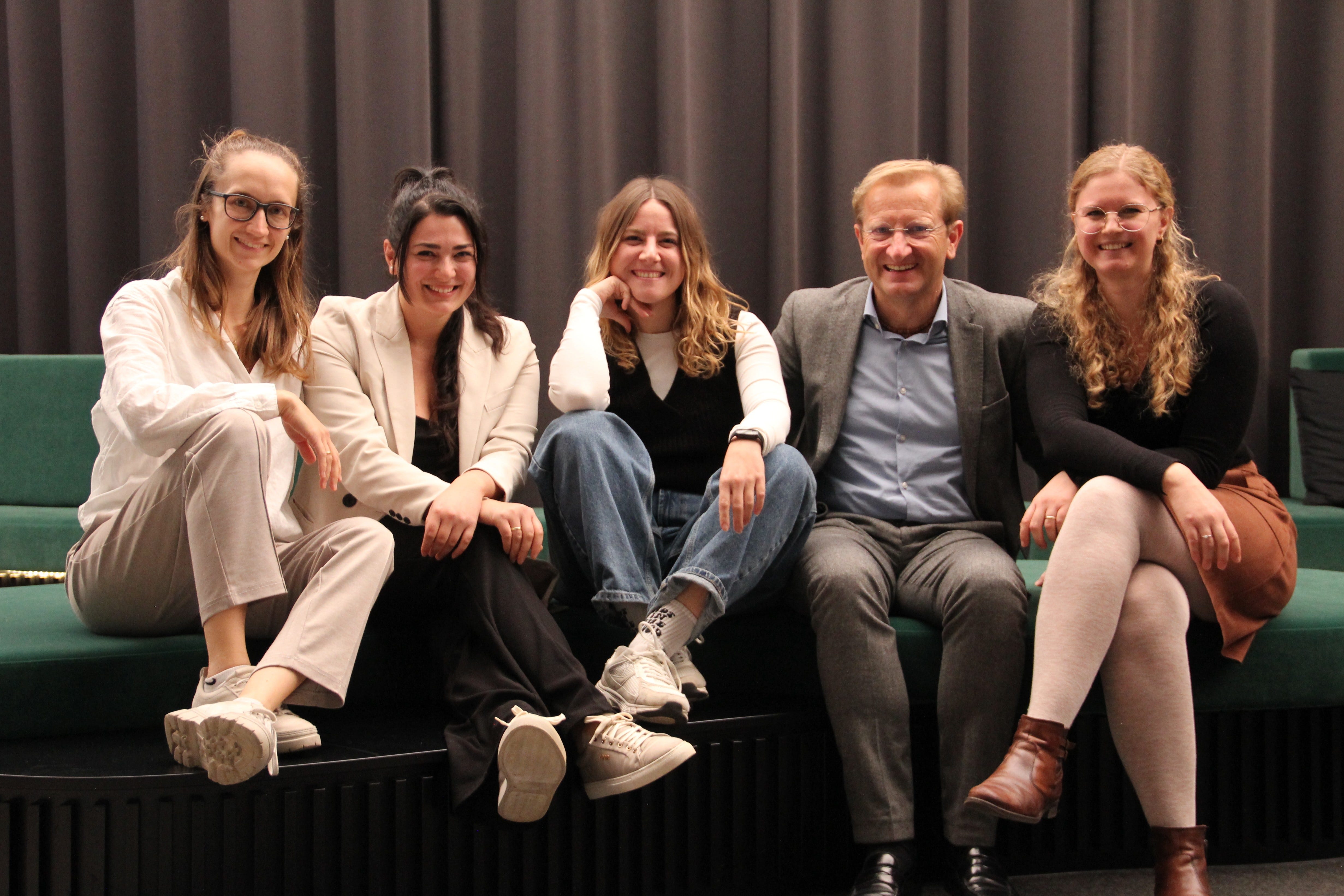
📌 AUSTRIA: Diamens raises 6-figure pre-seed funding to develop menstrual blood test for endometriosis. Diagnosis still takes ~7 years or more and often requires surgery. Diamens is developing a home-based test analysing menstrual blood biomarkers, with funding supporting clinical validation and regulatory work. This round was led by eQventure. The move comes amid growing interest in menstrual blood as a diagnostic source, with researchers exploring its potential for conditions ranging from endometriosis to fertility disorders. (Continue reading: FutureFemHealth)
📌 US: New Medicaid-focused doula provider Malama launches with $9.2m. Malama’s doula model combines care navigation, remote monitoring and postpartum support. Early data suggests improved outcomes, though still early-stage. This oversubscribed round was led by impact investor Acumen America and includes a $2.3m NIH grant and $1m in California state funding. (Continue reading: Fierce Healthcare)
📌 US: Nadia Care raises $12m to scale community-based maternal care. Nadia Care combines doulas, nurses and “maternity navigators” to target gaps in traditional maternal care, particularly for underserved populations. This round was led by Valtruis. (Continue reading: FutureFemHealth)
📌 SWEDEN: EsterCare raises SEK 7m (~$750k) to tackle hidden drivers of women’s sick leave. Women in Sweden take almost twice as much sick leave as men - but many underlying health conditions affecting women are underdiagnosed or misclassified, often appearing in statistics as mental health issues. EsterCare’s AI-powered workplace health platform combines employee screenings, symptom analysis and specialist referrals for issues such as PMS, menstrual disorders, menopause symptoms and birth injuries. This round includes Vera Invest, Impact Invest and more. (Continue reading: FutureFemHealth)
🌟 Industry moves and strategic shifts

📌 GLOBAL: Flo Health to hire privacy and policy PR lead as scrutiny of reproductive health data grows. The women’s health app previously faced regulatory action over data-sharing, including a 2021 settlement with the Federal Trade Commission, and agreed to contribute $8m to a class action settlement in 2025. This new role spans comms, policy and reputation - engaging regulators, shaping narratives on AI and data protection, and managing high-stakes issues internally and externally. It signals that privacy is becoming a core communications and strategic function for digital health platforms, not just a compliance one. (Continue reading: FutureFemHealth)
📌 US/INDIA: AI wearable ‘MAI’ promises two-week battery life and built-in safety features in women. This new wearable is aiming to make always-on monitoring more practical in regions with limited connectivity and weak network coverage. The device can also detect falls, SOS gestures and opt-in stress signals, triggering alerts for potentially dangerous situations. (Continue reading: FutureFemHealth)
📌 US: Maven Clinic launches direct-to-consumer platform nationwide featuring GLP-1 and hormone care. As demand for weight-management medications surges, many digital health platforms are expanding into GLP-1 services - turning them into a major new revenue line. Maven says its approach is different: prescribing decisions will incorporate reproductive health factors such as PCOS, postpartum recovery and perimenopause rather than relying solely on BMI. The new consumer platform also feeds back into Maven’s existing B2B ecosystem, allowing employers and health plans to add these services once they are validated in the consumer market. The move also signals how GLP-1 medications are rapidly becoming the entry point for broader metabolic and hormonal care - particularly for conditions like PCOS and perimenopause where insulin resistance plays a role. (Continue reading: HIT Consultant)
📌 US: Study finds Axena’s Leva pelvic health system improves fecal incontinence symptoms. Fecal incontinence affects 12 million US women, yet fewer than 3% are ever diagnosed. A new peer-reviewed real-world study published in Diseases of the Colon & Rectum reports clinically meaningful symptom improvement among women using Leva, Axena Health’s prescription at-home pelvic floor therapy system combining a vaginal biofeedback sensor, app guidance and remote support. The results show the potential of at-home treatment approaches in conditions that women may feel unable to discuss or seek care for - even if the bigger challenge of diagnosis remains unsolved. (Continue reading: Medical Product Outsourcing)
📌 US: Spark Biomedical launches LUNA trial testing neurostimulation for heavy menstrual bleeding. Heavy menstrual bleeding is one of the most common reasons women seek gynecologic care, yet treatment options are still largely limited to hormones, medication or surgery. Now Spark Biomedical has launched a Phase II clinical trial testing whether a wearable device that gently stimulates nerves through the ear can reduce heavy periods. The decentralized LUNA trial will enroll 80 participants across the US and is funded by Wellcome Leap’s Missed Vital Sign program, which aims to shorten the time it takes women to receive effective treatment for heavy menstrual bleeding from five years to five months. (Continue reading: FutureFemHealth)
📌 GLOBAL: Flo Health study suggests symptom checkers could shorten endometriosis diagnosis by four years. A new peer-reviewed study published in npj Digital Medicine suggests digital symptom checkers could help women reach an endometriosis diagnosis more than 50% sooner, while saving more than $5,000 per patient over time. The findings are based on modelling rather than real-world outcomes, but they highlight growing interest in tools that help women recognise symptom patterns earlier — a key barrier in conditions such as endometriosis where diagnosis often takes years. (Continue reading: Flo Health)
📌 GLOBAL: Why are women’s health founders denied bank accounts? Women’s health founders are hitting barriers before they even get to venture capital - they are getting misclassified as ‘adult’ industries or ‘high-risk’ by banks, payment processors, business insurers and ecommerce infrastructure. At a time when the global women's health market is growing rapidly, this represents an infrastructure problem that the financial services sector needs to address. Geri Stengel reports on this structural but solvable barrier. (Continue reading: Forbes)
🩸 Research and women’s health news
📌 UK: How AI can identify breast cancer ‘better’ than a doctor but there’s a catch. A nuanced look at a new study from Google, the NHS and Imperial College which shows AI can be better at identifying breast cancer than a human. But, as the piece explains, it also reveals the problems that would need to be solved to make it work in practice such as additional clinical checks. (Continue reading: Sky News)
📌 US: Preeclampsia Foundation launches national push for home blood pressure monitoring in pregnancy. Preeclampsia and other hypertensive disorders often develop between prenatal visits or after discharge, yet maternity care still relies heavily on episodic check-ups. The Preeclampsia Foundation has announced a new initiative to expand self-measured blood pressure monitoring during and after pregnancy. The model is simple: give patients a cuff, teach them how to use it, and ensure clinicians can respond when readings change. The goal is earlier detection of complications—and a shift toward continuous monitoring rather than occasional visits.(Continue reading: Preclampsia Foundation)
📌 GLOBAL: Postbiotics may help treat PCOS by restoring microbiome balance. A growing body of research suggests that the gut microbiome may influence the hormonal and metabolic disruptions seen in PCOS. Scientists now propose that postbiotics, bioactive compounds produced by microbes, could one day complement existing treatments by restoring microbial balance and improving metabolic health. **(Continue reading: News Medical)
📄 Policy watch: risks and opportunities
📌 UK: New non-hormonal treatment for hot flushes approved for use in the NHS. Up to 500,000 women are now eligible to benefit from new non-hormonal treatment for hot flushes caused by menopause. FDA approved back in 2023, Fezolinetant has now received final approval in England’s NICE guidance. It offers an alternative for patients unable or unwilling to take HRT, expanding treatment options and signalling greater recognition of menopause care needs. (Continue reading: NICE)
📆 Save the date
📌 VIRTUAL: FemTech Accelerate, March 25, 4pm-6.30pm GMT. An immersive workshop series in which founders and innovators explore the strategies, tools, frameworks needed to advance women’s health. Brought to you by the Women of Wearables team.
🎟️ Reserve your place.
✅ Hiring now
📌 US: Clinical Director, Heart Health, Oura
📌 UK: Partnerships Executive, Here we Flo
📌 REMOTE: Social media assistant, Sibyl (part-time)
That’s all for this week! If you’ve missed any previous newsletter issues catch them all at futurefemhealth.com and do make sure to follow us on LinkedIn and you can connect with me directly.
Anna

Before you go: FutureFemHealth reaches 100,000+ women’s health innovators each month - founders, operators, clinicians and investors. Want to partner with us? Explore opportunities or request our media pack contact: anna@futurefemhealth.com