


Welcome to issue #145 of FutureFemHealth, (w/c May 4 2026) — the global weekly briefing on women’s health innovation.
It’s now three years since FutureFemHealth launched and for the first time I decided to write about how the newsletter got started, how it’s evolved and share a couple of big changes coming up this year. You can read that here. Thank you for your support and readership to date - here’s to year four!
🌟 In this week’s briefing:
🧠 Mental health is still treated as separate from women’s health
🔥 ŌURA doubles down on women’s health with new birth control and menopause features
👩🏼 Hinge Health moves into migraine care with an FDA-cleared wearable and employer-backed rollout
👩🏽💻 What the Organon acquisition actually means for women’s health
Share your news: anna@futurefemhealth.com
This week’s newsletter is powered by ieso.

At every stage of a woman’s life, mental and physical health are inseparable. Her care should be built for that reality. ieso embeds safe, evidence-based mental health support into the digital health experiences women already trust, from fertility and pregnancy through postpartum, perimenopause, menopause, and chronic condition care.
🧠 Mental health isn’t separate from women’s health - but the system still treats it that way
When I think back to my own fertility, pregnancy and postpartum journeys, it feels obvious that my physical and mental health were completely intertwined.
But our healthcare systems are still built as if they are separate.
As part of some research I’ve been doing for Mental Health Awareness Month, which is happening throughout May, what’s become clear to me is that mental and physical health are still largely treated in isolation - even though one shapes the other.
A fertility platform may acknowledge the emotional toll of treatment, then point users to a therapist directory. A postpartum app may include resources, but still expect a new mother to go and find support herself. A chronic condition platform may recognise burnout is affecting outcomes - but still treat it as outside scope.
That gap creates friction at exactly the moment women have the least capacity.
As Dr. Clare Palmer from ieso told me: “Just referring people out isn’t giving people the support they need in the moment they need it.”
Mental health doesn’t sit alongside care - it shapes how women move through it: whether they engage, follow through, or drop out of their care programme altogether.
Increasingly, women are turning to unregulated general-purpose tools like ChatGPT in moments of stress and overwhelm, not because they’re clinically designed, but because they’re so immediate, responsive and easy to access.
That’s the real shift happening here. And if it’s not addressed, it risks undermining the very outcomes women’s health companies are trying to achieve.
We all know that mental health matters in women’s health. The challenge now is making support available when and where it’s needed: inside the trusted care experience itself.
Winning, truly impactful solutions won’t expect women to go elsewhere for support. They’ll embed mental health support directly into the programs, platforms, and pathways women are already using.
I spoke to Dr. Palmer about what better integration could look like in practice, how this shift is already starting to take shape, and what it means for founders and operators building in the space.
Continue reading the full article: FutureFemHealth
💰 Capital flows
📌 SWEDEN: Omaia raises pre-seed funding to support mental health in pregnancy. Anxiety, uncertainty and emotional strain during pregnancy are aspects of care that often sit outside the scope of traditional healthcare systems. Omaia is building a platform to support expectant parents with these realities. The company’s origins go back to co-founder Nina Larsen’s devastating loss of her daughter Nellie at birth. Co-founder Linnea Belding brings her own experience of perinatal anxiety and depression. While deal terms and investors were not disclosed, this investment is a signal of interest in maternal mental health as a standalone category. (Continue reading: FutureFemHealth)
🌟 Industry moves and strategic shifts
📌 US: ŌURA doubles down on women’s health with new birth control and menopause features. It took ŌURA 11 years to sell 2.5 million rings - and then one year to sell the next 2.5 million. At the same time, it’s rapidly expanded its women’s health offering. This latest update adds two new tools: one designed to help users understand how hormonal birth control interacts with their biometric data, and another focused on tracking and interpreting menopause symptoms using personalised insights. Together they position the ring as a continuous, data-driven companion across women’s health life stages. (Continue reading: ŌURA)
📌 US/INDIA: Is Organon’s acquisition good for women’s health - or just good business? When Organon was spun out of Merck & Co. in 2021, it stood out as one of the few scaled pharmaceutical companies built explicitly around women’s health. Now it’s being acquired by Sun Pharma, for its global footprint, steady and predictable income and well-developed product portfolio. But Organon also has a large amount of debt and is a complex business, plus Sun Pharma isn’t a women’s health company. So what might come next for Organon now it’s part of Sun Pharma? And is this positive for the women’s health industry more generally? (Continue reading: FutureFemHealth Pro)
📌 US: Hinge Health expands into migraine care with an FDA-cleared wearable and employer-backed rollout. Migraine affects 1 in 6 Americans - and women at twice the rate - yet is increasingly being captured by scaled, generalist platforms rather than women’s health-specific companies. With 125+ clients already covering 2M+ lives, it’s a clear signal that one of women’s most prevalent conditions is being scaled through employer health platforms. Hinge Health’s newly-cleared wearable delivers drug-free pain relief, alongside AI trigger tracking and prevention. (Continue reading: FutureFemHealth)
📌 US: Parsley Health moves in-network nationwide as insurers test functional medicine models. A model that has historically been cash-pay will now be covered across major insurers including Aetna, UnitedHealthcare and Blue Cross Blue Shield, with services such as consultations and lab testing eligible for reimbursement. Parsley will continue to operate a hybrid model, with patients paying a monthly fee for services not typically covered, such as nutrition support and ongoing care coordination. But, the shift signals early payer interest in more preventative, lifestyle-led approaches to chronic disease - an area that disproportionately affects women but has been difficult to integrate into traditional healthcare systems. (Continue reading: FutureFemHealth)
📌 US: Carrot Fertility partners with Origin to bring integrated pelvic floor therapy into employer benefits. With millions affected but care often underdiagnosed and hard to access, this move embeds virtual and in-person treatment directly into fertility, maternity and menopause pathways - signalling how (just like in the Hinge Health story above) overlooked areas of women’s health are being pulled into mainstream employer coverage. (Continue reading: Carrot)
📌 US: Winx Health expands into Walmart as retail becomes a key access point for women’s health. Winx is launching in 1,200+ Walmart stores after tripling retail revenue in three months, selling over-the-counter “Test + Treat” kits for UTIs and vaginal health. With 90% of Americans living within 10 miles of a Walmart, the move highlights how women’s health - particularly lower-cost, everyday care - is increasingly being delivered through retail, rather than traditional healthcare settings. (Continue reading: Modern Retail)
🩸 Research and women’s health news
📌 UK: New scan detects endometriosis without surgery in early trial. Endometriosis diagnosis is notoriously delayed by years. Current imaging methods such as ultrasound and MRI tend to detect structural changes associated with more advanced disease, meaning early-stage cases frequently go undetected and require laparoscopic surgery for confirmation. But a new imaging technique could help detect endometriosis without the need for surgery. Researchers, working with Serac Healthcare, found that the investigational imaging agent, 99mTc-maraciclatide, was able to visualise all major types of endometriosis in a small Phase 2 trial - including forms that are typically missed by standard scans. The study has been published in The Lancet and larger, international Phase 3 studies are expected to begin later this year. “If these results are confirmed… imaging with maraciclatide could transform clinical research and practice” says Professor Krina Zondervan. (Continue reading: FutureFemHealth)
📌 US: American College of Obstetricians and Gynecologists partners with OpenEvidence to bring clinical guidance into AI tools. OpenEvidence has been systematically plugging into the most trusted sources in medicine - and now into women’s health. This partnership will integrate ACOG’s evidence-based guidance directly into OpenEvidence’s platform, giving clinicians real-time, point-of-care access to trusted information. As AI tools become a core layer of clinical decision-making, embedding guidance at this level could shape how women’s health care is delivered at scale. (Continue reading: ACOG)
📄 Policy watch: risks and opportunities
📌 US: Supreme Court temporarily restores access to abortion pill. The Court has paused a recent lower ruling that would have restricted access to the abortion pill by requiring in-person prescriptions only - effectively rolling back telehealth and mail delivery introduced during the pandemic. The new decision follows an emergency appeal from drugmakers and keeps current access in place until at least May 11, leaving the future of the most widely used abortion method in the US uncertain. (Continue reading: New York Times)
📌 UK: No woman in England or Wales can be prosecuted for an abortion any more. The government has now formally done away with the ancient Offences Against the Person Act from 1861 and the Infant Life (Preservation) Act of 1929, both of which saw women and girls open to arrest, investigation or prosecution in relation to procuring an abortion for themselves. Recent years have seen a worrying increase in criminal cases, after minimal incidences for decades, as more anti-abortion groups receive funding in the UK. The change sees English and Welsh law more closely resemble legislation seen in Canada, Denmark, Sweden, France and New Zealand and will keep the existing legal framework intact – meaning doctors or abusive partners acting unlawfully could still face consequences. (Continue reading: Cosmopolitan)
📌 US: Proposed federal cuts target key maternal health programmes despite most deaths being preventable. More than 85% of maternal deaths in the US are considered preventable, yet recent budget proposals defended by Robert F. Kennedy Jr. would eliminate programmes like Title X and Healthy Start, alongside CDC maternal health initiatives. At the same time, funding is increasingly being directed toward unregulated pregnancy centres, signalling a shift in how reproductive health services are supported. (Continue reading: Time)
📆 Save the date
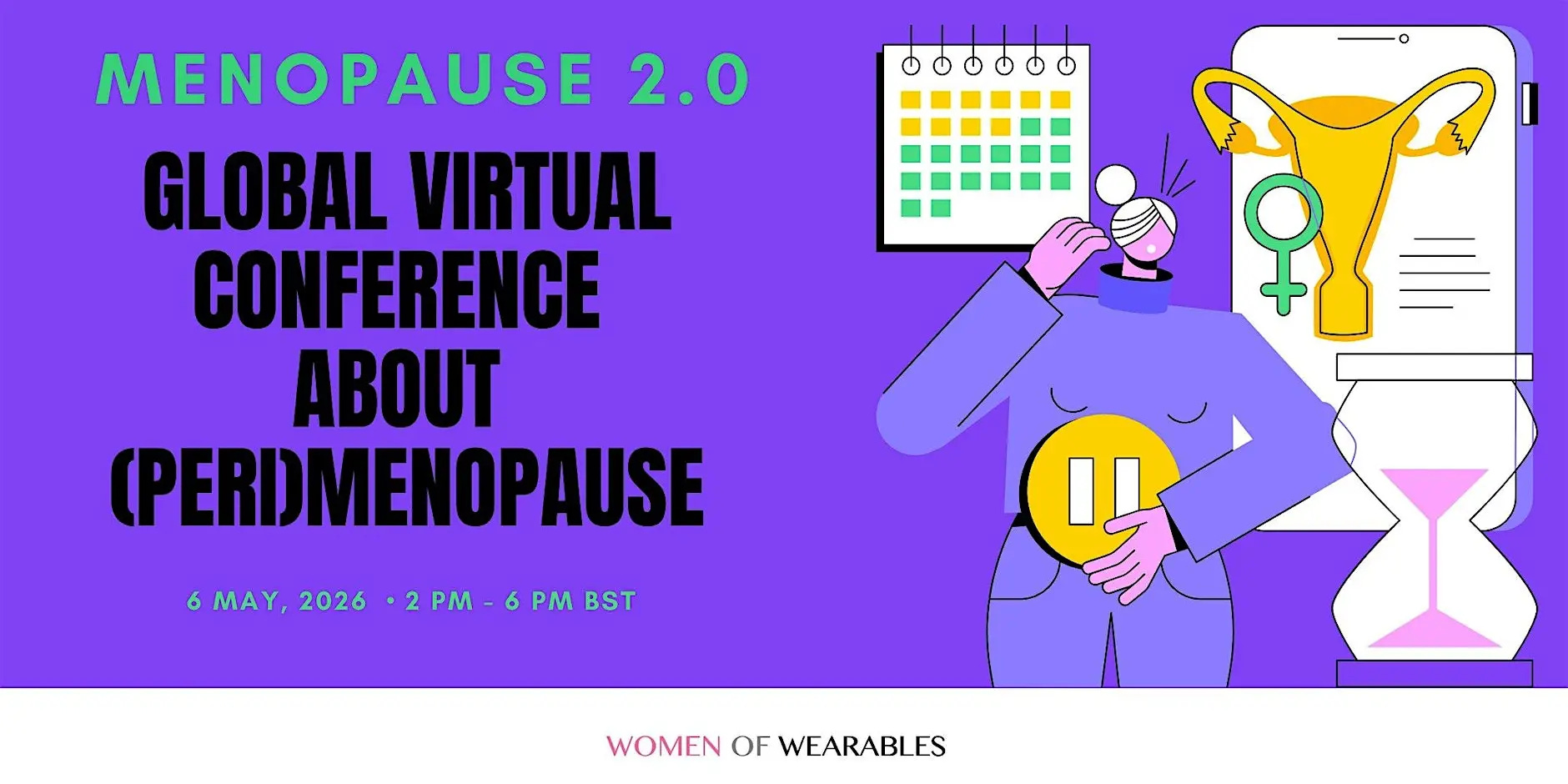
📌 VIRTUAL: Menopause 2.0 ‘Understanding perimenopause before menopause’. May 6. Women of Wearable’s third annual virtual conference on menopause, this year featuring speakers from Natural Cycles, Amissa Health, Mayo Clinic and more.
🎟️ Use code ‘FUTUREFEMHEALTH’ at the checkout for a free ticket here.
📌AUSTRALIA: Breaking the silos: the women’s health medtech summit. Sydney, May 27-28. This inaugural event is dedicated to addressing long-standing gaps in research, innovation, and policy affecting women’s health in Australia. The program brings together leading voices shaping the national conversation on women’s health in MedTech - spanning media, policy, research, and industry - to drive real system change.
🎟️ Tickets here.
📌 AUSTRALIA: FemTech Unfiltered, May 19, 5.30-7pm, Melbourne.
What will it take to advance women’s health innovation in Australia? This panel discussion will explore how progress can be accelerated and the actions possible in the near-term.
🎟️ Register here.
That’s all for this week! If you’ve missed any previous newsletter issues catch them all at futurefemhealth.com and do make sure to follow us on LinkedIn and you can connect with me directly.
Anna

Before you go…
FutureFemHealth now offers FutureFemHealth Pro - our new paid layer focused on deeper analysis on where women’s health is going.
Founders, investors, operators and leaders across the space are already joining FFH Pro and you can explore our first pieces: our Q1 funding tracker and key signals, or our feature on the bone health market.
Looking ahead, Pro is where I’ll now be sharing:
deeper dives into specific areas
more context and analysis behind the headlines
and the thinking that doesn’t fit into a weekly briefing
This weekly newsletter will continue as normal - but this is the direction FutureFemHealth is evolving in.
If you’d like to go deeper, you can join FutureFemHealth Pro here and receive our next piece:
This newsletter is for informational purposes only and should not be considered medical or financial advice.