


Welcome to issue #141 FutureFemHealth, (w/c April 6 2026) — the global weekly briefing on women’s health innovation.
🌟 In this week’s briefing:
💡 The PCOS opportunity - a deep dive
💰 Sub-Q Bionic raises $1.5m for lymphedema implant
🤰🏼 Maternal health company Simplifed raises $10m Series A
✅ Egg freezing demand leads to new infrastructure support
Share your news: anna@futurefemhealth.com
💡 The PCOS opportunity: a deep dive into this unsolved area of women’s health
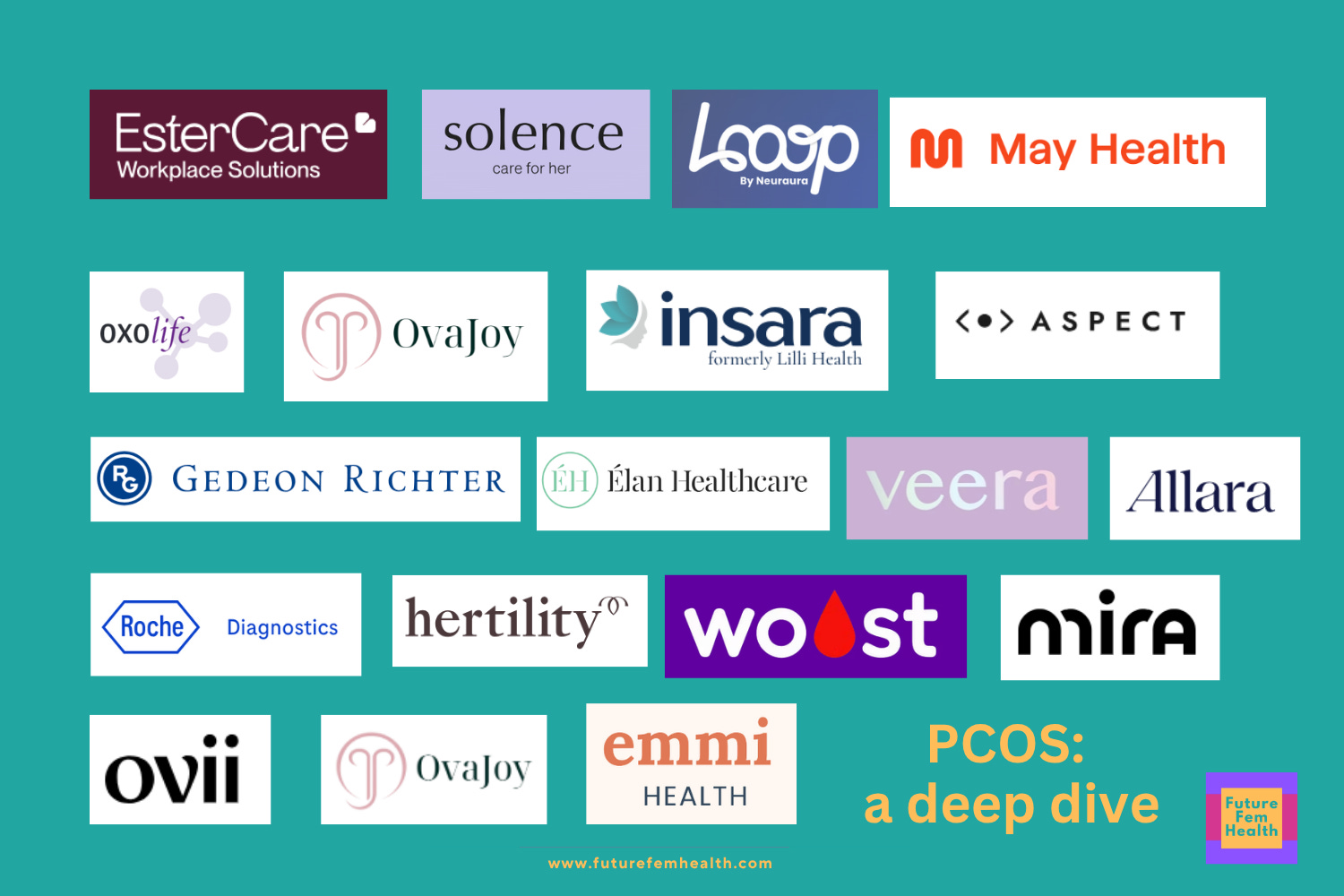
After more than a decade of campaigning work spearheaded by the UK charity Verity and Australia’s Monash University, Polycystic Ovary Syndrome is about to be renamed.
It’s a big deal - for patients, providers and anyone who has worked in the space. Because for years, the name has shaped how PCOS is understood, diagnosed and treated - and arguably has contributed to the speed (or lack of) progress.
Described by one patient as ‘misleading, medically outdated and emotionally invalidating’, ‘Polycystic Ovary Syndrome’ has never accurately represented PCOS as a condition. It centres the ovary, it suggests cysts and it reinforces the idea that this is predominantly a reproductive issue.
And while PCOS is a leading cause of infertility - affecting up to 80% of women with the condition - that’s never been the full picture.
PCOS is now more accurately understood as a lifelong metabolic and neuroendocrine condition - not just something that shows up when someone is trying to get pregnant. It’s associated with a 2–3x higher risk of developing type 2 diabetes, significantly increased rates of depression, and a substantially higher risk of cardiovascular disease.
The name change is therefore much more than a ‘rebrand’. It’s going to have positive impacts for innovators, investors and operators. It expands the market beyond fertility into chronic disease, brings new types of players into the space, and helps explain why some of the progress around PCOS has been slow to date - and why that is starting to change.
I’ve written a new FutureFemHealth deep dive to explore the big questions in PCOS:
🔍 why has PCOS been so difficult to solve?
🔍 what does the emerging innovation landscape look like? I’ve mapped it from GLP-1s and hormone-targeting therapies to care platforms, diagnostics and supplements
🔍 what are the signals that will determine whether this becomes a real, scalable category?
Read the deep dive in full here or click the button below:

Introducing FutureFemHealth Pro!
If you found today’s PCOS deep dive useful - this is exactly the kind of work I want to do more of for you.
FutureFemHealth helps you understand where women’s health is going - not just what is happening, but what it means and why it matters.
That’s why I’m launching FutureFemHealth Pro, it’s a new paid layer where I’ll be sharing more of this kind of deeper analysis.
Pro will be where you’ll get:
Deep dives into key areas shaping the market, like this one on PCOS or this one on menstrual blood diagnostics.
Conversations with founders and operators about how they’re actually building and where they see the space heading.
More editorial perspective on what I’m seeing across the sector.
Today’s PCOS deep dive is the last one that will be available for free!
Join FutureFemHealth Pro (I’ve added a founding rate on annual subscriptions for just 48 hours!)
💰 Capital flows

📌 US: Sub-Q Bionics raises $1.5m pre-seed to modernise lymphedema care. Lymphedema - a chronic and painful condition often affecting women after breast cancer treatment - remains underserved, with care largely limited to compression and manual management rather than targeted therapies. Sub-Q Bionics is developing a implantable system designed to deliver therapeutics subcutaneously, offering a more precise and continuous treatment approach. While early, the platform signals a shift toward more active, tech-enabled management of conditions that have historically lacked innovation. (Continue reading: Business Wire)
📌 US: SimpliFed raises over $10m in Series A funding to expand in maternal health. Virtual maternal health company SimpliFed began with origins in breastfeeding and baby feeding support - offering judgment-free guidance to parents through their feeding journeys while also addressing broader maternal health needs. Fresh with funds, the company will now grow its proprietary maternal health operating system which integrates with health plans, providers, partners and health systems for secure data exchange and smoother workflows. (Continue reading: FinSMEs)
📌 CANADA: Flora Fertility raises $5m for customer-owned reproductive insurance. While 1 in 6 people are impacted by infertility globally, Flora says that fewer than 2% of those who need treatment can actually afford it. The start-up offers a D2C subscription model with policies starting at $20 per month to cover the full spectrum of treatment, diagnostics and medication. And because the insurance isn’t tied to a job, the coverage can go with the subscriber wherever they work. This round was led by ManchesterStory. (Continued reading: Athletech News)
📌 CANADA: Coral raises C$4million to expand virtual midlife women’s health platform across country. In just a year since launch Coral has now raised over $8m - with this latest capital supporting national scaling to the approximately 20 million Canadian women navigating menopause and midlife health. Coral reports more than 70% of its members report reduced symptoms within 90 days. This funding round was led by Brightspark, Diagram. AQC Capital and Anges Quebec and The51, with angel investors supporting. (Continue reading: Pulse 2.0)
🌟 Industry moves and strategic shifts
📌 US: Reprotech and TMRW Life Sciences consolidate to create fertility cryostorage company. As egg freezing grows, IVF is also seeing more frozen cycles rather than fresh. Clinics are feeling the strain of storing and managing rising volumes of reproductive material. Reprotech and TMRW are merging to meet that demand, combining physical storage scale with digital tracking and automation. Together they already partner with approximately 75% of fertility centers nationwide and support over half of patient cycles. The duo said it also positions them well for internal expansion in time. (Continue reading: Reprotech)
📌 US: Family building platform Sunfish launches AI-powered egg freezing program with cost guarantee. And if you needed another proof point for the rising demand for egg freezing, this is it. Sunfish is tackling one of the biggest barriers to egg freezing - cost uncertainty - but offering a data-driven plan with a target number of eggs, and covering a second cycle if patients don’t reach it. The model combines proprietary AI-powered predictions with financial guarantees, shifting more of the risk away from patients and onto the provider - making things more structured and consumer-friendly. (Continue reading: Fierce Healthcare)
📌 US: Maven Clinic partners with Wellthy to expand into end-to-end family care. Virtual care clinic Maven has recognised that its patients aren’t just facing fertility issues, pregnancy or menopause but they are also part of the ‘sandwich generation’ - balancing care for children alongside ageing parents. This new partnership brings together clinical care with hands-on caregiving support (childcare, eldercare, complex care navigation). It’s a win for employers too, who are looking for these sorts of integrated platforms to support their employees through the whole of life’s ups and downs. (Continue reading: Maven)
📌 US: Women's Health Week USA is making the case that the sector's biggest challenge in 2026 isn't innovation, it's scale. Taking place May 13-14 at the New York Academy of Medicine in New York City, the event brings together 600+ investors, founders, corporates, policymakers and clinicians around one question: how do you take women's health from growth to infrastructure? With speakers from Maven Clinic, the FDA, Google, Planned Parenthood, Organon and Hologic confirmed, the programme spans capital deployment, M&A strategy, regulatory pathways and the commercial case for equity. A mainstage Pitch Session across two categories, Medical Devices & Therapeutics and Consumer & Tech, opens the floor to the next wave of innovators. Early bird pricing closes April 17. (Continue reading: FutureFemHealth (partner content) or head straight to early bird tickets here)
📄 Policy watch: risks and opportunities
📌 US: Proposed federal budget signals cuts to medical research - with no clear focus on women’s health. Early analysis of the FY2027 budget request points to a >12% reduction in Department of Health and Human Services funding, including a $5bn cut to NIH. Notably, there is little to no explicit mention of women’s health research - raising concerns about how (or whether) it is being prioritised at a federal level. While presidential budgets aren’t binding, they are a strong signal of policy direction - and this one suggests more potential headwinds for research funding and long-term innovation in women’s health. (Continue reading: SWHR)
📌 UK: Maternity deaths at 20-year high as NHS ‘ignores warnings’. More than 12 women per 100,000 are now dying in pregnancy, childbirth or within six weeks of giving birth, a new investigation has revealed, the highest level since 2005. Hundreds of recommendations over a decade-long period have not been implemented to help improve treatment - including dozens regarding the most serious and potentially fatal ‘red flag’ symptoms. The biggest killer remains blood clots - which are often treatable if caught early. More than 30 recommendations have also focused on improving access to mental health services. Another review of maternity services in England is due this year. (Continue reading: The Times - paywall)
That’s all for this week! If you’ve missed any previous newsletter issues catch them all at futurefemhealth.com and do make sure to follow us on LinkedIn and you can connect with me directly.
Anna

Before you go: