


Welcome to issue #164 of FutureFemHealth, (w/c September 21 2026) — your weekly briefing on the global women’s health market.
It’s another bumper week for women’s health investment - from nine-figure biotech rounds to a whopping $1.1bn investment in women’s health infrastructure.
🌟 In this week’s briefing:
🏆 $1.1bn gift will create Oregon’s first dedicated women’s health hospital
🧪 Teal Health raises $22m to expand at-home HPV screening
🩺 Blair Health raises CAD $4.24m to scale specialist-designed menopause care
🇪🇺 European Parliament endorses dedicated women’s health funding in next EU budget
Share your news: anna@futurefemhealth.com
🦠 New on FFH Pro: What comes after the vaginal microbiome test?
After Evvy’s $40m Series B last week, our latest analysis looks at the bigger vaginal microbiome opportunity - and the shift from consumer testing towards clinical care.
Inside: the companies, evidence and investment shaping the market.
And, crucially: what happens after the test - and what needs to change for vaginal microbiome testing to become part of routine healthcare?
💰 Capital flows
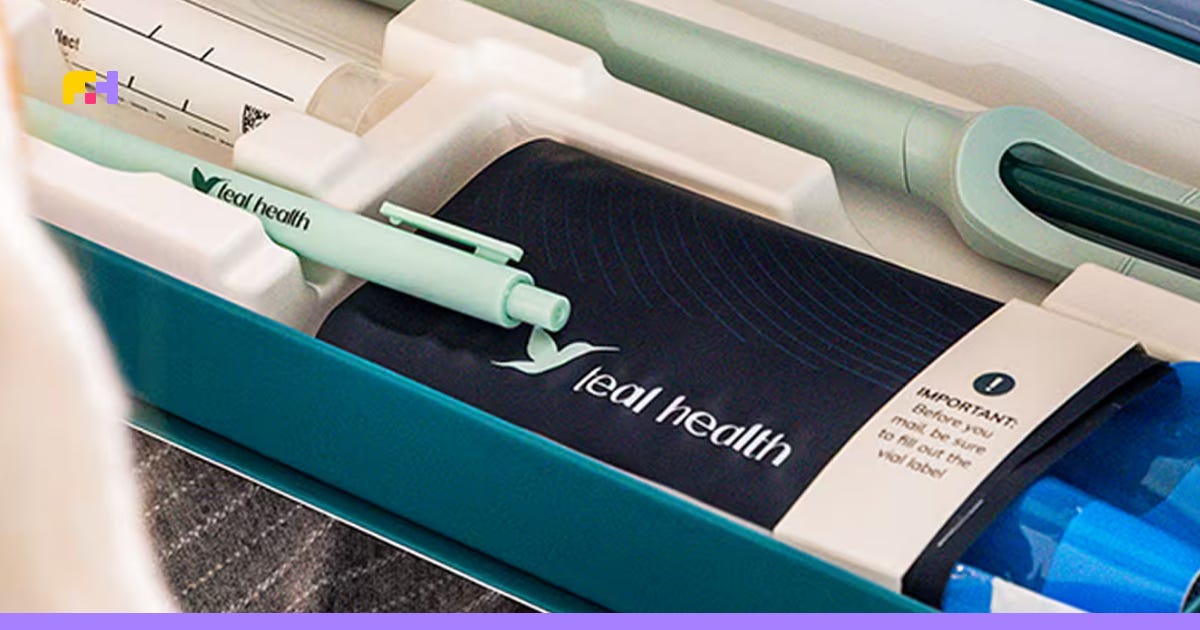
📌 US: Teal Health raises $22m Series A to expand at-home HPV screening. At-home HPV screening could help close one of the biggest gaps in cervical cancer prevention: reaching women who are overdue or not engaging with traditional screening. Teal Health says 59% of women using its FDA-authorised self-collection service are underscreened, with the new Series A set to expand access through insurers, health systems, employers and providers. A major policy tailwind is coming in January 2027 too, when new federal guidelines will require most US health plans to cover self-collection for cervical cancer screening without cost-sharing. The round was led by .406 Ventures, with Japan’s MPower Partners joining as a new investor — its third women’s health-related investment this month — alongside existing backers Emerson Collective, Forerunner, Labcorp and Serena Ventures. (Continue reading: FutureFemHealth)
📌 CANADA: Blair Health raises CAD $4.24m to scale specialist women’s health model. Starting with menopause, where women in Canada can wait up to two years to see a specialist, Blair is taking a different approach to the specialist access problem: encoding specialist-designed assessments, treatment protocols and escalation pathways into software that allows family physicians and nurse practitioners to deliver the care. Blair says its menopause pathway can be taught to a provider in under four hours, and it is now applying the same infrastructure to pelvic health and urology, as well as clinical nutrition and weight management. More than 2,300 women have signed up since its May 2025 launch, while its employer channel grew to around half of revenue in H1 2026. The pre-seed round was co-led by BDC’s Thrive Venture Fund, Accelia Capital and Ogaei Investments, with Ontario Centre of Innovation and angels participating. (Continue reading: FutureFemHealth)
📌 US: Sling Therapeutics raises $123m for Phase III thyroid eye disease drug. This Series C takes Sling into late-stage development of linsitinib, a potential first oral treatment for thyroid eye disease (TED), a serious autoimmune condition that predominantly affects women and commonly occurs alongside Graves’ disease. If successful, the drug could offer a more convenient treatment option for a condition currently treated with approaches including IV therapy and surgery. Forbion led the round, with TPG Life Sciences Innovations and Sectoral Asset Management participating. (Continue reading: Sling Therapeutics)
📌 US: Circle Pharma raises $92.5m to advance new breast cancer drug. This oversubscribed Series E will take Circle’s new oral treatment for ER-positive breast cancer into its first clinical trial in early 2027. The drug is designed to offer a new approach for patients whose cancer has progressed despite existing treatments, targeting a pathway that has historically been difficult to drug directly. The Column Group led the round and Eli Lilly. (Continue reading: Circle Pharma)
📌 CANADA: Bird&Be raises $13m to expand fertility testing and supplements. Fertility products are moving further beyond specialist clinics, with Bird&Be now selling its female and male reproductive health range across nearly 1,000 Ulta Beauty stores alongside growing clinical distribution. The company says it reached eight-figure revenues within three years, with the new funding supporting R&D, product development and further expansion. The undisclosed-stage round was led by BDC’s Thrive Venture Fund and BFG Partners. (Continue reading: FutureFemHealth)
Also funded in the past week…..
Norway’s Induvita raised NOK 7.5m to commercialise its redesigned vaginal speculum, Vega, and continue development of its induction-of-labour catheter; Denmark’s Sylvia Health secured €560k through BioInnovation Institute’s Venture Lab to advance its pelvic organ prolapse device towards manufacturing and regulatory submission; France’s Herapreg raised €215k to develop new devices targeting endometriosis and dysmenorrhoea; and China’s Medicovestor raised several million RMB to advance an antibody pipeline that includes a potential new treatment approach for endometriosis.
🌟 Industry moves and strategic shifts
📌 GLOBAL: PwC puts fertility and reproductive health market at up to $45bn by 2030. It’s a trend we’ve been tracking at FutureFemHealth and now new analysis from PwC highlights how the fertility market is expanding beyond IVF into fertility testing and preservation, diagnostics, tech-enabled care and new therapeutics. PwC estimates the market at $25–35bn today, growing 6–8% annually, with more than $14bn invested between 2020 and 2025. (Continue reading: PwC)
📌 US: Walmart targets maternal health in rural pharmacy pilot. Pharmacists will act as “Health Ambassadors” at five stores, providing coaching and connecting customers with services across maternal health, diabetes and weight management. With 4,000 Walmart stores in medically underserved areas and 90% of the US population living within 10 miles of a Walmart or Sam’s Club, the pilot shows the potential for retailers to use their existing footprint to plug gaps in healthcare access. (Continue reading: Fierce Healthcare)
📌 US: Sexual wellness brand Maude to enter 600+ Target Beauty Studios and nearly 400 Ulta Beauty stores. This expansion is another sign of intimate and sexual health moving deeper into mainstream beauty and wellness retail. Ulta has already added brands including Unbound, Crave, Smile Makers, Stripes and Playground this year, and says wellness could become its next $1bn category. Maude, which has raised around $13m but no external capital for almost four years, is now approaching profitability. (Continue reading: Beauty Independent)
🩸 Research and women’s health news
📌 US: $1.1bn gift will create Oregon’s first dedicated women’s health hospital. Nike co-founder Phil Knight and his wife Penny Knight have committed a whopping $1.1bn to US not-for-profit health system Providence to fund the new Portland hospital and wider women’s health services - a huge investment in women’s health infrastructure. Rather than focusing primarily on maternity, this new hospital will be based around a broader model of women’s health spanning pregnancy, gynaecology and menopause alongside cardiovascular care, prevention and diagnostics. (Continue reading: AP News)
📌 UAE: Abu Dhabi launches 2030 reproductive health programme. Abu Dhabi is making a major play to become a global reproductive health hub - including an ambitious goal to increase its IVF success rates from 59% to 80%(!). It’s launching a programme spanning preconception and genetic screening, fertility treatment, IVF and fertility preservation, alongside research and innovation. The ecosystem brings together 2,000+ experts across 250+ facilities and has established a Global Reproductive Health Advisory Council to help shape research priorities and standards. (Continue reading: Abu Dhabi media office)
📄 Policy watch: risks and opportunities

📌 EU: European Parliament backs report calling for dedicated women’s health funding in next EU budget. This vote comes as negotiations get underway around the EU’s 2028–34 budget, potentially putting women’s health into the fight over where billions in future research funding goes. The report that MEPs endorsed recommends explicitly earmarking women’s health funding within major EU research and innovation programmes, alongside better representation in clinical trials, more sex-disaggregated data and greater consideration of sex and gender across research and care. While non-binding, it gives Parliament a clearer position as the next funding framework is negotiated. (Continue reading: FutureFemHealth)
📌 US: First Menopause Capitol Hill Day brings 125+ advocates to Washington. Advocates from 29 states have met lawmakers to push for federal action on menopause research, care, coverage and workplace support. It follows last week’s first bipartisan congressional hearing on menopause, as the issue gains further traction in federal policy. (Continue reading: Women’s Health Advocates)
📌 UK: NICE reverses decision on Enhertu for advanced breast cancer. Around 1,000 women a year could gain access to Enhertu on the NHS in England after NICE reversed its 2024 rejection of the drug for HER2-low advanced breast cancer. The decision follows a new commercial agreement and changes to NICE’s cost-effectiveness framework — making this an important early test of the UK’s new approach to assessing the value for money of medicines. (Continue reading: Pharmacy Biz)
📆 Save the date

📌 SAN FRANCISCO: Forward: Women’s Health Summit, November 4. TechThrive Ventures’ third FORWARD Women’s Health Summit returns with Silicon Valley Bank, bringing together leading investors and ecosystem builders to discuss the future of women’s health.
That’s all for this week! If you’ve missed any previous briefings catch them all at futurefemhealth.com and do make sure to follow us on LinkedIn and you can connect with me directly on LinkedIn.
Anna
