


Welcome to issue #161 of FutureFemHealth (w/c August 31 2026) - your weekly briefing on the global women’s health market.
If the volume of news landing in my inbox is anything to go by, the summer slowdown is officially over. This week brings fresh capital, clinical milestones and potentially significant changes in how women are diagnosed and treated.
🌟 In this week’s briefing:
🫀 New heart attack definition could improve diagnosis for women
💰 Up to $35m for preeclampsia and eclampsia discovery
💊 FDA approves first targeted oral treatment for dermatomyositis
📊 What 2,000 pitch decks tell us about women’s health investing
Share your news: anna@futurefemhealth.com
This week’s issue is powered by Women’s Health Horizons:
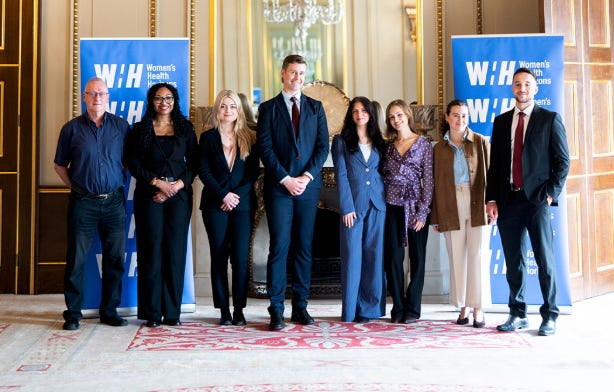
Join the global women’s health ecosystem this autumn in London and Washington, D.C., bringing together the people shaping the future of women’s health.
💰 Capital flows
📌 US: Profound gets $35m funding from Gates Foundation for preeclampsia. An initial $20m, with up to a further $15m tied to milestones, will fund the search for new biomarkers and drug targets for two of pregnancy’s most serious complications - preeclampsia and eclampsia. ProFound was created by Flagship Pioneering, the venture-creation firm behind companies including Moderna. (Continue reading: BioXconomy)
📌 US: Materna Medical completes oversubscribed Series B3 ahead of Ellora launch. Preventing birth injury as it happens is beginning to attract fresh capital. Materna announced a $5m first close in June and has now completed its round as it prepares for the anticipated launch of Ellora, its device designed to reduce pelvic floor muscle injury during vaginal delivery. Portfolia and Dalton Investments joined returning investor. (Continue reading: Materna Medical via LinkedIn)
📌 UK: PeriPear secures £1.2 million for wearable designed to reduce perineal tearing. Up to 90% of first-time mothers experience some degree of tearing during vaginal birth, yet relatively little innovation has focused on preventing it. PeriPear is developing a wearable that applies gentle pressure and warmth to the perineum, with the aim of reducing tearing and episiotomy. Its combination of pre-seed equity and grant funding will support product development, clinical trials and regulatory work. The equity round was led by HERmesa and included backing from more than 50 female investors and women-led funds. (Continue reading: FutureFemHealth)
◆ FFH PRO: Is maternal birth injury prevention emerging as a market? Two rounds don’t make an investment trend. But fresh capital behind Materna and PeriPear does point to growing interest in the same idea: could more maternal birth injury be prevented as it happens? We examine the emerging market, the evidence behind these technologies and what could determine whether they reach routine maternity care. (Continue reading: FutureFemHealth)
📌 SWITZERLAND: KOVE Medical raises CHF1.6 million (c. $1.97m USD) to reduce pregnancy complications following fetal surgery. Women undergoing fetal surgery face an increased risk of their waters breaking early and giving birth prematurely. This can happen because instruments must pass through the uterine wall and amniotic sac, leaving an opening through which amniotic fluid can leak. University of Zurich spinout KOVE Medical is developing an implant designed to close and stabilise that opening after surgery, with this angel funding taking the technology towards first-in-human studies. (Continue reading: VentureLab)
📌 US: ProvanAI raises $1.2m to predict ovarian cancer risk from mammograms. This WashU Medicine spinout is developing AI that analyses mammogram images to estimate a woman’s five-year risk of ovarian cancer, potentially turning an existing breast screening touchpoint into a broader source of women’s health data. The pre-seed was backed by BioGenerator and Missouri Technology Corporation, with funding supporting external validation and the path towards FDA clearance. (Continue reading: St Louis)
📌 US: Capital F closes $17 million debut fund targeting the “female economy”. This new pool of capital is explicitly looking for opportunities in markets where women drive demand. Founded by former retail executives Dawn Dobras and Margaret Coblentz, Capital F will invest at pre-seed and seed across women’s health, digital commerce and AI, writing cheques of between $250,000 and $1m. It has already backed 13 companies, including familiar names such as Hey Jane and period-tracking app Stardust, while women account for almost 80% of its LPs. (Continue reading: Tech Crunch)
🌟 Industry moves and strategic shifts
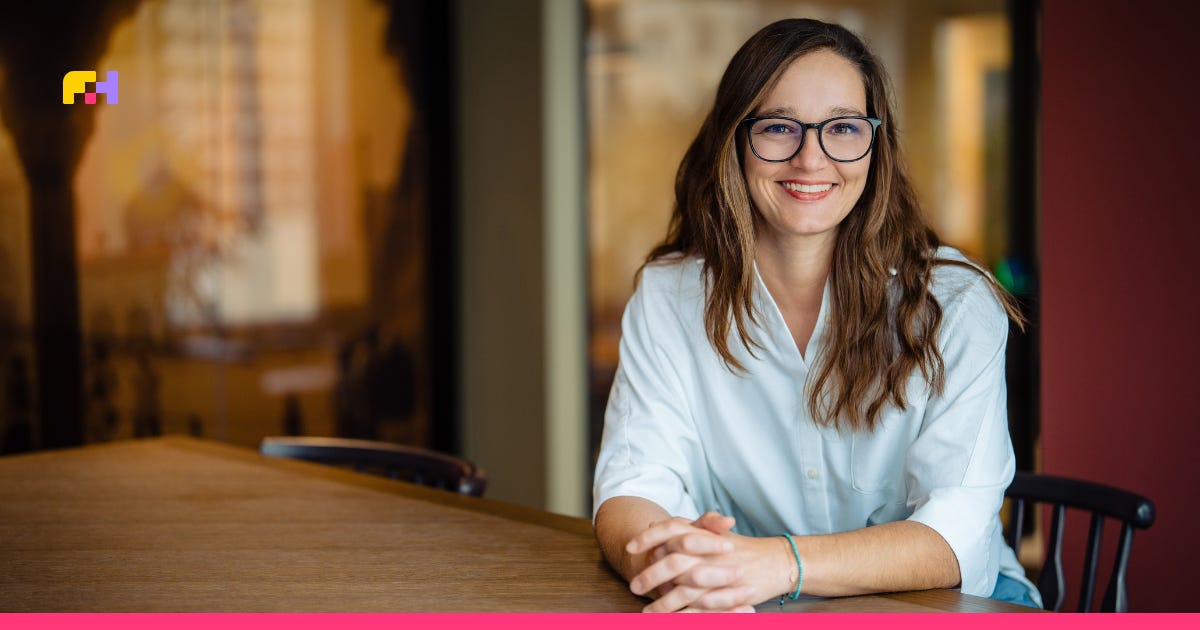
📌 GLOBAL: Flo Health hires IPO-experienced CMO as it enters its next phase of growth. Women’s health unicorn Flo has appointed Rina Hahn, who helped scale remittance business Remitly through its IPO, as Chief Marketing Officer. Flo’s CEO told FutureFemHealth that Hahn’s combination of “proven scale experience plus category sensitivity” was a “big part” of the rationale for her appointment, while adding that it is “not announcing any specific IPO or public listing plans at this time”. The hire adds another executive with public-market experience to Flo’s leadership team as the company prepares for further international expansion. (Continue reading: FutureFemHealth)
📌 US: Amara Therapeutics completes recruitment of nearly 600 women into major overactive bladder trial. Behavioral therapies are recommended early for overactive bladder, but many women struggle to access specialist support or follow a programme consistently. Amara’s US trial will test whether RiSolve - an eight-week app-based treatment combining bladder training, pelvic floor exercises and cognitive behavioral therapy - can improve symptoms and quality of life compared with standard behavioral education. Following 596 women for up to 12 months, it should offer meaningful evidence on whether digital treatment can make this care more accessible without compromising its effectiveness. (Continue reading: FutureFemHealth)
📌 US: Phira emerges from stealth with earring wearable designed to track hormone patterns. The race to continuously track women’s hormones has another contender - and another take on what “continuous hormone monitoring” actually means. Rather than measuring hormones directly, Phira uses thermoregulatory signals from behind the ear to infer patterns associated with estrogen, LH and progesterone. Founded by UC Berkeley-trained wearable sensing researcher Dr Alisha Menon, its work has received support from the National Science Foundation and research programmes at Rice and Baylor. A larger study is now underway ahead of a planned 2027 launch. (Continue reading: FutureFemHealth)
🩸 Research and women’s health news
📌 GLOBAL: New heart attack definition could improve diagnosis for women. One of the biggest changes to heart attack diagnosis in decades could have a major impact on women. This new guidance agreed by four of the world’s leading cardiovascular organisations gives greater recognition to less familiar forms of heart attack that disproportionately affect women. It also recommends sex-specific thresholds for troponin, the blood test widely used to diagnose a heart attack, after the previous universal threshold was found to miss some women. (Continue reading: The Guardian)
📌 US: FDA approves first oral treatment specifically indicated for dermatomyositis. Around 70% of people with dermatomyositis are women, and this rare autoimmune disease causes the immune system to attack the muscles and skin, leading to progressive muscle weakness and painful rashes. Lisraya (brepocitinib), developed by Priovant and Roivant, is the first targeted oral treatment approved specifically for the condition. Trial results showed improvements in muscle and skin symptoms, alongside reduced reliance on corticosteroids. (Continue reading: MedPage Today)
💡 Perspectives
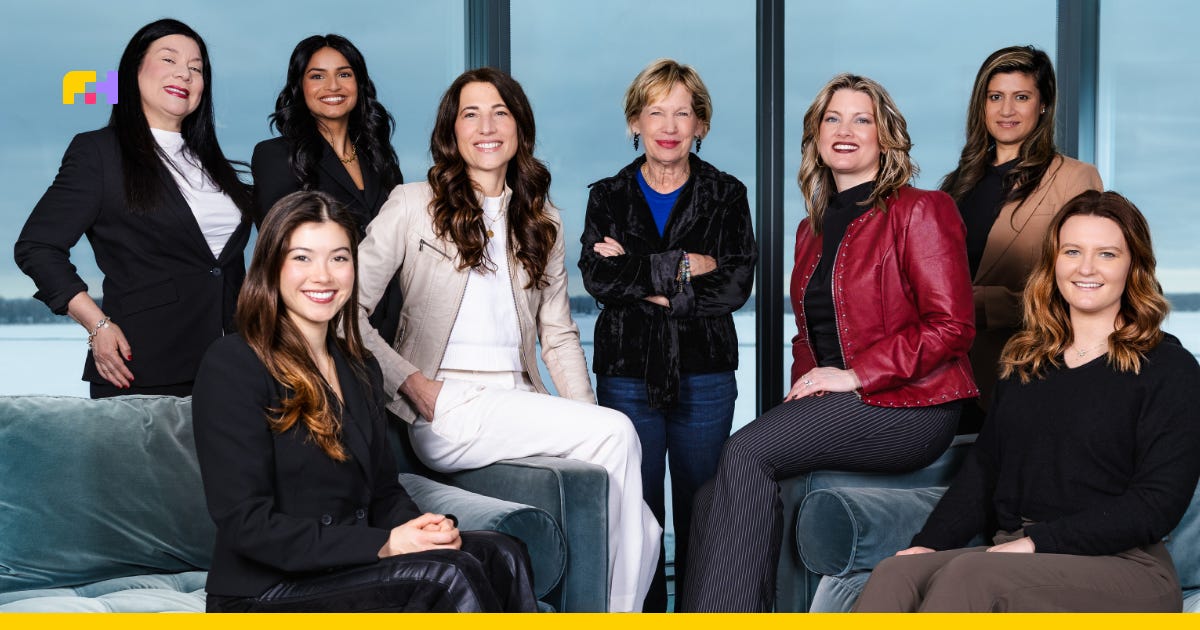
📌 GLOBAL: What 2,000 pitch decks tell us about women’s health investing. After five years reviewing more than 2,000 healthtech opportunities, Cross-Border Impact Ventures is seeing the women’s health pipeline broaden and mature. In this interview with FutureFemHealth, Managing Partner Annie Thériault shares what is changing in the companies coming through, where the funding gaps remain and why the next phase of the market could bring more consolidation and exits. (Continue reading: FutureFemHealth)
📌 GLOBAL: What has Women’s Health Horizons learned from bringing together more than 2,500 people across the sector? A year after we first spoke to founder Jason Clark, we caught up again about what WHH has learned from its global events, why fragmentation remains a challenge for women’s health and its plans to connect the sector beyond individual summits. (Continue reading: FutureFemHealth)
📄 Policy watch: risks and opportunities
📌 UK: Government begins search for England’s next Women’s Health Ambassador. The Department of Health and Social Care is recruiting a successor to Professor Dame Lesley Regan, who became England’s first Women’s Health Ambassador in 2022. The role was created to provide national leadership on women’s health, raise its profile across the health system and help drive delivery of the Women’s Health Strategy. It will be worth watching not only who takes over, but what mandate and priorities the next ambassador is given as the government determines the next phase of its women’s health agenda. (Continue reading: Gov.UK)
📆 Save the date

📌 Women’s Health Horizons London Autumn Summit: London, September 22. Join more than 400 leaders at the Royal College of Obstetricians and Gynaecologists to explore how ambition in women’s health can be turned into meaningful, system-wide progress. 🎟️ Secure your ticket
📌 10 Years of FemTech: A Fireside Chat with Ida Tin: virtual, September 17. Ten years after Ida Tin coined the term FemTech, she will join FemTech Focus founder Dr Brittany Barreto to discuss where the category began, how it has evolved and what its next decade should look like. Includes a live audience Q&A too! 🎟️ Register here.
That’s all for this week! If you’ve missed any previous briefings catch them all at futurefemhealth.com and do make sure to follow us on LinkedIn and you can connect with me directly on LinkedIn.
Anna

That's a lot of great news in one week! I'm excited to see the money going into maternal health. And to see Thang on that speaker list for WHH!