Welcome to issue #127 of FutureFemHealth, (w/c December 15 2025) — the global weekly briefing on women’s health innovation, trusted by 8,900 investors, innovators and leaders to decode the funding flows, breakthrough ideas and policy shifts transforming the sector.
It’s our last issue of 2025, so grab 5 minutes and enjoy our mega round-up of the year’s defining moments and how they’ll shape the future of women’s health in 2026.
Plus, it’s your last chance to share your insights for our 2026 predictions piece in January - add your thoughts here by Monday.
🌟 In this week’s briefing:
🏆 2025’s defining moments in women’s health
🔥 University of Leeds spinout IVFmicro secures £3.5 million pre-seed
❤️ $29 million for at-home fertility test Inito
🌎 FemTech Portugal and FemTech Spain launch to strengthen Europe’s women’s health ecosystem
Got news to share from the world of FemTech and women’s health innovation? Let me know at anna@futurefemhealth.com
🏆 2025 in review: 17 defining moments for women’s health that will shape 2026

If 2024 was the year that women’s health finally broke into the mainstream, 2025 was the year it began to harden into infrastructure. Serious movement of capital (though still not nearly enough). Governments and philanthropy stepping up. Shifting regulations. And the definition of women’s health finally feels like it is pushing beyond being seen as ‘just’ reproductive health - expanding into chronic disease, metabolic health, brain health.
Some moments were clear standouts: The Gates Foundation $2.5 billion commitment to reset the global research agenda. The FDA’s removal of the menopause HRT black box warning was long overdue. And the return of President Trump to office sending global shockwaves with the rollback of reproductive health access and research - a reminder of how politically exposed women’s health can be.
Alongside the headline moments were some slower-burn shifts and trends taking shape. The breakout of hormone monitoring as a category. Diagnostics moving ever more into the home (especially screening for HPV); and new capital structures such as FemTech France’s government-backed fund and the new women’s health fund of funds.
Understanding the key stories of women’s health in 2025 matters, because it shapes what might be possible in 2026.
So, for this final issue of the year, together with women’s health strategist Anastasiya Markvarde, I’ve pulled together 17 defining moments from 2025 that will continue to influence women’s health in the year ahead - from menopause to fertility to AI, longevity, privacy and biotech.
👉 You can find out all 17 defining moments here in our deep dive: 2025 in review: 17 defining moments that will shape women’s health in 2026
Or click the button below:
As always, I’d love to know your thoughts: do you agree with our list? what did we miss and what were your highlights? Add your thoughts in the comments or hit reply and let me know!
💰 Capital flows: where are investors placing bets?

📌 UK: University of Leeds spinout IVFmicro secures £3.5 million pre-seed. Globally, one in six couples will face fertility issues, yet IVF success rates are only 25-30% in women aged under 35. Part of the challenge lies in how embryos are currently grown in the laboratory. Embryos are often moved and handled several times, and embryologists must make judgement calls about which embryo to transfer. These processes can affect outcomes and require highly skilled staff, adding to the overall cost of treatment. IVFmicro, co-founded by Dr Virginia Pensabene and Professor Helen Pictor, has created a device designed to improve how embryos are grown during IVF treatment. This pre-seed funding was led by Northern Gritstone with support from Innovate UK Investor Partnerships Programme. (Continue reading: FutureFemHealth)
📌 INDIA: $29 million Series B for at-home diagnostics startup Inito. Inito’s edge lies in its ability to measure all core fertility hormones enabling lab-grade hormone testing at home, not just fertility predictions. With millions of hormone data points already analyzed since launch in 2021, the company now plans to expand into pregnancy, menopause and broader endocrine health. This funding will accelerate R&D, manufacturing scale-up, and international expansion as Inito positions itself as a full-service hormone diagnostics platform, not a single-use product. This round was led by Bertelsmann India Investments and Fireside Ventures. (Continue reading: Tech Crunch)
📌 UK/SPAIN: London’s Punto Health raises €2.3 million ($2.7 million) for AI-powered platform for dementia care. Punto is developing a multilingual, AI-powered, speech-based test for the early detection of dementia and cognitive decline - both of which disproportionately impact more women than men. The platform, which also features a companion support app, is being co-designed and clinically validated in partnership with Ace Alzeheimer Centre Barcelona. Early user testing is taking place in both London, UK and Spain. “We are building technology that turns a reactive, crisis-driven system into proactive, personalised support that fits into people’s real lives,” said Anna Muñoz-Farré, CEO and co-founder. The round was co-led by Shilling VC and Plus Partners. (Continue reading: Eu-startups)
📌 AUSTRALIA: Cosette and Mayne Pharma terminate $430 million acquisition deal. It was one of the most high-profile deals of 2025 which would have created a combined product line spanning the gamut of women’s health including birth control, menopause meds and more. But cracks set in earlier in the year when Cosette tried to exit the agreement triggering contractual disputes. Now the transaction has formally collapsed after the Australian government blocked it on ‘national interest’ grounds, citing concerns over medicine supply chains, jobs and local communities. Even so, the scale of the original deal shows growing strategic value of women’s health portfolios and emerging consolidation. (Continue reading: NJBiz.com)
This week’s poll:
Last week’s poll asked: Have you heard of large brands ‘borrowing’ ideas from smaller women’s health brands? 61% of you said yes, this had happened to you or someone you know. While 38% said no. (note - this was a smaller-than-usual response size (I probably should have stated these polls are anonymous!))
🌟 Industry moves and strategic shifts
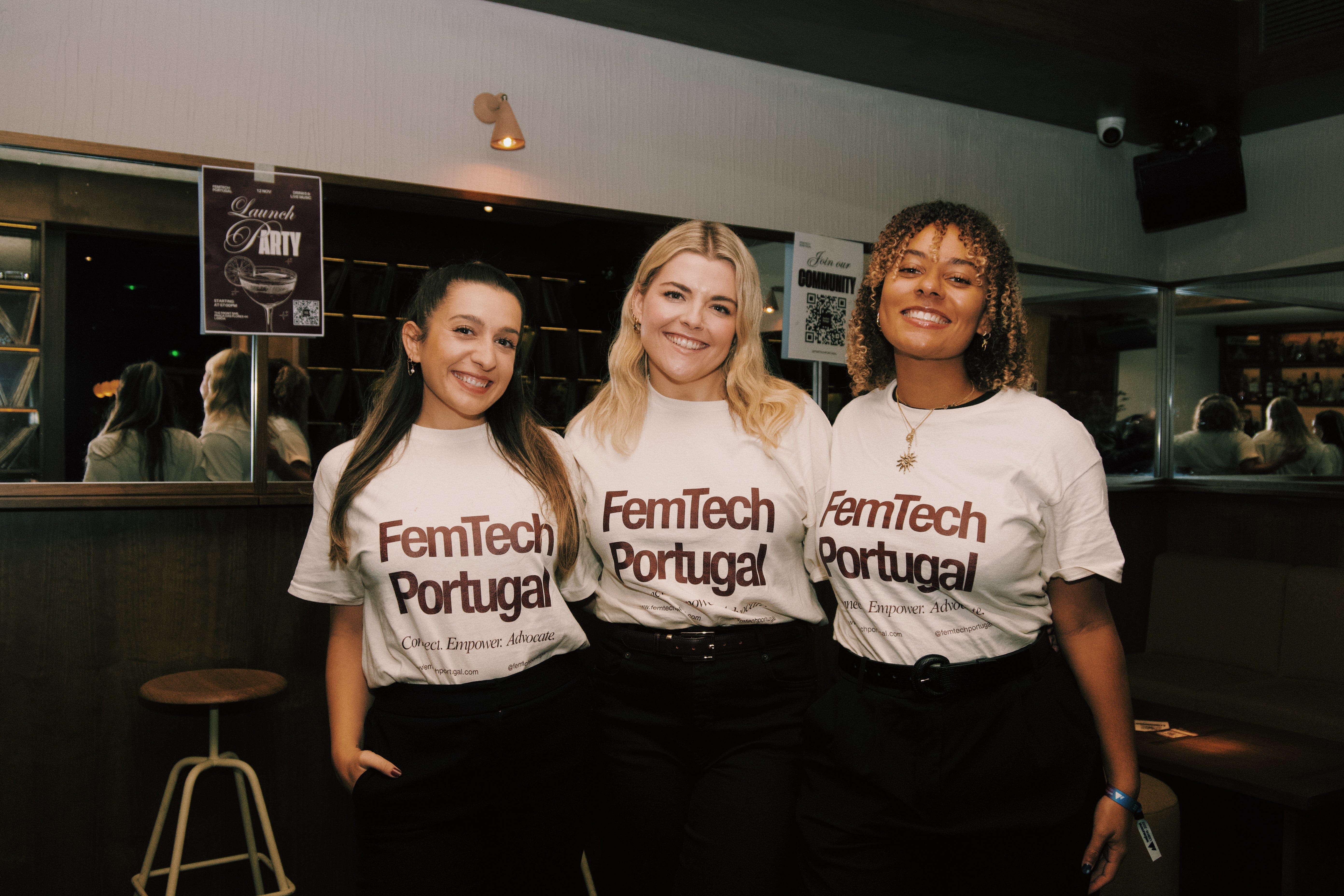
📌 EUROPE: FemTech Portugal and FemTech Spain launch to strengthen Europe’s women’s health ecosystem. Two new national FemTech networks have launched in quick succession, showing the growing momentum for women’s health innovation across Southern Europe. “Networks like Femtech Spain are essential to connect the dots across a sector that too often develops in isolation,” said FemTech Spain founder Lucia Orozco Lopez, “When founders, researchers, clinicians and investors can find each other, the work becomes stronger, faster, and more aligned with women’s real health needs.” (Continue reading: FutureFemHealth)
📌 UK: Hims & Hers launches Hers in UK together with new weight loss programme. While Hims already provides sexual health, skincare and hair loss treatments for men in the UK, a new rollout sees the first launch of the Hers telehealth platform too. Hims & Hers also rolled out a new weight loss programme - pairing GLP-1s with holistic support across nutrition and exercise. It says that 64% of UK adults are overweight or living with obesity yet access to GLP-1 treatment plans remains challenging on the NHS and also in the private sector. (Continue reading: The Independent)
📌 U.S: Noom eyes GLP-1s for longevity, not just weight loss. Targeting early metabolic risk factors linked to chronic disease, Noom is opening up GLP-1 medications to those who don’t meet the usual BMI requirements for the drugs. This microdosing program is billed as a preventative health program supporting longevity, with blood testing every four months to track 17 biomarkers tied to metabolic, cardiovascular and hormonal health. It’s another signal of the blurring of GLP-1s into the women’s health space and will be a key trend to watch in 2026. (Continue reading: Athletechnews)
📌 U.S: Nutrition brand Momentous to fund female physiology research. The female-first sport science non-profit VOICEINSPORT has partnered with performance nutrition brand Momentous to launch a multi-year grant backing women researchers - starting with research into hormones and RED-S (relative energy deficiency in sport) led by a former pro athelete and PhD researcher Katie Rainsberger. RED-S remains one of the most under-studied conditions in women athletes despite its links to menstrual disruption, bone health and long-term performance. This partnership is a concrete example of the trend we highlighted in our 2025 review: women’s sports as a catalyst for understanding women’s bodies at scale. (Continue reading: Fitt Insider)
📌 U.S: FDA approves Addyi for use in postmenopausal women. You might remember Addyi as the drug controversially tested on men - despite it being intended to treat low sexual desire in women. A decade later, this expanded approval means Addyi is now the first and only FDA-approved pill for hypoactive sexual desire disorder (HSDD) in both premenopausal and postmenopausal women. HSDD is defined as persistently low sexual desire that causes distress and is not explained by another medical or psychiatric condition, relationship issues, or medication use. (Continue reading: FutureFemHealth)
📄 Policy watch: risks and opportunities
📌 THE NORDICS: A Nordic Charter sets out a 2040 vision for women’s health — and asks governments to commit. Earlier this year, more than 130 people from across the Nordic region gathered for a workshop at the Danish Parliament to define what women’s health should look like in 2040. The result became a shared vision: “By 2040, every woman in the Nordics lives in a society where health is a birthright, not a benefit – anticipated, equitable, and seamlessly woven into everyday life.” The vision is now captured in the Nordic Charter for Women’s Health 2040 and a petition has launched to call upon the governments of Iceland, Sweden, Finland, Norway, Denmark and the Nordic Council of Ministers to commit to the vision. (Continue reading: FutureFemHealth)
📌 UK: Doctor’ strikes will push maternity wards to a breaking point - and women will suffer the most. The NHS is stretched far beyond its limits and women across the country are struggling to receive even the most basic level of maternity care. Yet now there are planned doctors’ strikes. Carea founder Anastasia Shubareva-Epshtein explains the potential impact. (Continue reading: LBC)
📦 New in the FemTech Files - a ten-part series
‘The FemTech Files’ shares the critical data from different women’s health verticals and product types. They were published last year using Dr Brittany Barreto’s FemHealth Insights database and created by FemHealth Fellows. This week sees the release of parts seven and eight of the series:
That’s all for this week - and for the year! Thank you as always for being a reader and subscriber in 2025, it’s been wonderful to have you here.
If you’ve missed any previous newsletter issues catch them all at futurefemhealth.com and do make sure to follow us on LinkedIn or connect with me directly.
Anna