


Welcome to issue #130 of FutureFemHealth (w/c January 19, 2025) — the global weekly briefing on women’s health innovation, we’re trusted by 9,000+ investors, founders and industry leaders.
After last week’s three agenda-setting reports, the key themes continue this week: women’s health is moving out of the margins, and it’s much more expansive an opportunity than it has previously appeared on the surface.
🌟 In this week’s briefing:
💍 Ultrahuman and Oura move into migraine
💰 Clue secures ‘substantial’ growth investment from Verdane
🔥 Science&Humans closes an oversubscribed CAD $10m Series A as hormone health goes mainstream
📈 World Economic Forum launches a women’s health investment index
News to share from the world of FemTech and women’s health innovation? Let me know at anna@futurefemhealth.com
Wearables move into migraine to offer up continuous care
An estimated one billion people globally experience migraine — and women are affected at around three times the rate of men.
For many, it is genuinely life-limiting: disrupting work, relationships and daily function. In McKinsey’s seminal 2024 report on closing the women’s health gap, the firm named migraine one of the most economically burdensome conditions in women’s health. Even that likely understates the true cost. Migraine is invisible. People show up, but they underperform. The impact is real, but often will not be counted.
Care for migraine is also fragmented. There are clinical appointments, yes — but symptoms, triggers and severity fluctuate daily. Between visits, people are largely left on their own to identify patterns, test out coping strategies and make sense of their bodies.
That’s the gap that creates an opening: continuous, data-driven care outside the clinic.
Wearables are now moving into that space.
Earlier this month, Oura announced migraine tracking via Aptar’s Migraine Buddy.
“This partnership is about empowering our users with seamless and fully automated tracking tools to more deeply understand what could impact their migraine episodes,” said Aurore Beaume, Chief Business Officer, Aptar Digital Health.
“Bringing our insights together aims to create an even more holistic experience that can help people recognize patterns and make choices to enhance their health.”
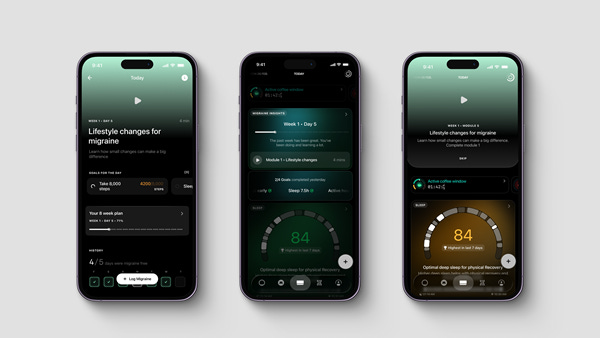
And then this week, Ultrahuman partnered with Click Therapeutics to launch Migraine PowerPlug — a biomarker-driven feature that connects sleep, stress, HRV and movement data with personalised guidance.
Ultrahuman is careful to stress that this is not a prescription treatment. The value lies in helping users see correlations in their own data, apply evidence-based strategies and build resilience over time.
“We are enabling users to track and understand migraine-related patterns in real time, and then go further to turn those insights into actionable guidance,” said Mohit Kumar, CEO of Ultrahuman.
What’s notable in both of these launches is migraine being integrated together with sleep, recovery, hormones, stress and cycles. There’s been much talk in women’s health about the redundance of point-solutions and more demand for integrated care. Wearables are the perfect platform to do that, partnering with experts in the field.
Migraine is one of the white spaces in healthcare where the burden falls disproportionately to women. Wearables aren’t going to “solve” migraine. But the progress to note here is practical: taking a condition that’s been invisible and folding it into platforms that people already, use, trust and return to every day - supercharging existing data through the specific lens of migraine patterns.
(Continue reading: FutureFemHealth)
This week’s poll:
Our last poll asked: What are your initial thoughts on the launch of ChatGPT for Health? Just 17% of you said this was great news, while 43% thought it was progress, not perfection. 40% of you said ‘oh no…’
✅ Let’s partner in 2026
Each month FutureFemHealth reaches 100,000+ women’s health innovators in 109+ countries across our newsletter, social media channels and website.
We are not a mass media channel, we are a high-trust, highly-targeted briefing read by the people who are building, funding and shaping women’s health.
In 2026 we have a limited number of partnerships for organisations who want to:
Lead the narrative on complex and/or emerging women’s health topics
Build credibility and trust with industry peers - founders, operators, clinicians and investors.
Engage leaders through thoughtful content that sparks connection, conversation and collaboration.
📩 We’re now opening 2026 partnership slots. To explore opportunities or request our media pack contact: anna@futurefemhealth.com
💰 Capital flows: where are investors placing bets?

📌 GERMANY: Clue app secures ‘substantial’ investment from Verdane’s €2 billion growth fund. A major boost for one of Femtech’s true pioneers (Clue founder Ida Tin even coined the term). While exact investment figures have not been disclosed, this is confirmed as the single largest investment in Clue’s history (its previous biggest was $7.6m in 2023). Verdane specialises in scaling durable, category-defining businesses. With category leader Flo Health now reportedly reaching reaching hundreds of millions of users, this is undoubtedly an opportunity to see if Clue’s edge - trust, privacy and science - can turn into similar scale. “Verdane’s deep expertise in growing sustainable businesses […] brings unparalleled support to the opportunity in front of us” said Clue CEO Rhiannon White. (Continue reading: FutureFemHealth)
📌 INDIA: Wellness brand Pee Safe closes a $32m funding round with OrbiMed. Already exporting to 23 countries, PeeSafe now plans to scale offline retail and quick commerce. The round was led by global healthcare-focused private equity firm OrbiMed - a serious sign of support for women’s health. (Continue reading: Economic Times)
📌 CANADA: Science&Humans closes oversubscribed $10m Series A as hormone health moves into the mainstream. As employers and insurance carriers increasingly incorporate hormone health into a workplace wellness and benefits programmes, Science&Humans is positioning itself as an enterprise-grade partner with its diagnostics, prescription and continuous monitoring platform. 80% of its 50,000 patients to date report meaningful symptom improvement. The round will fund national expansion, employer partnerships and outcomes-based care. “What Science&Humans has built is a scalable, clinically grounded approach to an area of healthcare that has long been underserved” says investor Michele Romanow. (Continue reading: FutureFemHealth)
🌟 Industry moves and strategic shifts
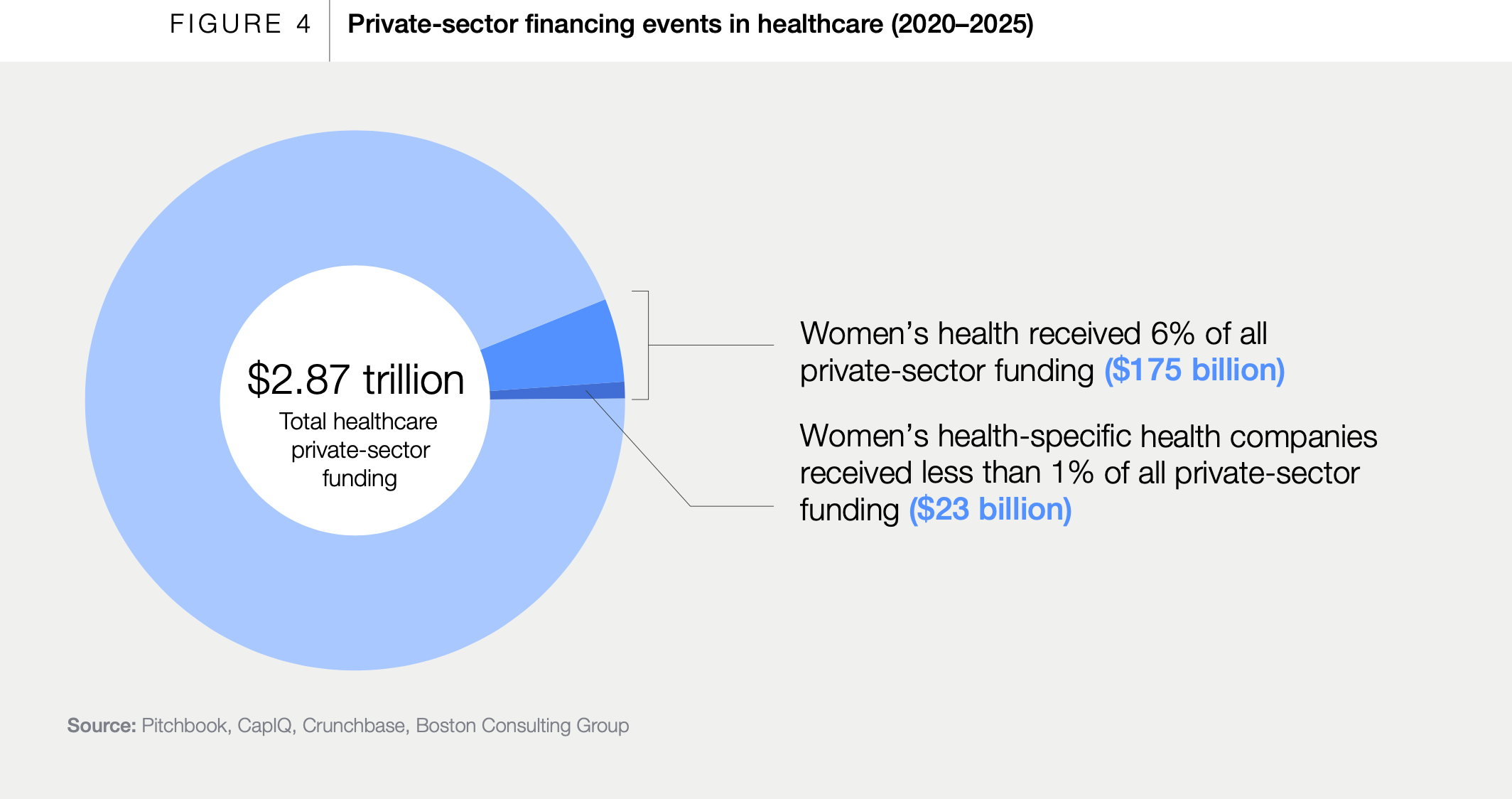
📌 GLOBAL: World Economic Forum releases women’s health investment outlook - and launches new investment index. Despite women and girls representing nearly half the world’s population, women’s health has captured just 6% of private healthcare investment, says a new insight report from WEF and Boston Consulting Group (BCG). Now WEF/BCG wants to make the market more visible: it’s introducing the ‘Women’s Health Investment Index’, modelled on the Climate Policy Initiative mapping. That example brought together fragmented data, unclear value pathways and perceived risk. The result? climate investments nearly doubled. While the authors do not promise the same outcome for women’s health, it makes a solid point that markets cannot function properly if investors cannot see them. (Continue reading: FutureFemHealth)
📌 GLOBAL: The Digital health IPO watchlist 2026. Maven Clinic makes Halle Tecco’s top ten list of digital healthtech companies that are IPO-ready this year. Oura, Ro, Noom and Spring Health - all with strong women’s health components - also make the list. Halle argues that the long IPO drought has created a backlog of companies that have spent the past few years prioritising durability, profitability and clinical-grade evidence over a rush for growth-at-all-costs. Maven is a key example of that - now 12 years since being founded in 2014 rumours have circulated for a number of years that it will IPO. We’ll watch with interest. (Continue reading: Halle Tecco’s Massively Better Healthcare)
📌 GLOBAL: Deep Femtech: how the second wave of femtech innovation will transform women’s health. Science-first, hard-tech innovations that require original research, significant R&D, clincial validation and regulatory pathways are now the ones to watch in women’s health. As Femovate founder Theresa Neil argues, these are the tools that target underlying biology instead of repackaging existing tools or managing symptoms at the surface. Screening, devices / instruments and wearables/ sensors are all ripe as a starting point for impact. More signs Femtech is maturing. (Continue reading: Forbes)
📌 U.S: Peleton shares results of menopause fitness study with Halle Berry’s Respin. The results of this (small scale, limited) study are not as important as the fact that this is an interesting example of how large fitness brands are seeing menopause as something to design for explicitly - and that offerings should move beyond marketing into something more evidence-based. Another broader example this week of the fitness / health convergence as Equinox gyms announced an integration partnership with Oura. (Continue reading: Investing.com)
🩸 Research and women’s health news
📌 GLOBAL: Plans to include pregnant women in drug trials ‘a generational change’. 90% of medicines have never been tested in pregnancy. This year, the World Health Organisation will start to work with scientists and drug developers to gather more information about the safety of medicines in pregnancy. It’s the biggest step change since the Thalidomide scandal of the 1950s and 1960s - when a drug that was never tested in pregnant women was given as a treatment for morning sickness but caused serious birth defects on many babies. More guidelines and a WHO toolkit are expected in the Spring. (Continue reading: The Independent)
📆 Save the date
100 Female Founders : Women’s Health Innovators. Fundraising + GTM. London, Wednesday 28 Jan, 8am-11am GMT. Barclays, Shoreditch.
🎟️ Register here.
100 Female founders: Health innovators. AI in women’s health. London, Tuesday 24 Feb, 8am-11am GMT. Barclays, Shoreditch.
🎟️ Register here.
The Women’s Domain: CensHERship and the Femtech Economy. Navigating the digital barriers in women’s health. London, Thursday 26 Feb, 6pm GMT. London Bridge. (I’ll be joining my CensHERship co-founder Clio Wood to speak at this one!)
🎟️ Register here.
✅ Hiring now
📌 UK: Founder at Macha (part of Nesta Mission Studio)
📌 SWEDEN: Machine Learning Engineer, Hormona
📌 U.S: Lead lifecycle growth manager (CRM), Natural Cycles
📌 GERMANY: Sexual and Reproductive Health Innovation Specialist, UNFPA
📌 BULGARIA: Head of Content, Daye
That’s all for this week! If you’ve missed any previous newsletter issues catch them all at futurefemhealth.com and do make sure to follow us on LinkedIn and you can connect with me directly.
Anna

Before you go: Want to partner with us? To explore opportunities or request our media pack contact: anna@futurefemhealth.com
Interesting to read the WEF news - curious if the timing has anything to do with the reports out at JPM26 last week re: women’s health as a more sizable market than generally perceived 👀
What a great start to the year! Your newsletter is one of my favorites and a trusted resource for understanding the women’s health landscape and opportunities.