


Welcome to issue #136 FutureFemHealth, (w/c March 2 2026) — the global weekly briefing on women’s health innovation.
I’m spending this week back in Denmark with my family (the snow has finally subsided after six weeks!) and then next week it’s back to London again where I’ll be moderating a panel on censorship in women’s health at Women’s Health Horizons. Hope to see some of you there (you can use my code AOS20 for 20% off tickets here too).
🌟 In this week’s briefing:
👩🏽💻 Women’s health failures show up at work
💊 Gedeon Richter buys Celmatix women’s health drug pipeline
🛑 New study may explain why pain lasts longer for women.
🩸 Tampon-based trial explores earlier ovarian cancer detection
Share your news for next week: anna@futurefemhealth.com
👩🏽💻 Women’s health failures show up at work

If you want to understand what is broken in women’s healthcare, look at the world of work.
Long before problems appear in gynaecological waiting lists or national health statistics, they are already visible in sick days, reduced hours and careers put on hold.
The workplace has become an unexpected diagnostic tool for women’s health - revealing where access breaks down, where care pathways fragment and where unmet needs persist.
New data from women’s health platform Maven Clinic illustrates the pattern. One in four women reports delaying or skipping routine care because of scheduling challenges, long waits or transport barriers. Over half (56%) of employers report increased healthcare costs tied to high-risk pregnancies. One in three employees now report taking medical action based on AI-generated advice - often before speaking to a clinician.
Women are navigating complex health needs alone - often because accessing care remains difficult. That means employers are absorbing the consequences of these gaps - not by replacing healthcare systems but by trying to make them more navigable.
Policymakers are starting to formalise that responsibility. In the UK, large employers will soon be mandated to develop menopause action plans and in the US Rhode Island became the first state to mandate workplace accommodations last year — recognition that women’s health is not just a clinical issue but an economic one, affecting retention, productivity and career progression.
The Maven annual report also shows employers have been expanding women’s and family health benefits by nearly 40% on average - yet employee confidence in those benefits has fallen.
So, employee benefits, even the best and most comprehensive ones, cannot compensate for a health system that remains difficult to access.
But there is a blindspot in this sort of data too. The companies investing in specialist benefits platforms tend to be larger, better-resourced organisations. Millions of women work in smaller businesses without structured support or flexible working. And even in well-resourced organisations, gaps persist. In the UK, a former Accenture employee recently won an endometriosis discrimination case.
If this is what women’s health looks like in some of the best-supported workplaces, what does it look like everywhere else?
✅ Work with FutureFemHealth in 2026
FutureFemHealth reaches 100,000+ women’s health leaders across 109+ countries each month.
We’re not mass media. We’re a high-trust briefing read by the people building, funding and shaping the sector.
In 2026, we’re partnering with a limited number of organisations who want to:
Launch a product or enter a new market
Amplify a research report or data release
Raise visibility ahead of a fundraise
Announce a strategic milestone
Build employer brand within women’s health
Our partnership formats include sponsored insight reports, branded deep dives, research amplification campaigns and strategic content partnerships.
📩 Request our 2026 partnership pack for more details: anna@futurefemhealth.com
💰 Capital flows: where are investors placing bets?

📌 HUNGARY / US: Gedeon Richter buys Celmatix women’s health drug pipeline. Pharma group Gedeon Richter is expanding its focus on fertility, endometriosis and ovarian ageing through a deal to acquire several early-stage drug programmes from US biotech Celmatix. Celmatix has built its reputation around research into ovarian biology and preserving ovarian function across the lifespan — including longer-term ambitions to extend ovarian “healthspan” and potentially delay menopause — though all programmes remain at a preclinical stage. The portfolio includes a potential pill designed to replace injectable hormones used in IVF, a non-hormonal treatment candidate for endometriosis, and experimental programmes targeting anti-Müllerian hormone, which plays a key role in regulating ovarian follicles. Financial terms were not disclosed beyond upfront and milestone payments. The move comes just weeks after Richter signed a separate endometriosis antibody deal with Swiss biotech FimmCyte, another signal of its clear strategy to deepen its innovation pipeline in women’s health. (Continue reading: FutureFemHealth)
📌 INDIA: Fertility provider Gaudium IVF & Women Health launches a ₹165 crore (~$20 million) IPO. The Delhi-based IVF clinic network opened its public offering, with proceeds intended to support expansion across India’s growing fertility market. The offering reflects rising investor interest in reproductive healthcare as fertility clinic networks in emerging markets begin reaching public markets alongside rising demand for assisted reproduction. (Continue reading: Business Standard)
🌟 Industry moves and strategic shifts
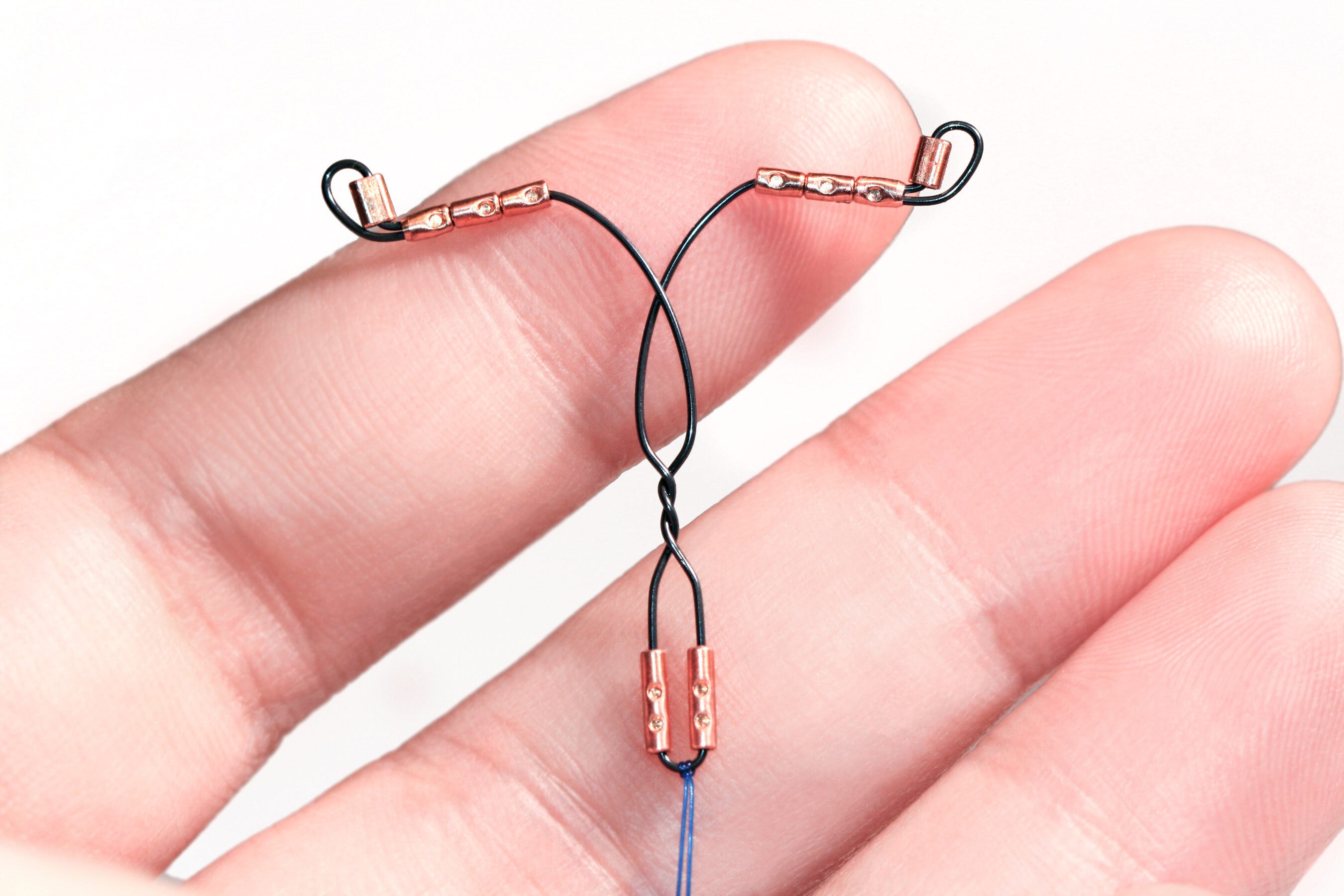
📌 Organon licenses Sebela’s hormone-free copper IUD. Sebela won FDA approval for Miudella in February 2025 for the prevention of pregnancy for up to three years, but the device is not yet commercially available. Now Organon is reportedly paying $27.5m upfront as part of an estimated $532 million deal for exclusive licensing of the contraception. Once on the market it will compete with CooperSurgical’s hormone-free-copper IUD ParaGard which received FDA approval in 1984 and can prevent pregnancy for up to 10 years - although Miudella’s is said to be smaller and easier to insert. (Continue reading: Fierce Biotech)
📌 US: Evvy maps six subtypes of bacterial vaginosis in 100,000-sample analysis. Bacterial vaginosis is the most common vaginal condition among reproductive-aged women in the US affecting more than 30% each year. Yet recurrence of the infection is high. Now over four years Evvy has identified six separate patterns in its data which could help inform treatment plans and pathways beyond a one-size-fits-all approach. A next step is to peer-review the initial research and connect the different subtypes to meaningful clinical differences. (Continue reading: FutureFemHealth)
📌UK: Carea launches IVF support app to help patients manage treatment between clinic visits. The London-based pregnancy platform has added a new IVF/IUI mode including medication tracking, reminders and educational content for people undergoing fertility treatment at home. The launch comes as UK clinics report rising demand and patients increasingly manage complex treatment routines between appointments. The shift highlights how much of fertility care now takes place outside clinical settings as treatment volumes grow. (Continue reading: Medtech Insights)
📌 US/SOUTH KOREA: South Korean FemTech brand Inertia enters the U.S. with plant-based disposable pads. Founded by scientists from leading South Korean research university KAIST, the company has launched Prism Pads featuring a patented cellulose-based absorbent core designed to replace the synthetic superabsorbent polymers used in most disposable period products. The move comes as questions grow around potential toxins in period products and pressure increases for lower-plastic, more sustainable alternatives — pushing manufacturers to rethink the materials used inside mainstream disposable pads. (Continue reading: FutureFemHealth)
📌 GLOBAL: Horizon map: breast health. How are innovators addressing awareness, screening, treatment precision and long-term survivorship support? This new map from Femovate shows innovation across the care journey - and highlights that the overwhelming majority of tech in this mature landscape is built around breast cancer. (Continue reading: Femovate)
🩸 Research and women’s health news
📌 GLOBAL: New study may explain why pain lasts longer for women. Chronic pain is one of the most common reasons women seek medical care (more on this in last week’s deep dive on chronic pain). Now a new study suggests the immune system may play a role in why recovery from pain differs in men and women. Researchers at Michigan State University found that certain immune cells help switch off pain by releasing a molecule called interleukin-10, but these cells appear to be less active in females. The findings suggest that resolving pain is an active biological process — and could eventually lead to new non-opioid treatments as well as a better understanding of sex differences in pain. “The difference in pain between men and women has a biological basis. It’s not in your head, and you’re not soft. It’s in your immune system” says Geoffroy Laumet, associate professor of physiology at Michigan State University and lead researcher on the study. (Continue reading: FutureFemHealth)
📌 UK: Trial to test tampon-based approach for earlier ovarian cancer detection. A new UK study is exploring whether tiny tumour-linked signals can be detected in vaginal fluid collected using a medical tampon. In the VIOLET study, researchers at University Hospital Southampton will compare tampon samples with ovarian and fallopian tube tissue from women undergoing risk-reducing surgery, to see whether early-stage cancers leave measurable molecular traces. The tampons are supplied by Daye, though the study is focused on biomarker discovery rather than product validation. With no national screening programme and only 27% of ovarian cancers diagnosed early, the research could help shape future non-invasive screening strategies for women at high genetic risk. (Continue reading: FutureFemHealth)
📌 DENMARK: First EU country to eliminate mother-to-child transmission of HIV and syphilis. The World Health Organization has certified Denmark for eliminating mother-to-child transmission of HIV and syphilis, after the country met strict targets for prenatal testing, treatment coverage and low infant infection rates between 2021 and 2024. The milestone reflects decades of universal antenatal screening and strong maternal health systems — and positions Denmark as a model for “triple elimination,” with hepatitis B next in sight. (Continue reading: WHO)
📄 Policy watch: risks and opportunities
📌 CANADA: Women’s health leaders rally behind national framework bill. Advocates, clinicians, researchers and innovators continue to push for coordinated federal action on women’s health building momentum behind Senate Public Bill S-243. The proposed legislation would establish a national framework to strengthen research, improve access to care, advance prevention and primary care, and support women-led health innovation. It’s been organised by the Women’s Health Coalition of Canada and partners. With Canada ranking 64th on the Hologic Global Women’s Health Index — and research suggesting closing the women’s health gap could add $37bn annually to the economy by 2040 — advocates are positioning women’s health not only as a care issue, but as an economic and competitiveness strategy. (Continue reading: Newswire)
📌 EU: Commission says existing EU funds can support abortion access after ‘My Voice, My Choice’ push. After months of campaigning and 1.1 million signatures under the My Voice, My Choice initiative, the European Commission has confirmed that Member States can use existing EU Social Fund (ESF+) money to help women access safe and legal abortion care, including travel to another EU country. The Commission stopped short of creating a new dedicated fund, but the clarification opens a funding route — if national governments choose to use it. Access will still depend on political will at country level. (Continue reading: Euronews)
📌 WALES: Cardiff opens first women’s health hub as menopause services expand nationwide. Wales is effectively piloting what integrated, menopause-focused primary care can look like at scale. A new specialist hub in Cardiff will offer extended GP appointments, menopause expertise and community support for women aged 40–65. The centre is part of a nationwide rollout of “pathfinder” women’s health hubs, with one planned in every health board by March and £300,000 allocated to each this year. The programme sits within Wales’ Women’s Health Plan — a 60-plus action strategy developed after consultation with 4,000 women to address the gender health gap. (Continue reading: gov.wales)
📌 UK: Most employers unprepared for upcoming menopause action plan requirement. New survey data suggests large organisations are lagging behind forthcoming rules under the Employment Rights Act, which will require menopause action plans from 2027 (with voluntary reporting from 2026). Only 29% say they plan to publish one in the next two years, while 74% of HR and compliance professionals believe the law does not go far enough. With rising tribunal cases and growing calls for menopause leave, the findings point to a widening gap between legal reform and workplace readiness. (Continue reading: Legal Futures)
Have your say…
Last week’s poll asked: What will shift outcomes in women’s chronic pain? 48% of you said better diagnostics and biomarkers, with reimbursement reform and consumer-led digital tools both coming in at 19%.
✅ Hiring now
📌 GERMANY: Marketing Director, Brand and Organic Growth, Clue
📌 US/ REMOTE: Head of Consulting Relations, Maven Clinic
📌 US: Business Operations and Strategy, Senior Manager, Tia Health
📌 UK / NIGERIA / UGANDA / GHANA / OTHER LOCATIONS: Global Brand and Communications Manager - Clinics and Maternities, MSI Reproductive Choices
That’s all for this week! If you’ve missed any previous newsletter issues catch them all at futurefemhealth.com and do make sure to follow us on LinkedIn and you can connect with me directly.
Anna

Before you go: Want to partner with us? To explore opportunities or request our media pack contact: anna@futurefemhealth.com.